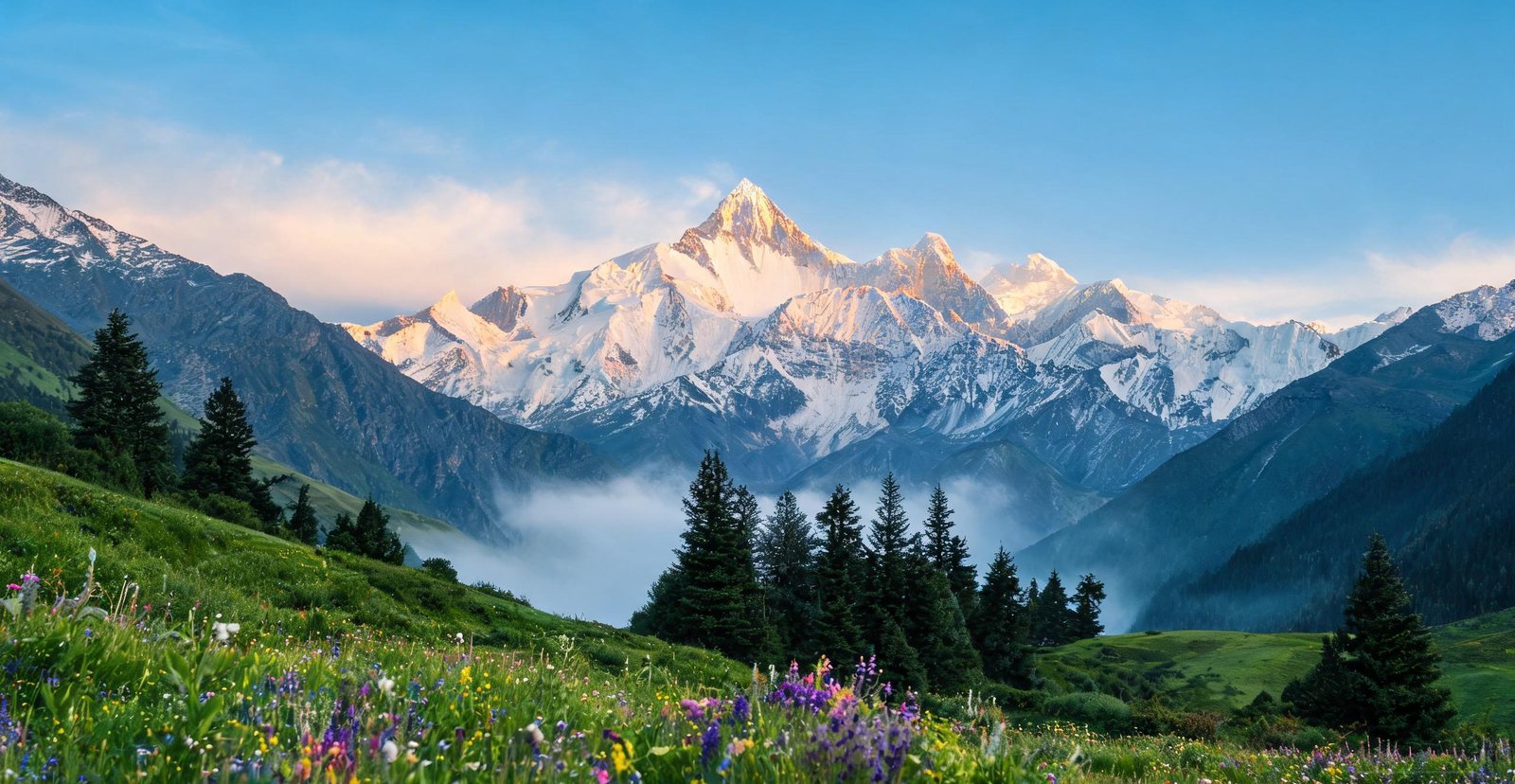
From the windswept steppes of Inner Mongolia to the tropical coast of Hainan, here are the destinations that belong on every China bucket list.
Historic Cities
Ancient Capitals and Imperial Walls
Fifteen cities where dynasties rose and fell — imperial walls, old town lanes and temples that still stand.
Tap a marker on the map — then swipe left or right, or use the arrows, to browse the cities.
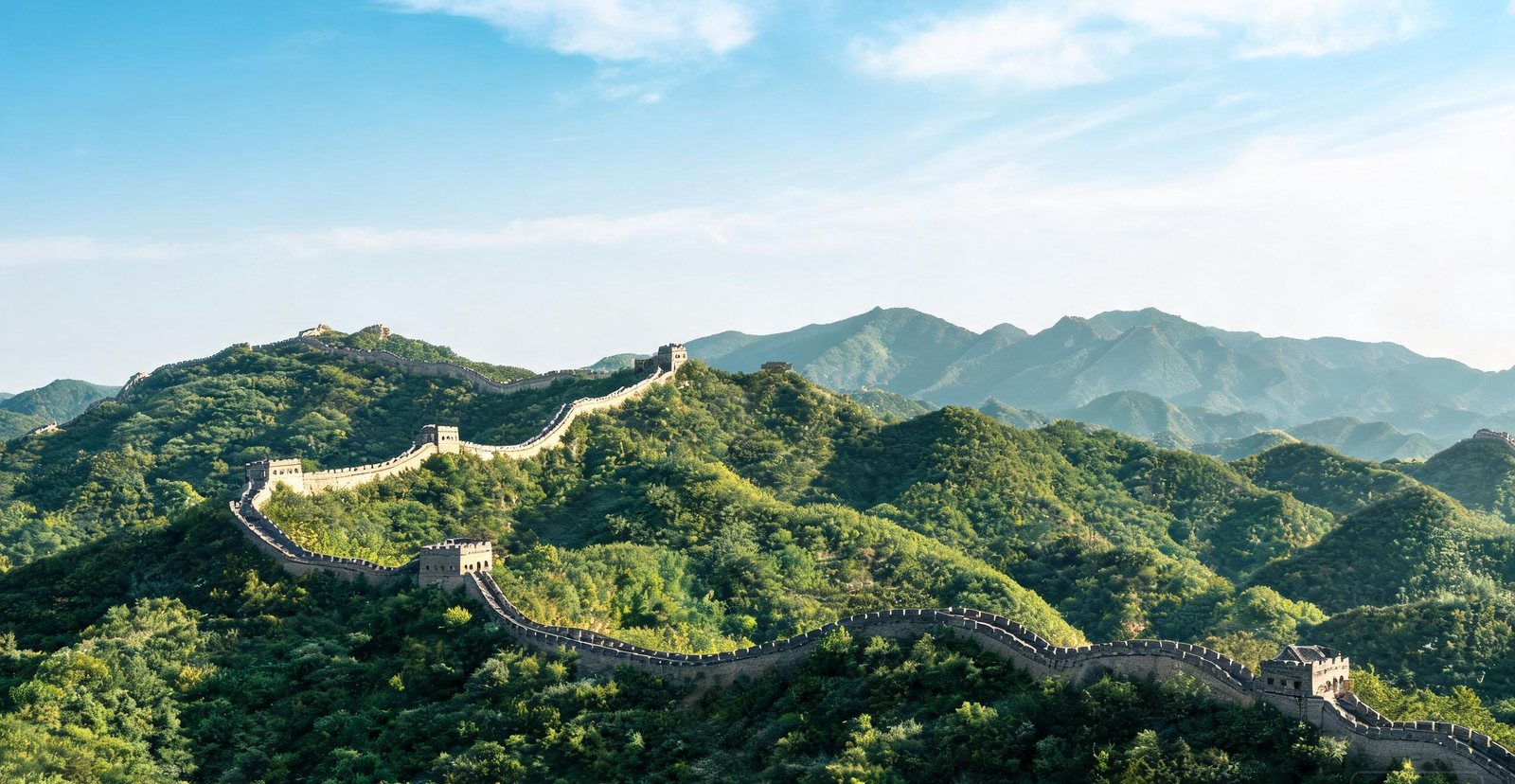
The Great Wall rolling over forested ridges at Mutianyu
#1 — Beijing & the Great Wall
A Wall Built by Emperors and Walked by You
Stretching 21,000+ kilometers across northern China, the Great Wall is visible from low orbit and humbling at human scale. The Badaling section is closest to Beijing, but drive an hour further to Mutianyu for fewer crowds, cable cars, and a luge slide down.
Forbidden City — 14 million annual visitors; go at opening (8:30am).
Temple of Heaven — where emperors prayed for good harvests.
Hutongs — narrow courtyard alleys vanishing fast; rent a bicycle.
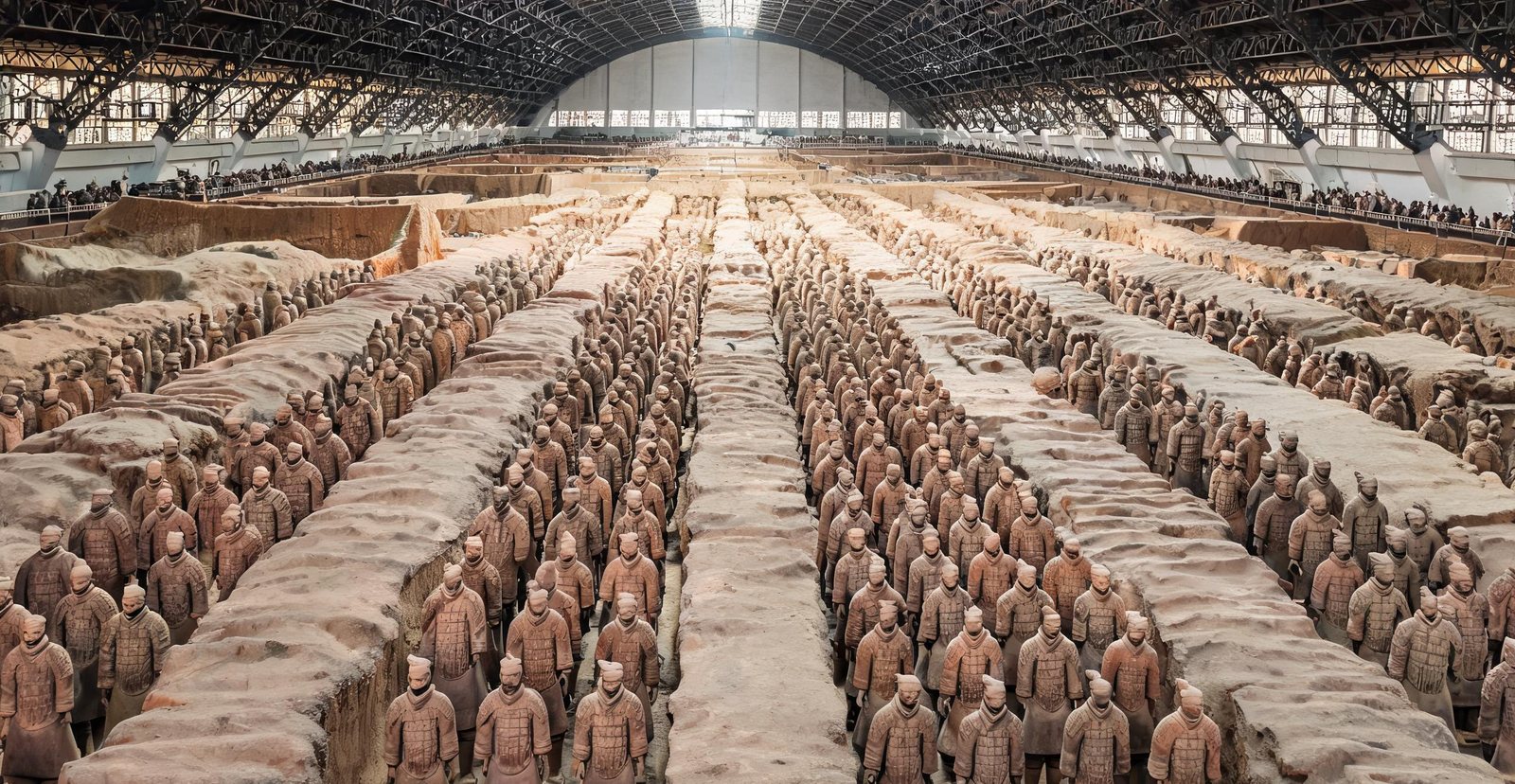
Terracotta warriors standing in ranks inside the excavation hall
#2 — Xi'an
Terracotta Warriors and the Start of the Silk Road
An army of 8,000 life-sized soldiers guards Emperor Qin Shi Huang's tomb — and archaeologists have barely scratched the surface. Xi'an also has one of the world's best-preserved ancient city walls; rent a bike and ride the full 14 km loop.
Terracotta Warriors: Book the museum ticket in advance.
Muslim Quarter for street food — roujiamo (Chinese hamburger) mandatory.
Huashan mountain day trip if you like hiking — it's breathtaking and terrifying.
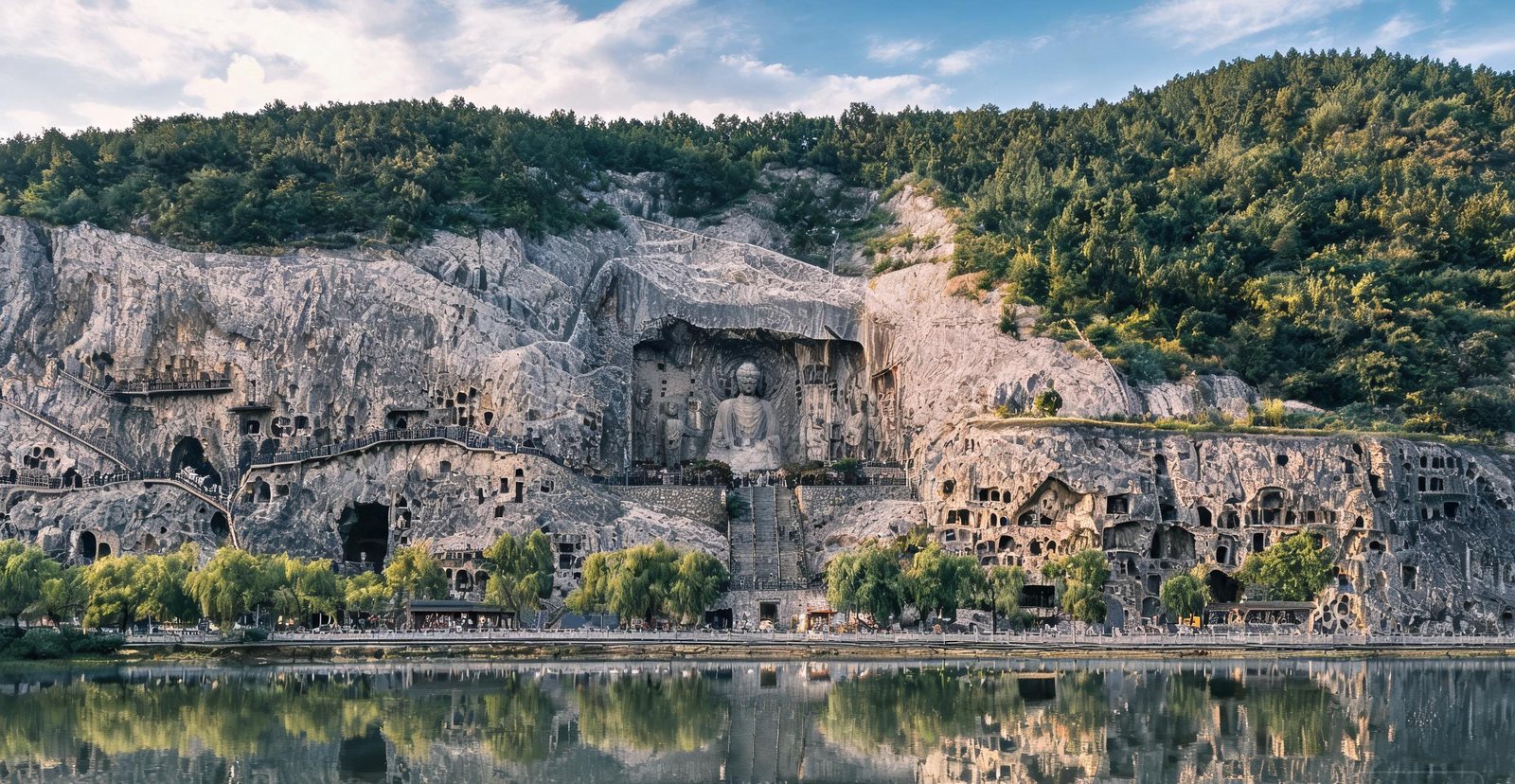
Buddhist carvings filling the limestone cliffs at Longmen
#3 — Luoyang
Luoyang: Where Buddhism Entered China
Capital to thirteen dynasties over 1,500 years, Luoyang is where Buddhism first took root in China — the White Horse Temple, founded in 68 AD, is the country's oldest. Nearby, the Longmen Grottoes hold more than 100,000 Buddhist carvings cut into the limestone cliffs.
Longmen Grottoes — go at dawn or dusk, when the limestone turns gold.
Come in mid-April for the peony festival, when the whole city blooms.
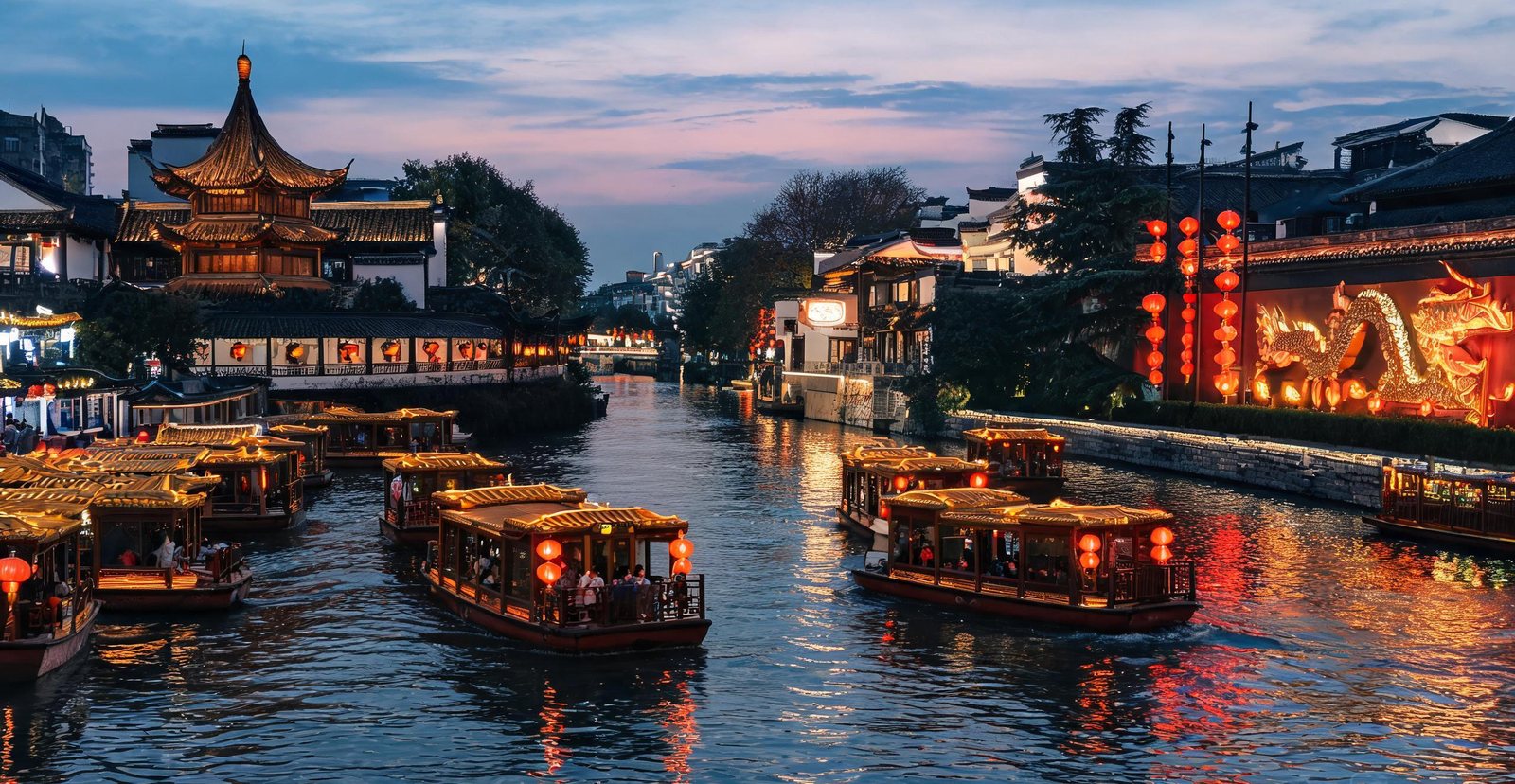
Boats on the Qinhuai River beneath red lanterns in Nanjing
#4 — Nanjing
Nanjing: The City of Six Dynasties
Capital to six dynasties and later to the Republic of China, Nanjing wears its history in layers — Ming city walls, the mausoleum of Sun Yat-sen on Purple Mountain, and the lantern-lit Qinhuai River quarter.
Ming Xiaoling Mausoleum — the UNESCO-listed tomb of the first Ming emperor.
Cruise the Qinhuai River at night, past the Confucius Temple.
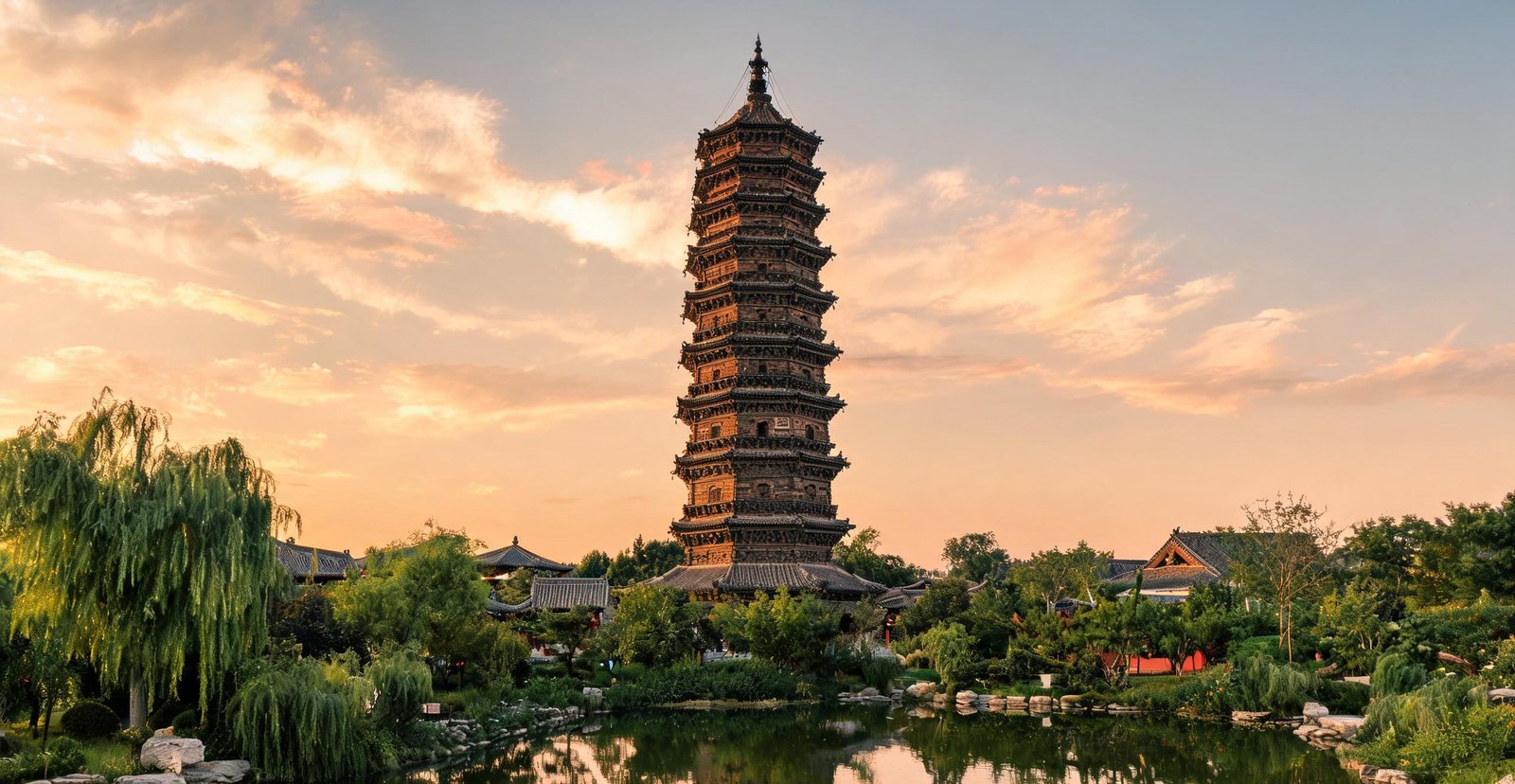
The glazed-brick Iron Pagoda rising above Kaifeng
#5 — Kaifeng
Kaifeng: The Lost Capital of the Song
A thousand years ago Kaifeng was the largest city on earth, capital of the Northern Song. Its Song-dynasty spirit survives in the Iron Pagoda, the old city wall, and the recreated Riverside Scene park.
Iron Pagoda — a 55-metre glazed-brick tower that has outlived thirty floods.
Graze the night market for soup dumplings and peanut cakes.
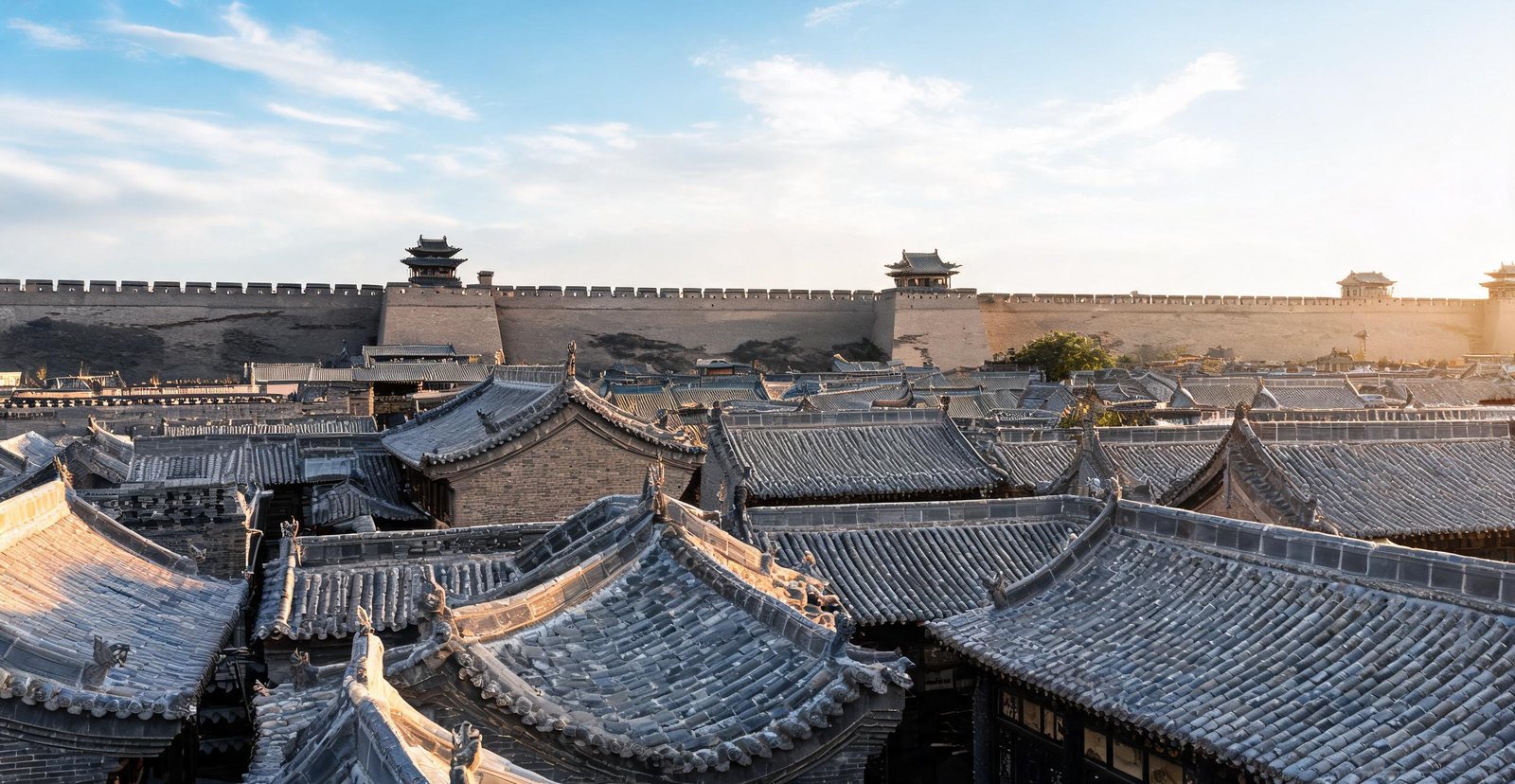
Grey rooftops and temple eaves inside the walls of Pingyao
#6 — Pingyao
Pingyao: China's Best-Preserved Walled Town
The only intact Ming-and-Qing walled city in China, Pingyao grew rich as the birthplace of Chinese banking — its old draft banks once moved silver across the whole empire.
Walk the 6-km city wall at sunset for rooftops as far as you can see.
Stay overnight in a courtyard inn on Ming-Qing Street.
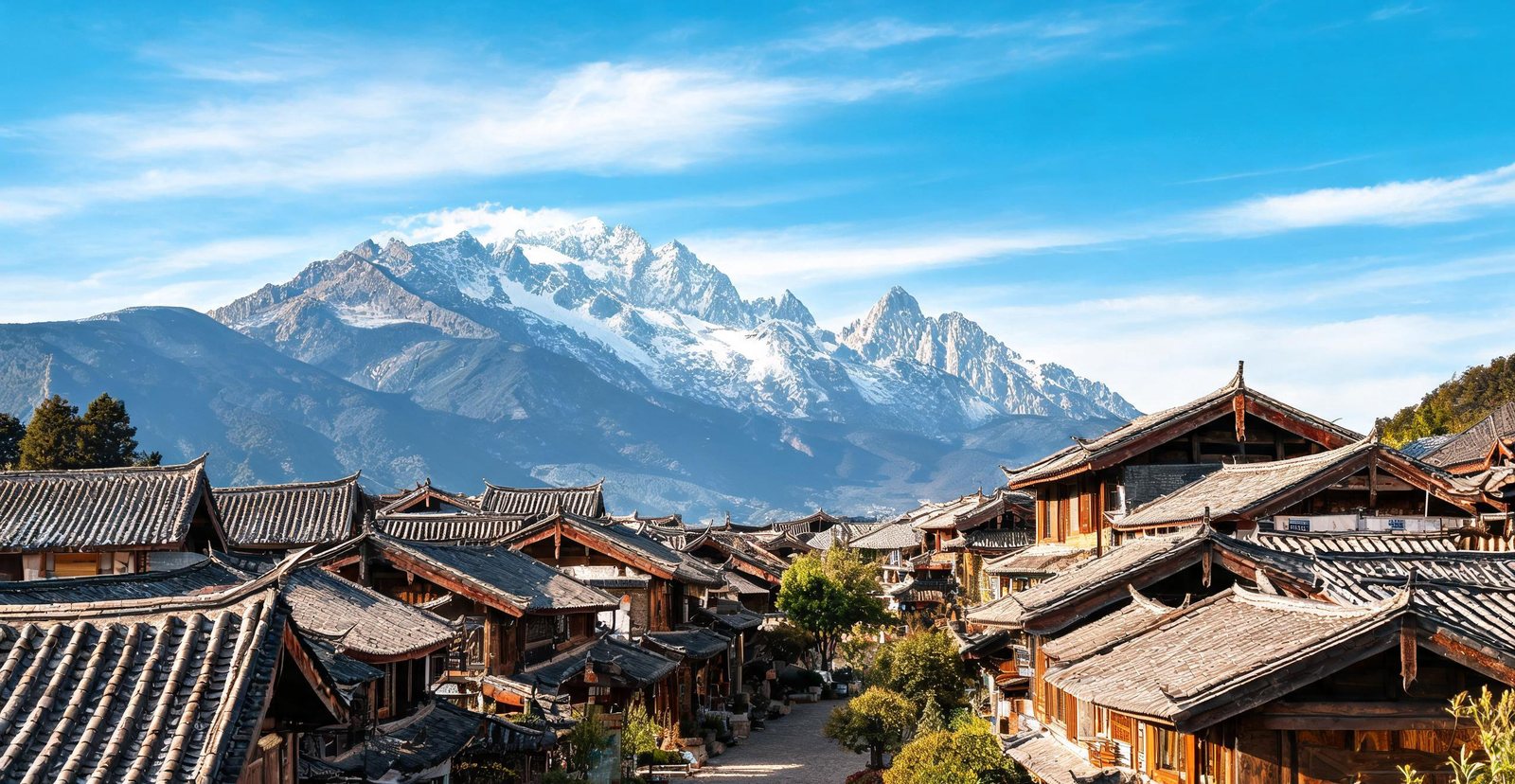
Tiled roofs and snow peaks behind Lijiang's old town
#7 — Lijiang
Lijiang: Naxi Old Town Under Snow Mountains
Cobbled lanes, willow-lined canals and Naxi women who still write the pictographic Dongba script — Lijiang's old town sits in the shadow of 5,596-metre Jade Dragon Snow Mountain.
Explore the Mu Family Mansion and the lanes around Sifang Square.
Day-trip to Jade Dragon Snow Mountain or Tiger Leaping Gorge.
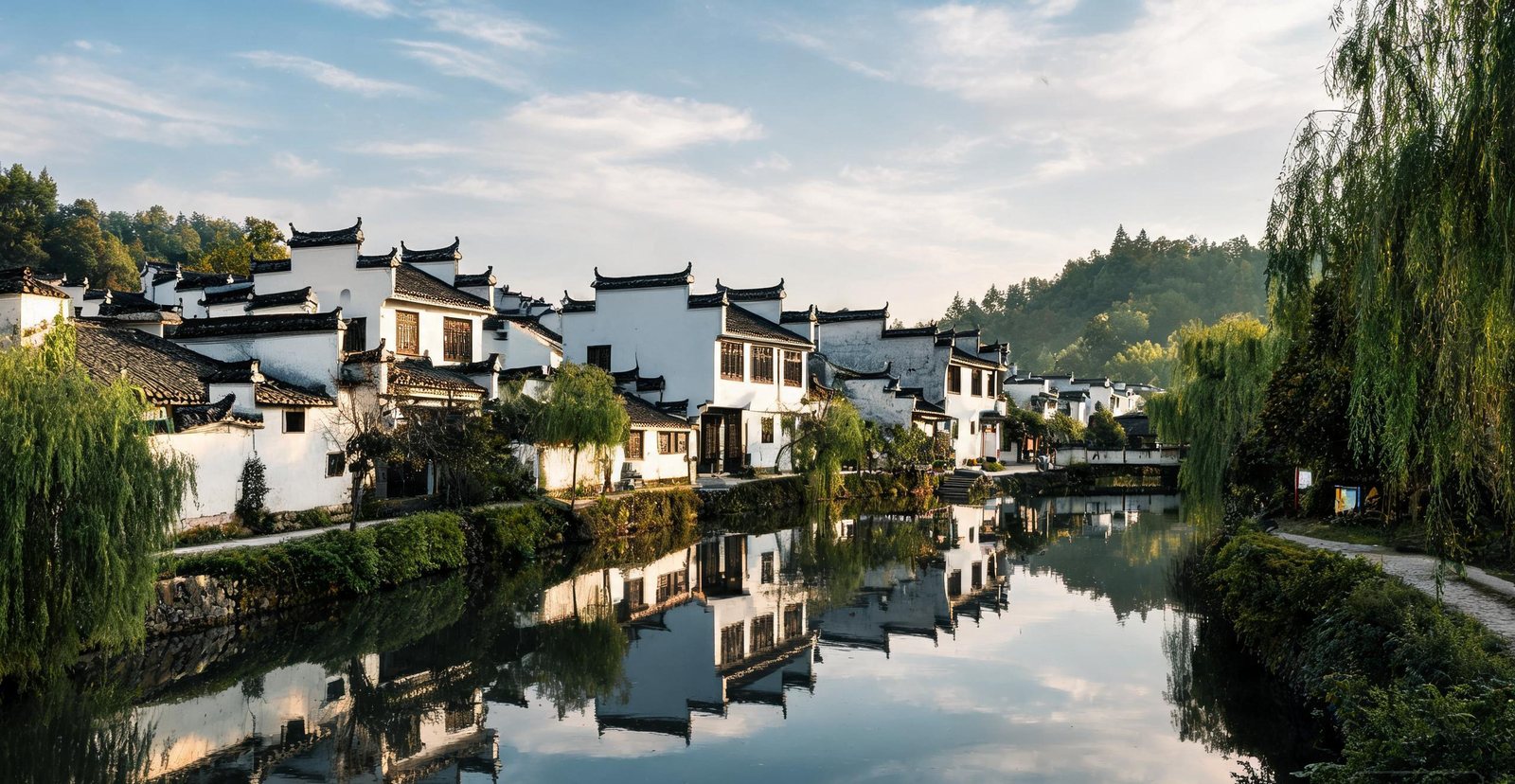
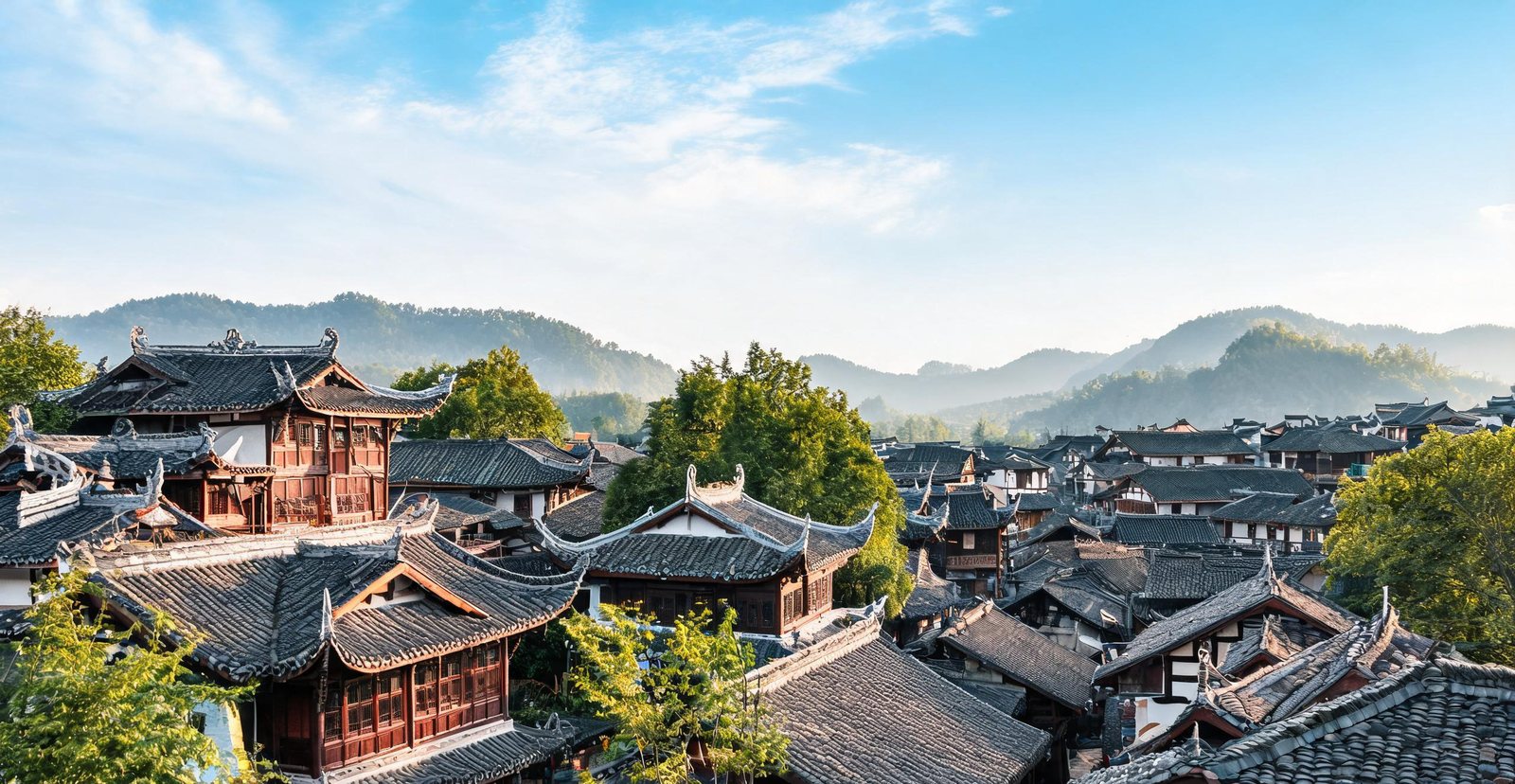
White-walled Huizhou houses and grey tile roofs at Shexian
#8 — Shexian
Shexian: The Heart of Huizhou
The old seat of Huizhou prefecture, Shexian is the place to see Hui-style architecture — whitewashed walls, black-tile roofs and horse-head gables — plus the memorial archways of Tangyue.
See the Tangyue Archway Group — seven stone arches in a row.
Wander the old town past the Xu Guo Stone Archway.
Curved roofs and lanterns over the old town of Langzhong
#9 — Langzhong
Langzhong: The Feng Shui City
One of China's four best-preserved ancient cities, Langzhong was laid out by feng shui rules on a bend of the Jialing River — and is still watched over by a temple to the warrior Zhang Fei.
Climb Zhongtian Tower for a bird's-eye view of the old town grid.
Visit Zhang Fei Temple, honouring the general turned silk official.
Riverside houses and stone bridges at Zhenyuan, Guizhou
#10 — Zhenyuan
Zhenyuan: A Riverside Town in a Mountain Bend
Tucked into an S-bend of the Wuyang River and ringed by green hills, Zhenyuan mixes Ming lanes, old wharves and the cliff-clinging Qinglong Cave temple complex.
Walk the Qinglong Cave halls balanced on stilts over the water.
Take a boat on the Wuyang River through the old town at dusk.
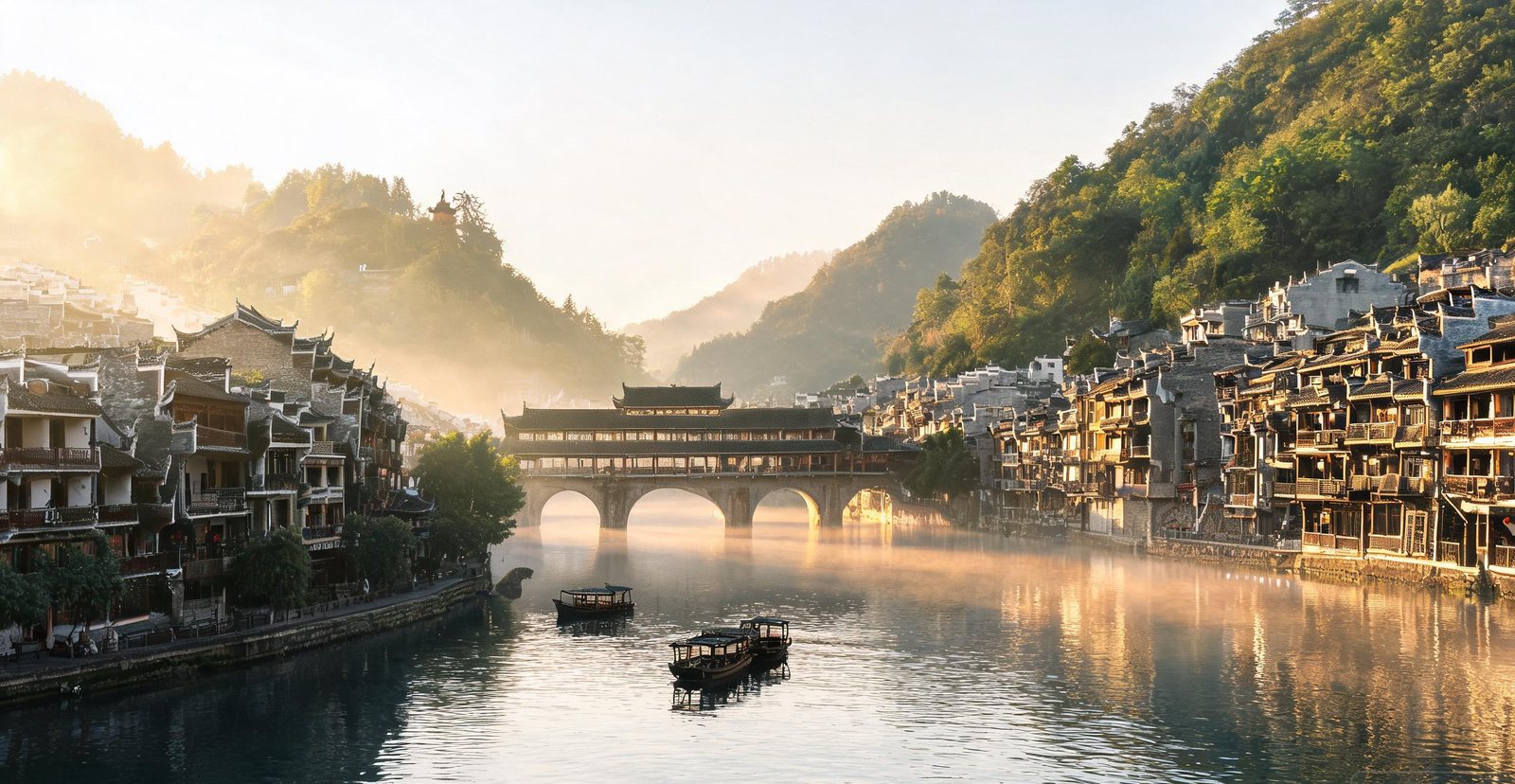
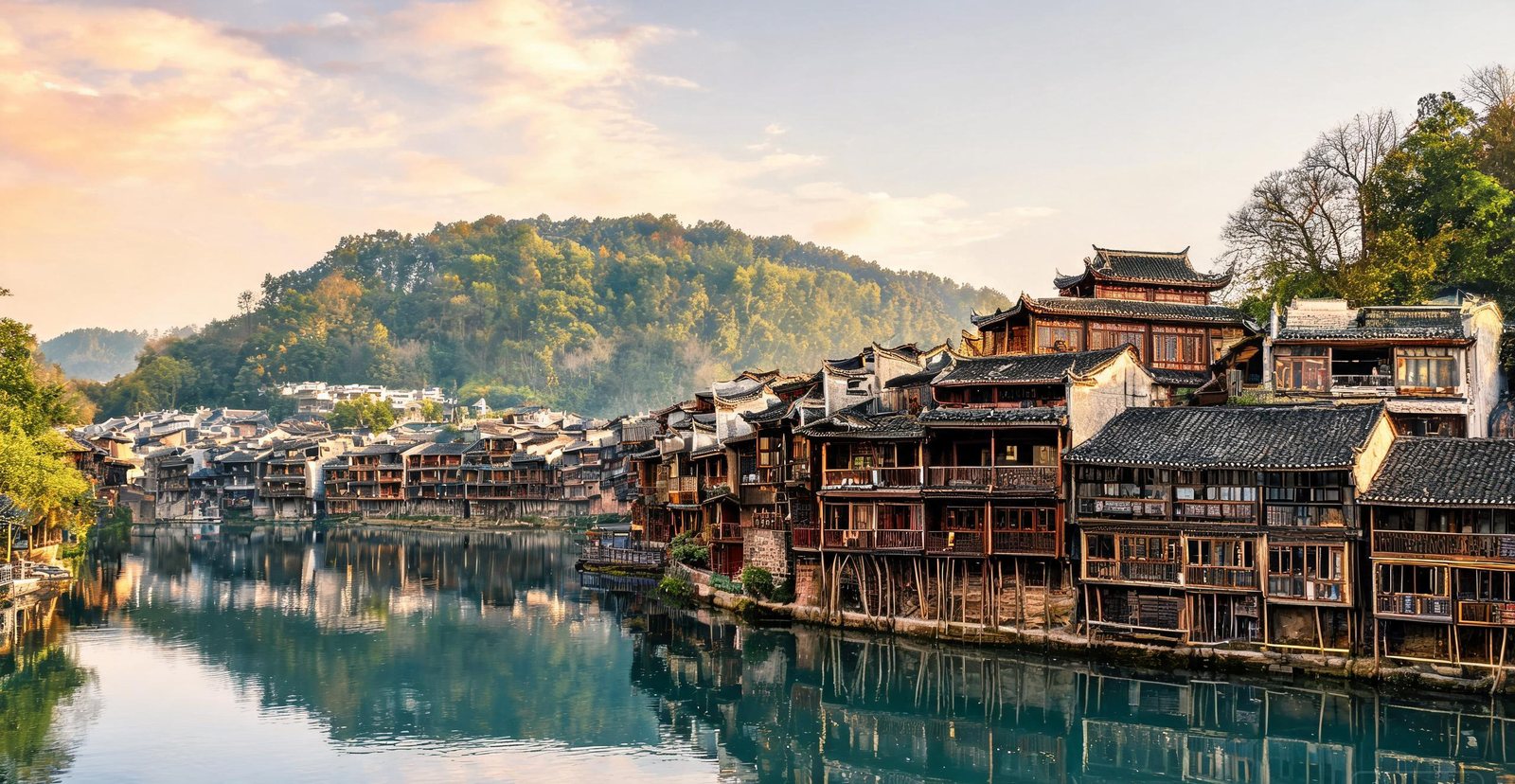
Stilt houses lining the Tuo River at Fenghuang old town
#11 — Fenghuang
Fenghuang: Stilt Houses on the Tuo River
Tiered wooden stilt houses lean over the green Tuo River, and the Miao and Tujia villages around Fenghuang keep embroidery, silverwork and drum songs alive.
Cross the Hong Bridge and wander the riverside stone lanes.
Watch the silver-forging craftsmen along the old street.
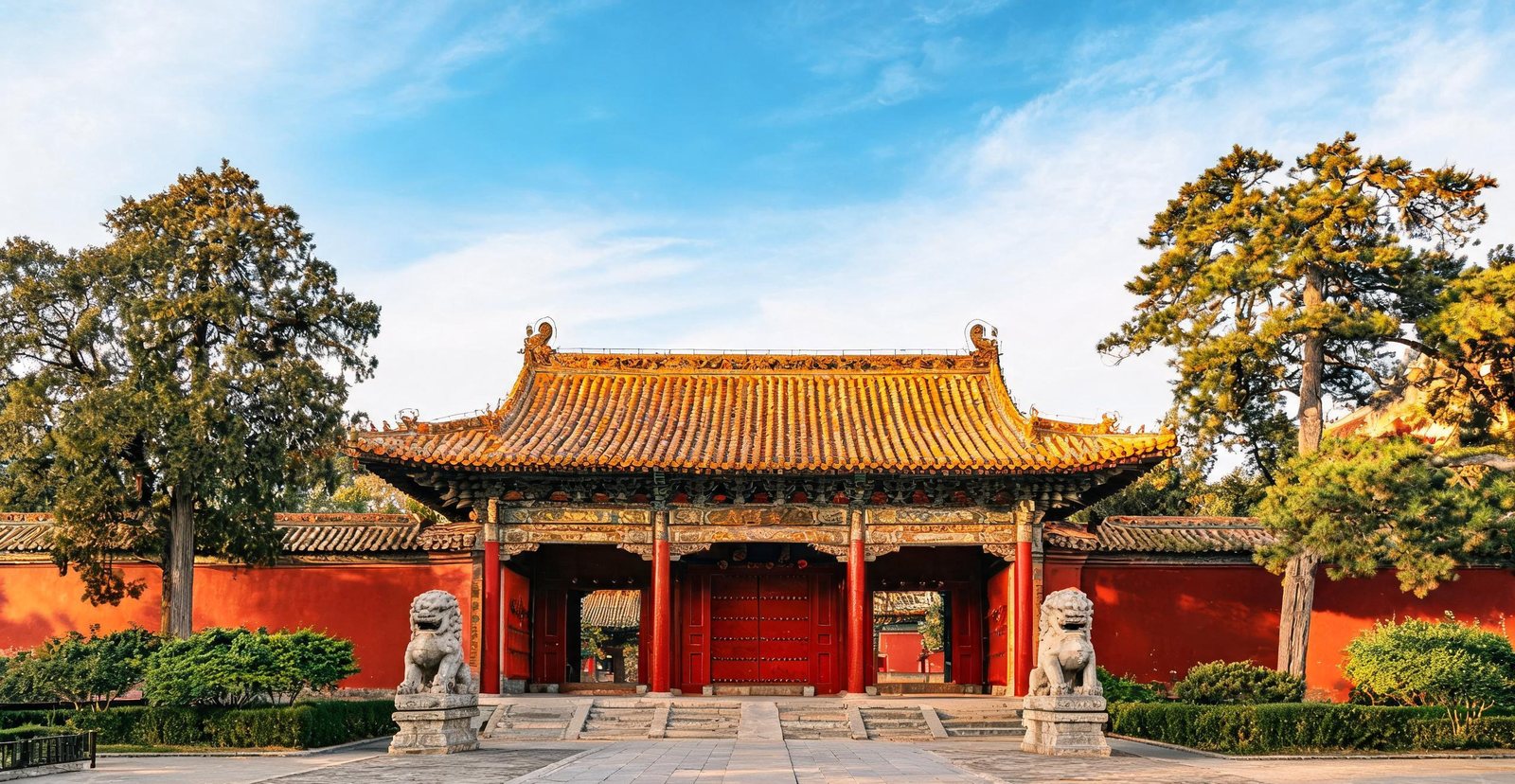
The Dacheng Hall of the Temple of Confucius in Qufu
#12 — Qufu
Qufu: Confucius's Hometown
The birthplace of Confucius, Qufu holds the 'Three Confucian Sites' — the Temple, the Mansion and the Forest — a UNESCO complex that has drawn pilgrims for 2,500 years.
See the Dacheng Hall, one of China's three great ancient halls.
Walk the Cemetery of Confucius, where his descendants rest among 10,000 trees.
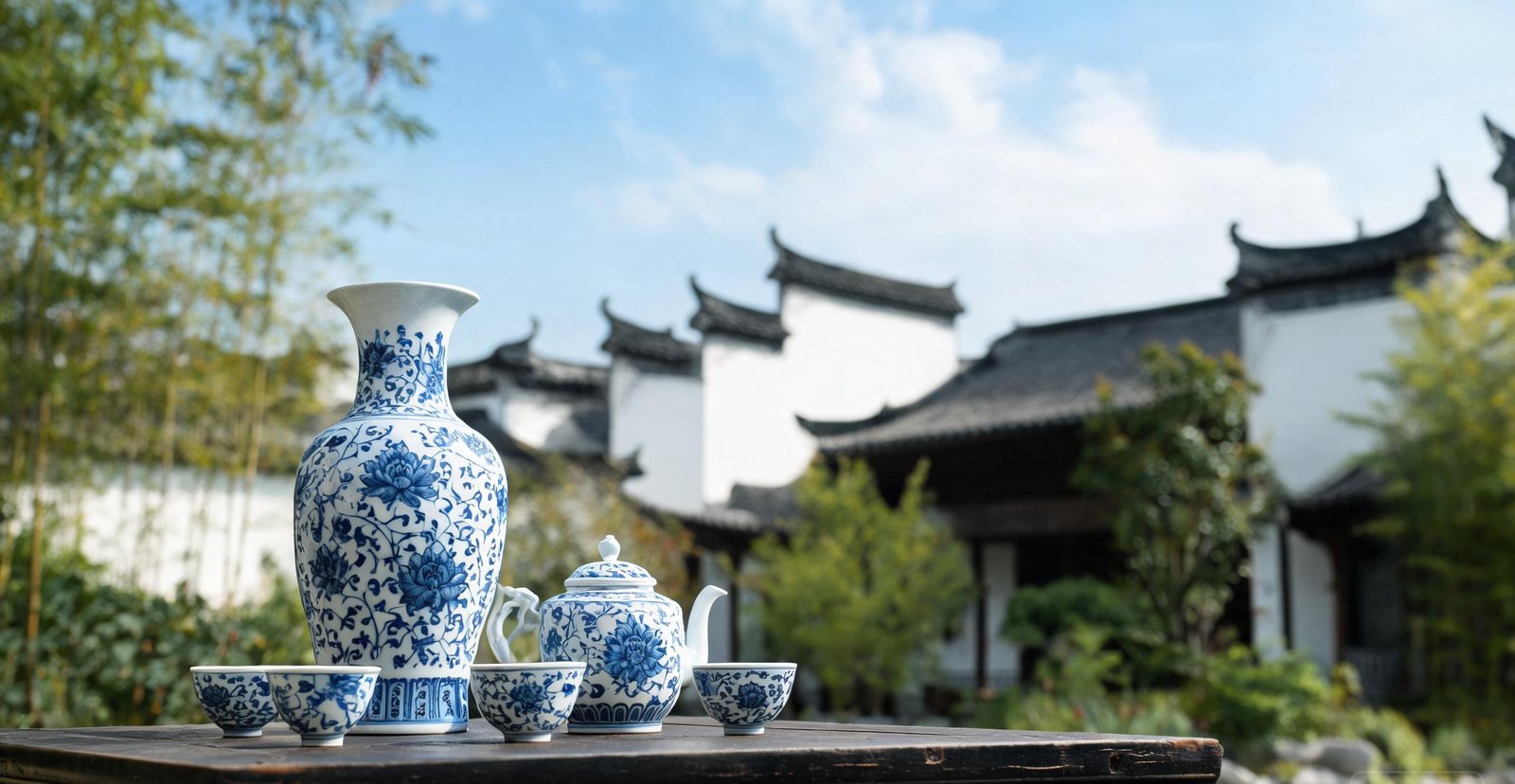
Hand-painted blue-and-white porcelain in Jingdezhen
#13 — Jingdezhen
Jingdezhen: The Porcelain Capital
For 1,700 years Jingdezhen has fired the porcelain the world simply calls 'china'. Whole neighbourhoods are still kilns, studios and markets — and you can throw a pot yourself.
Visit the Imperial Kiln Museum and the kiln ruins at Hutian.
Paint your own cup at a Taoxichuan ceramic studio.
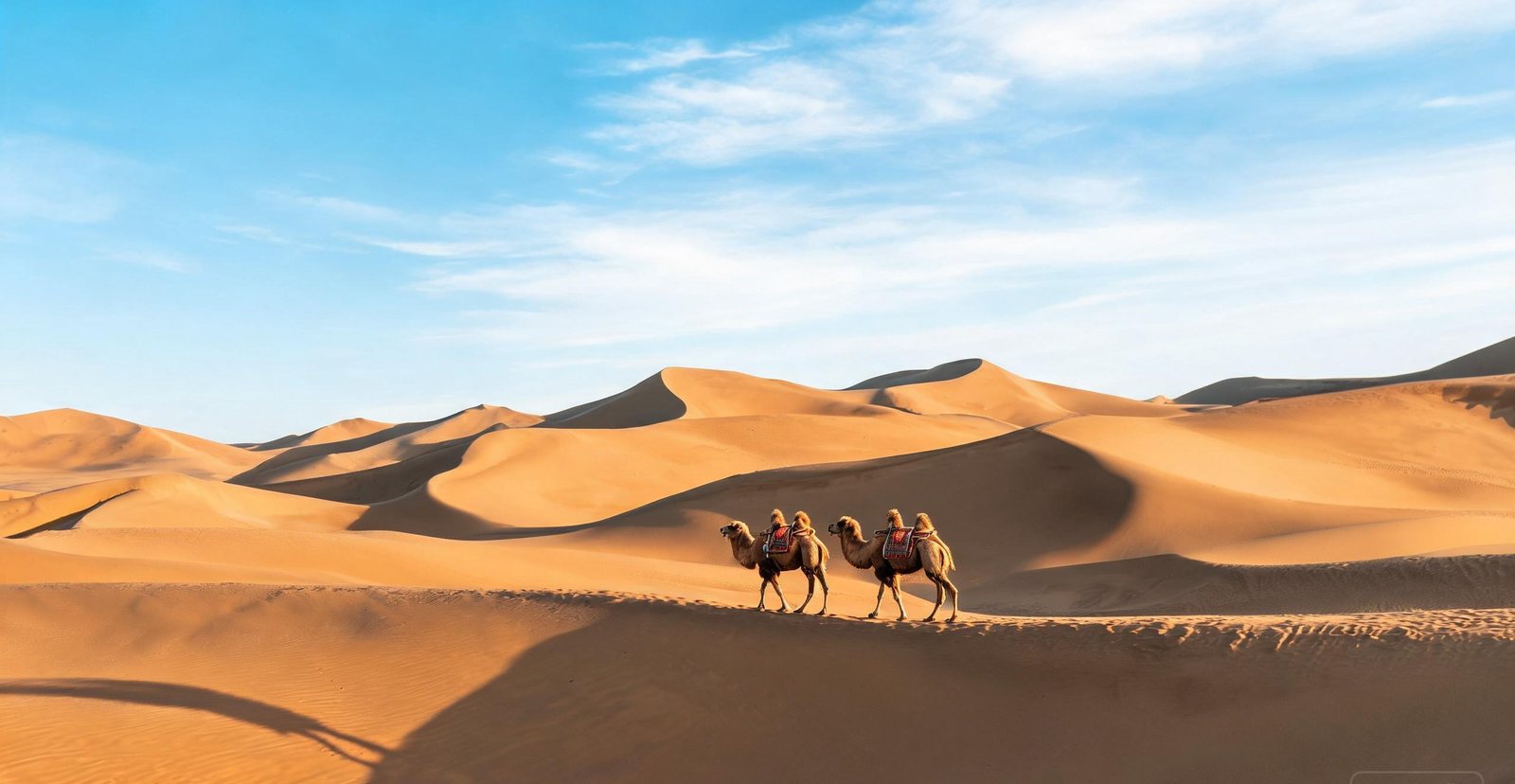
A camel caravan crossing the Mingsha dunes near Dunhuang
#14 — Dunhuang
Dunhuang: Oasis of the Silk Road
Where the Silk Road met the desert, Dunhuang's Mogao Caves hold 492 painted grottoes spanning a thousand years of Buddhist art — with the singing dunes and Crescent Lake just next door.
Book Mogao Caves tickets weeks ahead — daily numbers are capped.
Ride a camel over the Mingsha dunes in the late afternoon.
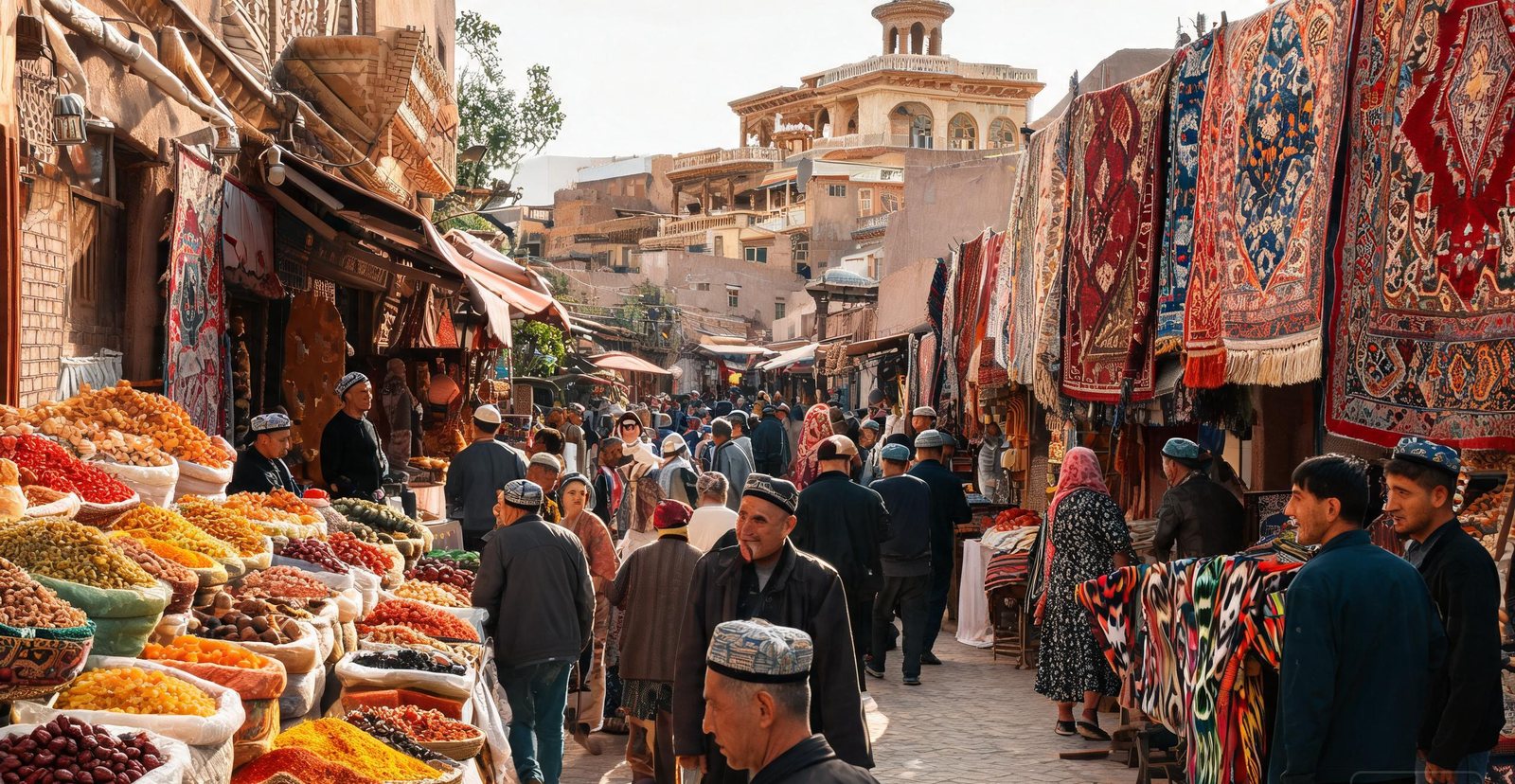
Spice stalls and crowds in the Sunday bazaar at Kashgar
#15 — Kashgar
Kashgar: The Far Western Bazaar
China's westernmost city and the Silk Road's great crossroads, Kashgar is Uyghur country — tea houses, domed bazaars, pilgrimage tombs and a sprawling Sunday livestock market.
Wander the Old Town around the Id Kah Mosque.
Haggle for spices and carpets at the Grand Bazaar.
Modern China
Tech Hubs and Future Skylines
Ten cities that build, sell and ship the future — skyscrapers, high-speed rail, drones and digital cash.
Tap a marker on the map — then swipe left or right, or use the arrows, to browse the cities.
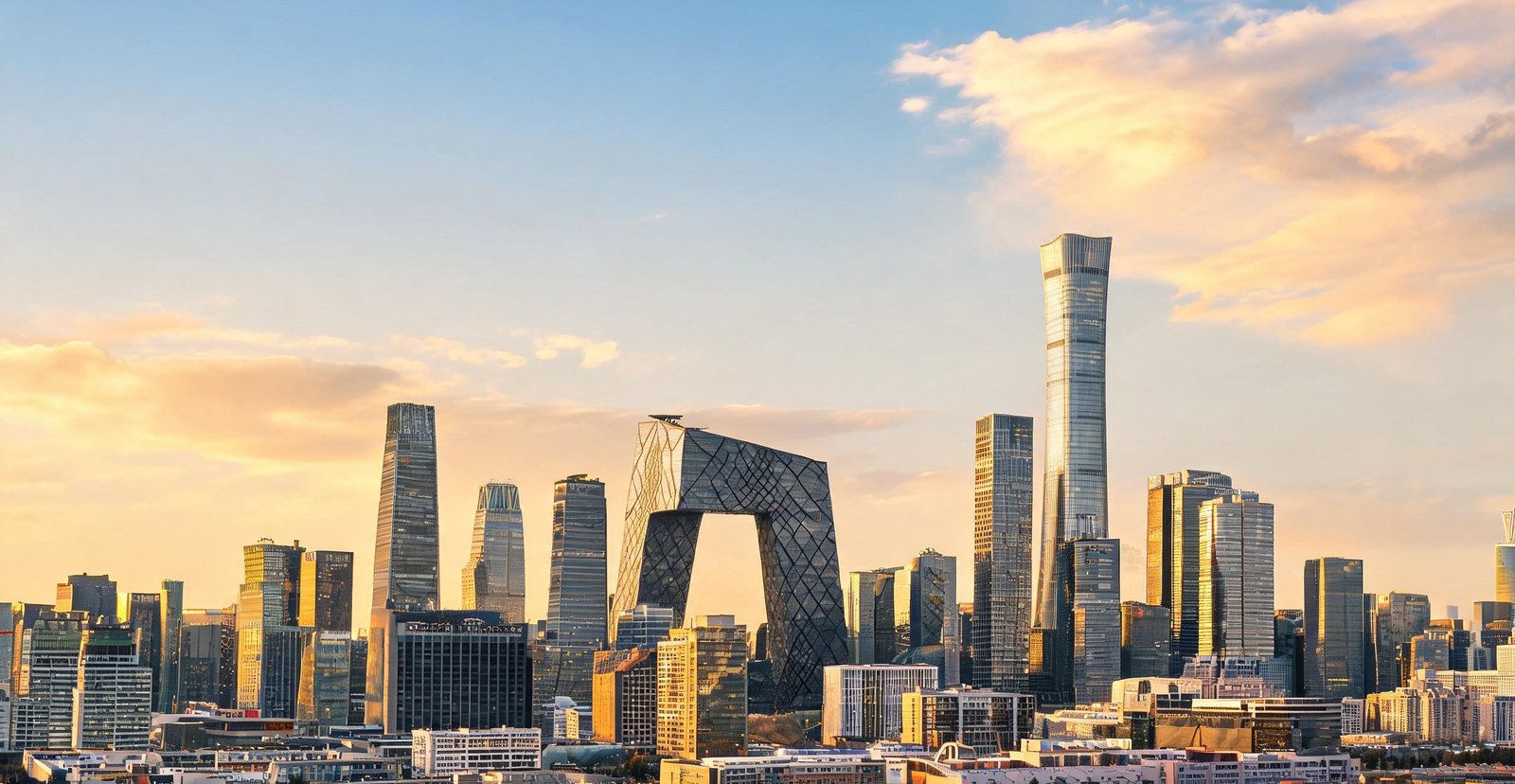
The Beijing CBD skyline glowing at blue hour
#1 — Beijing
Beijing: Power, Dust and Three Thousand Years
Dynastic capital for eight centuries, Beijing now runs the world's second-largest economy — its hutongs and imperial axis sit inside a ring-road megacity of twenty-two million.
CBD and Guomao — the skyline that anchors China's finance and state media.
Zhongguancun — the 'Silicon Valley of China' beside Tsinghua and Peking University.
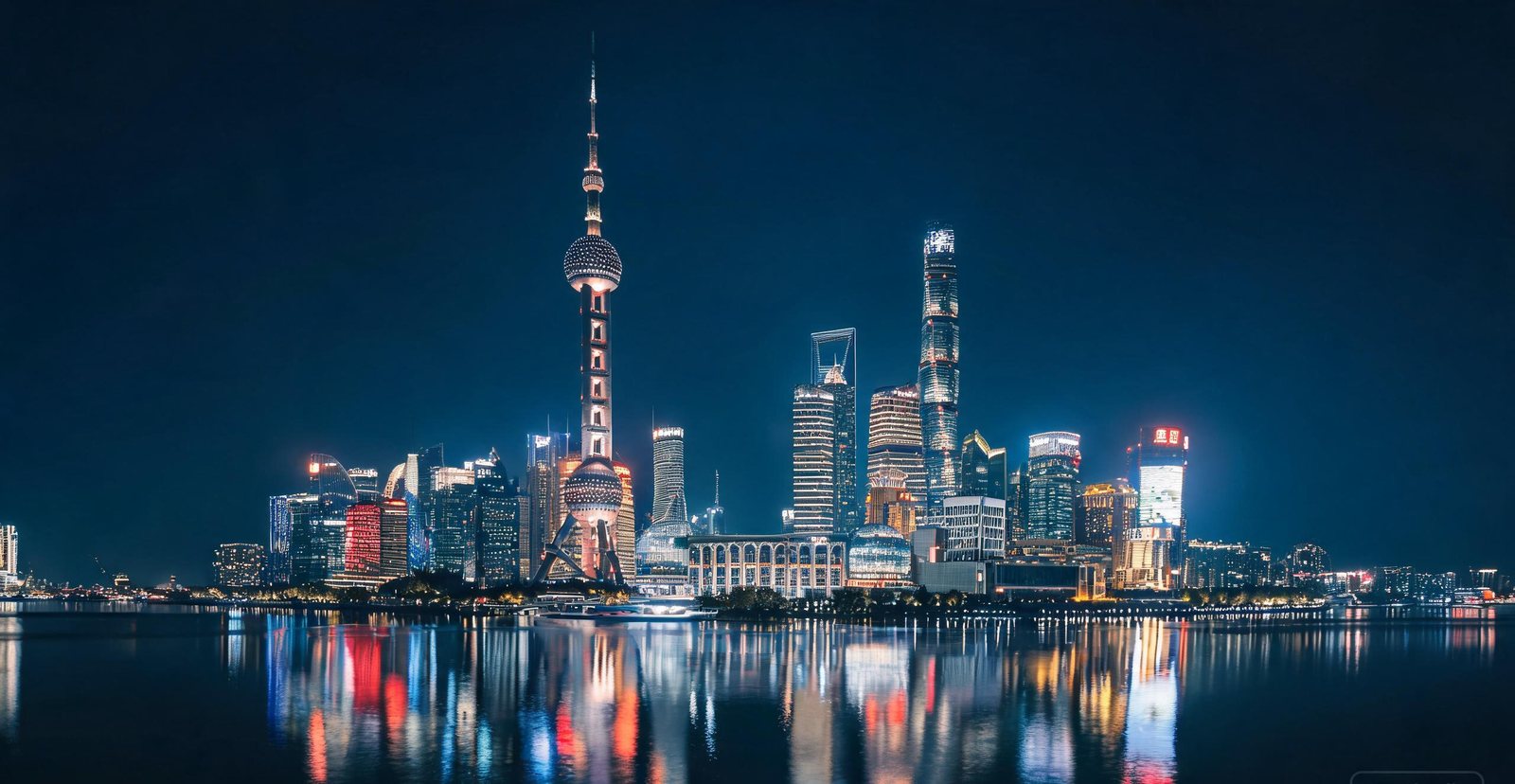
The Lujiazui skyline on the Huangpu River in Shanghai
#2 — Shanghai
Where East Meets West, Then Built a Skyline
Walk the Bund at night — the Pudong skyline reflected in the Huangpu River — and you'll understand why this city fascinates everyone. But Shanghai isn't just skyscrapers. It's old French Concession tree-lined avenues, street food alleys, and Fuxing Park where locals do tai chi at dawn.
Take the Huangpu River cruise after dark.
Yu Garden and surrounding bazaar for traditional teahouse experience.
High-speed rail to Suzhou (30 min) for classical gardens.
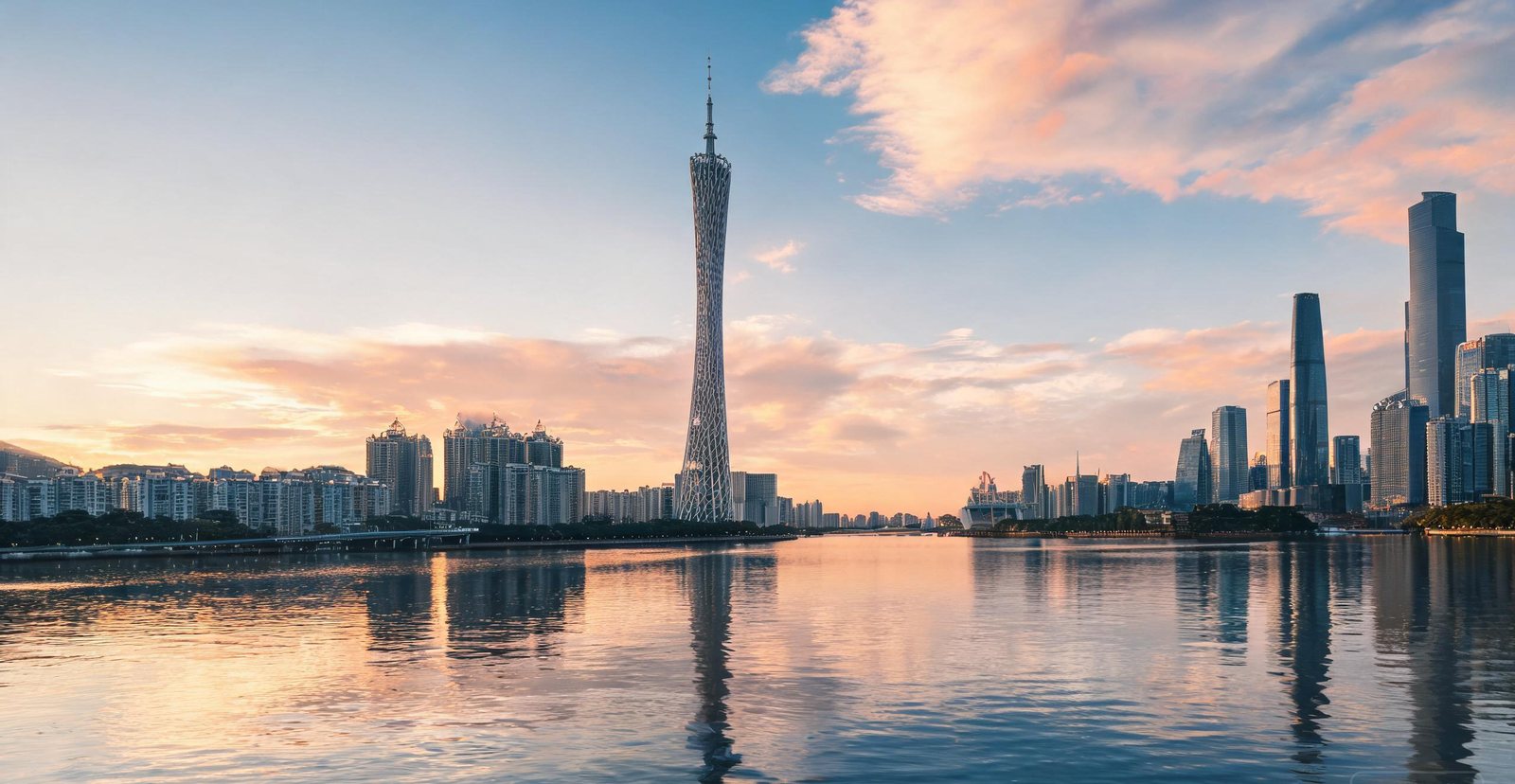
The Canton Tower above the Pearl River skyline at dusk
#3 — Guangzhou
Guangzhou: The Southern Gateway
China's original trading port, Guangzhou has been open to the world for two thousand years — and its Cantonese food, dim-sum mornings and Pearl River skyline are the reward.
Walk Shamian Island and the arcaded colonial riverside.
Eat dim sum in the old tea houses of Liwan.
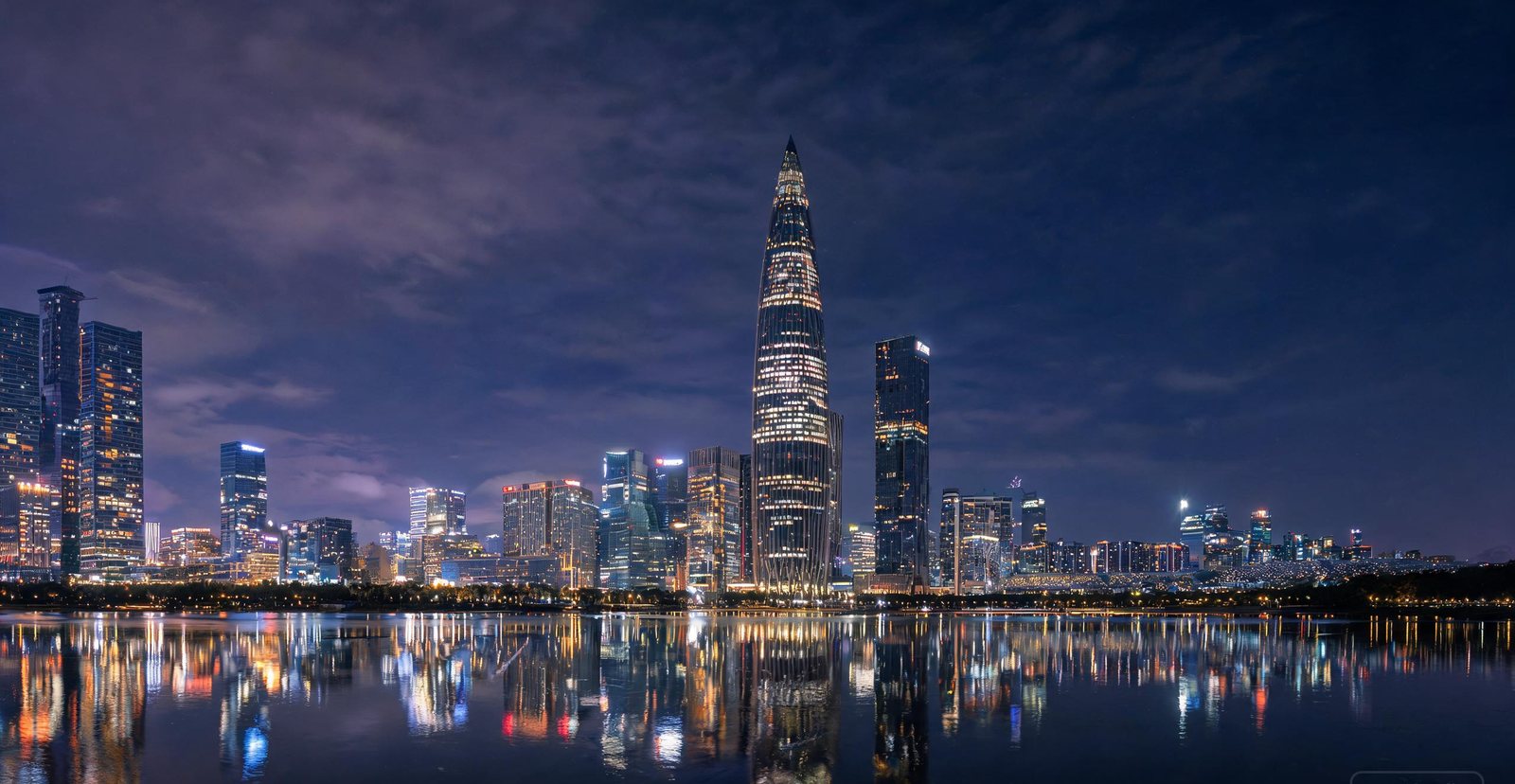
Shenzhen's Futian district skyline after dark
#4 — Shenzhen
Shenzhen: From Fishing Village to Tech Capital
Forty years ago Shenzhen was a fishing town of 30,000 people. Today it is a metropolis of over 17 million and the hardware capital of the world — home to Huawei, Tencent and DJI, and to Huaqiangbei, the electronics market where you can buy almost any component ever made.
Huaqiangbei — the market where you can buy any component ever made.
Take the ferry or the metro to see the Bay Area skyline at night.
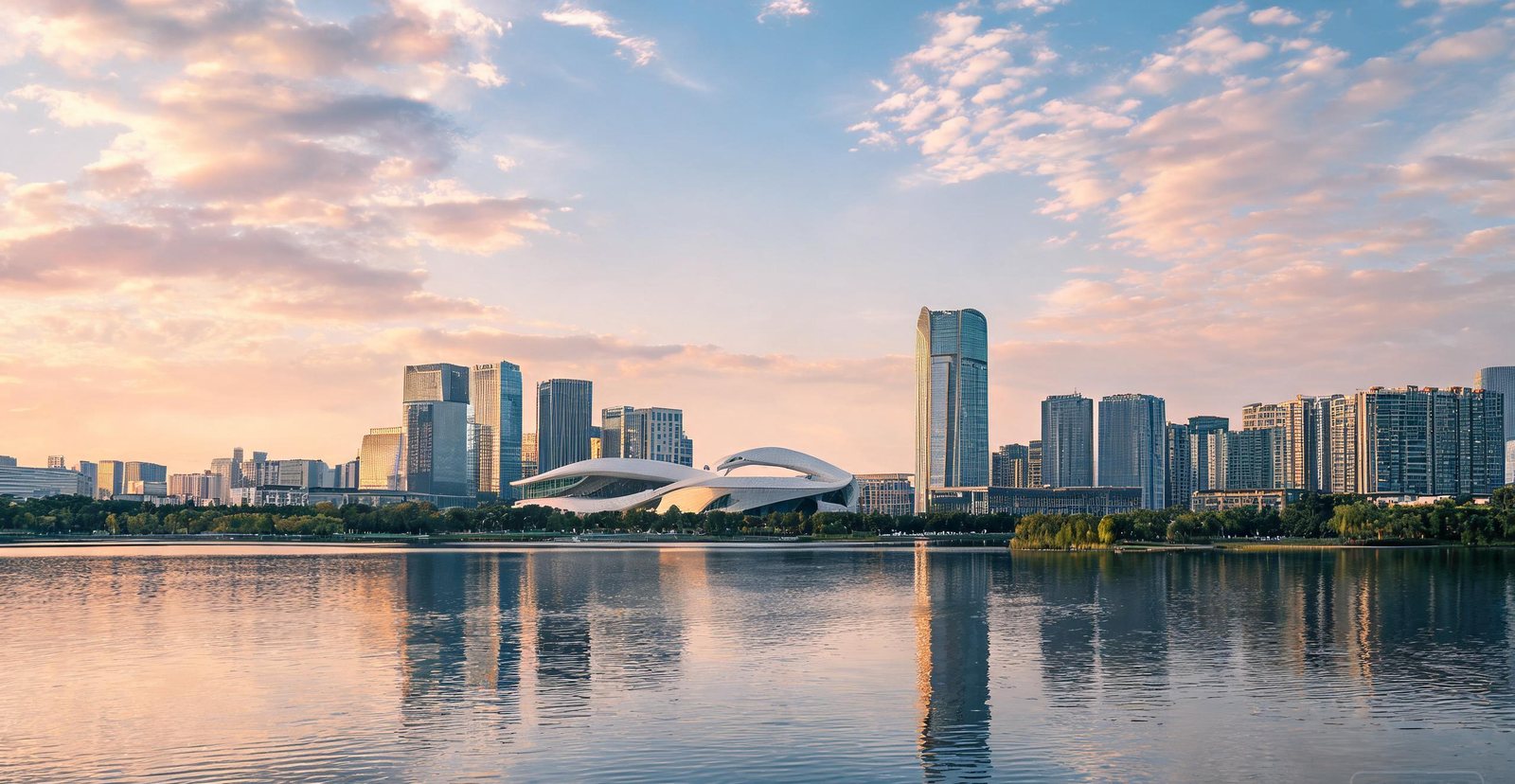
The lakeside towers of Hefei's Swan Lake district
#5 — Hefei
Hefei: The Quiet Science Capital
Once an unassuming provincial town, Hefei became one of China's fastest-rising science cities — home to a top technical university and a hub for quantum research and electric vehicles.
See the Swan Lake CBD and the Anhui Provincial Museum.
Escape to Chaohu Lake, one of China's five largest freshwater lakes.
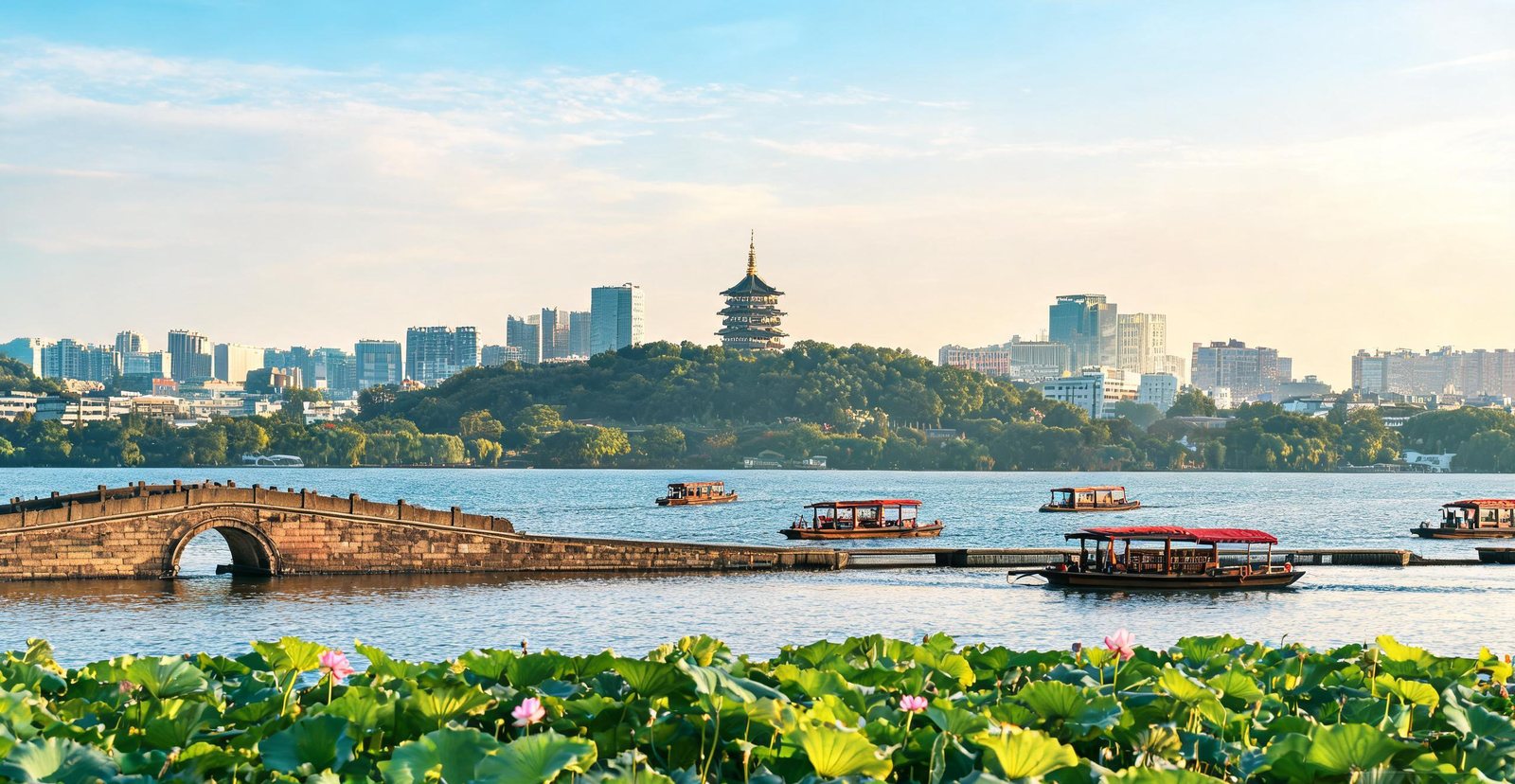
West Lake and the Hangzhou skyline at golden hour
#6 — Hangzhou
Hangzhou: E-commerce Capital on a 1,000-Year-Old Lake
Headquarters of Alibaba and a showcase for China's cashless economy, Hangzhou still revolves around West Lake — a UNESCO site praised by poets for a thousand years. Ride the 15 km loop at sunrise, then taste Longjing tea in the hills where it grows.
West Lake — rent a bike and ride the 15 km loop at sunrise.
Taste Longjing tea in the village where it is grown.
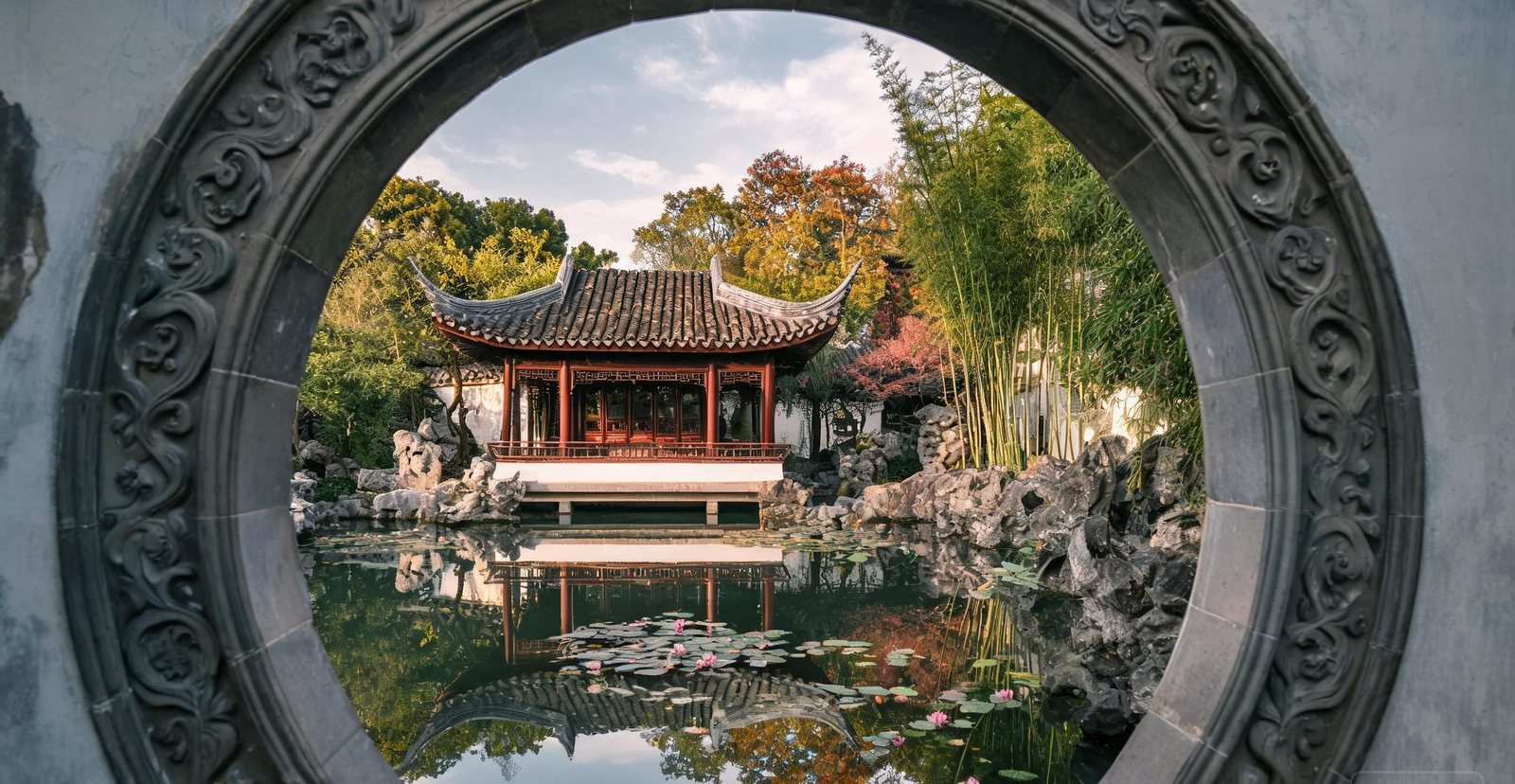
A moon gate and bonsai in a classical Suzhou garden
#7 — Suzhou
Suzhou: Gardens, Canals and Silicon
Suzhou keeps two faces — the classical gardens and canal lanes that UNESCO protects, and the industrial parks that make it China's semiconductor and medical-device capital.
See the Humble Administrator's Garden and the Tiger Hill pagoda.
Cruise the Grand Canal lanes of the old town by night.
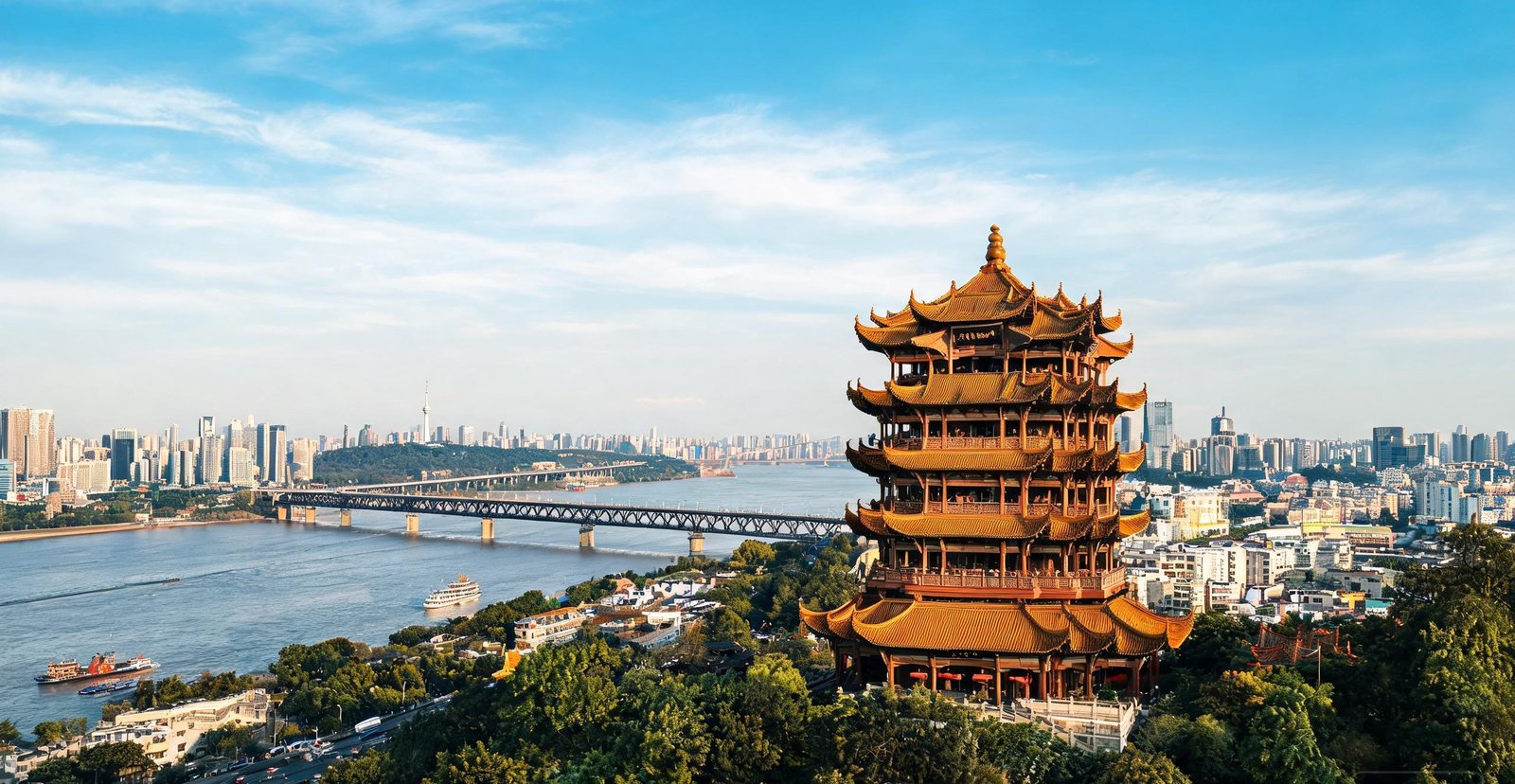
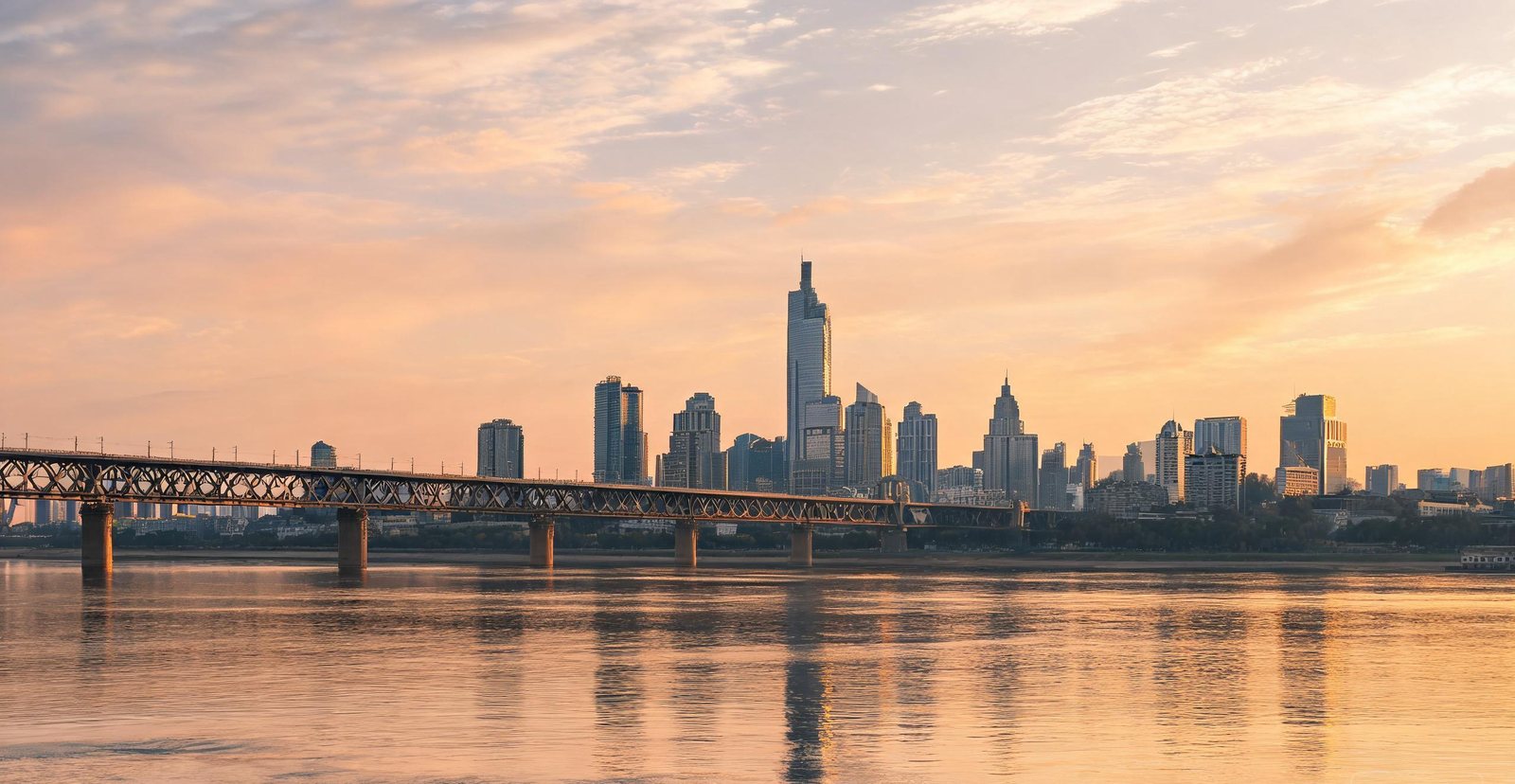
Yellow Crane Tower above the Yangtze River in Wuhan
#8 — Wuhan
Wuhan: Three Towns, One River
Where the Yangtze meets the Han, Wuhan is really three cities in one — a student megacity of over a million undergraduates, an industrial giant, and the home of Yellow Crane Tower.
Climb Yellow Crane Tower for the Yangtze bridge view.
Cross the river by ferry and eat hot dry noodles for breakfast.
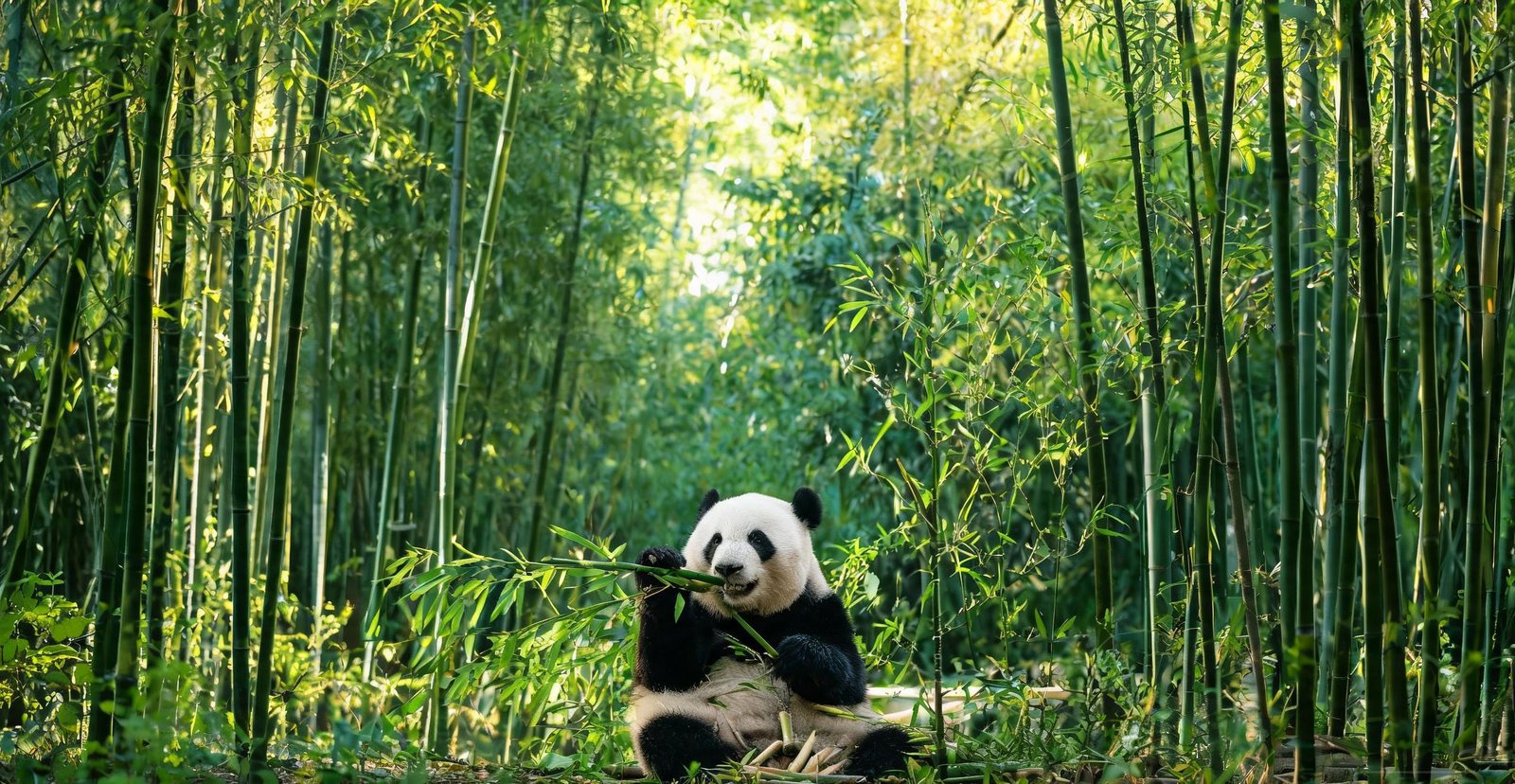
A giant panda cub climbing through bamboo at Chengdu
#9 — Chengdu
Pandas, Hotpot, and the Slow Life of Sichuan
The giant panda breeding base is non-negotiable — arrive at 8:00am before the crowds, and get up close to cubs in spring. But Chengdu is also the capital of Sichuan cuisine and one of China's most relaxed major cities: teahouses, mahjong, and a pace that says sit down and stay a while.
Visit Dujiangyan — a 2,200-year-old irrigation system still working today.
Try hotpot at Haidilao — yes, it's a chain, yes, it's magic.
Take the high-speed rail to Leshan for the Giant Buddha.
The Nanjing skyline rising along the Yangtze River
#10 — Nanjing
Nanjing: Ancient Walls, New Labs
Nanjing pairs a Ming-dynasty city wall with one of China's strongest university and software sectors — a Yangtze-delta hub of chips and AI behind eight-hundred-year-old city gates.
See the Nanjing Yangtze River Bridge and the Jiangbei new district.
Walk the Ming City Wall between the old gates at dusk.
Natural Wonders
Mountains, Rivers and Karst
From karst peaks and salt flats to volcanoes, rainforest and the world’s deepest canyon — the landscapes that define China.
Tap a marker on the map — then swipe left or right, or use the arrows, to browse the cities.
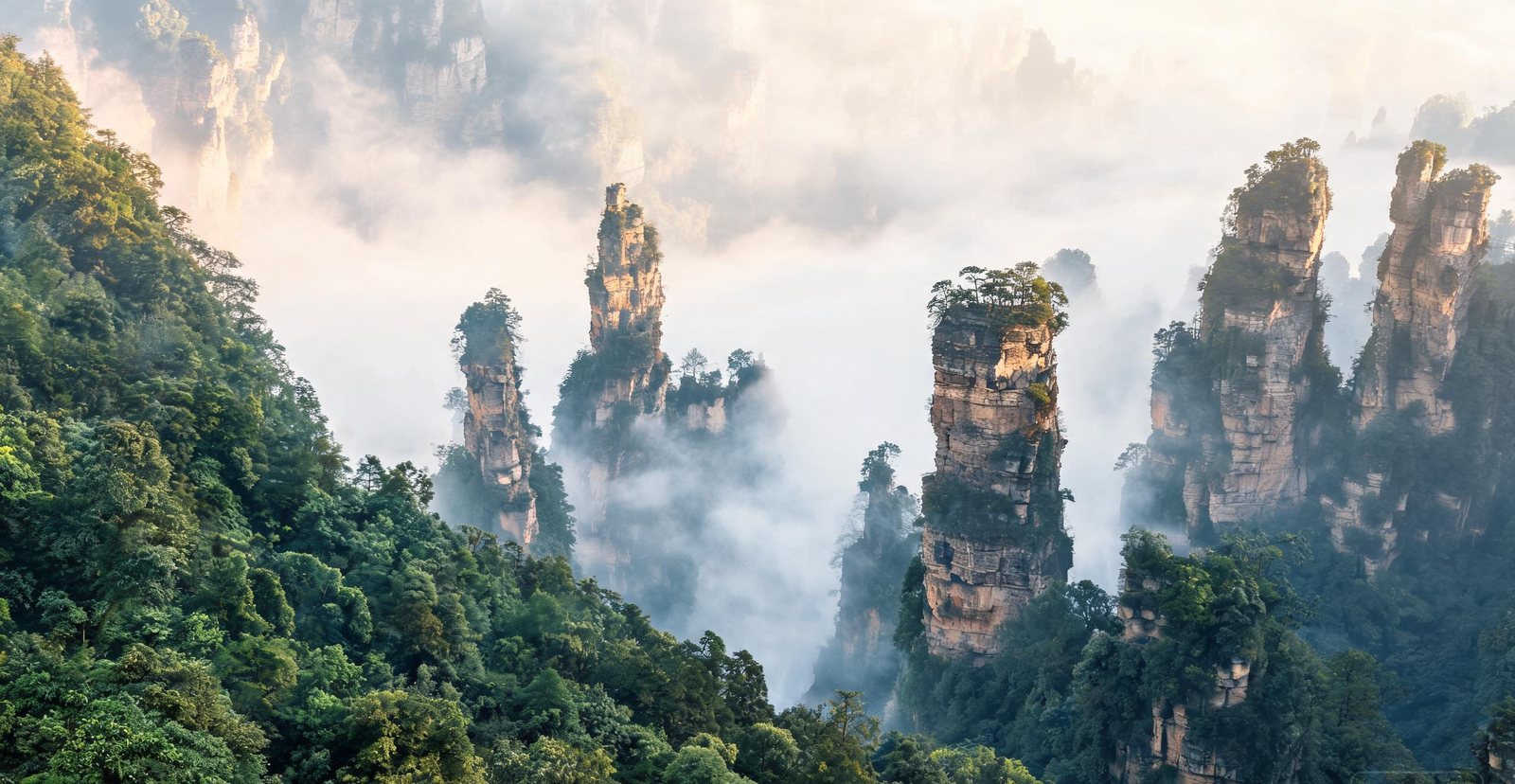
Sandstone pillars rising out of the mist in Zhangjiajie
#1 — Zhangjiajie
The Floating Mountains That Inspired Avatar
3,000 sandstone pillars rise up to 1,000 meters from dense subtropical forest. Ride the Bailong Elevator (highest outdoor elevator on Earth) to the top of Yuanjiajie, then walk the glass bridge at Grand Canyon — if your nerves allow.
3–4 days minimum — there's a lot to cover.
Weather is unpredictable; bring layers and waterproofs.
Avoid weekends and Chinese public holidays.
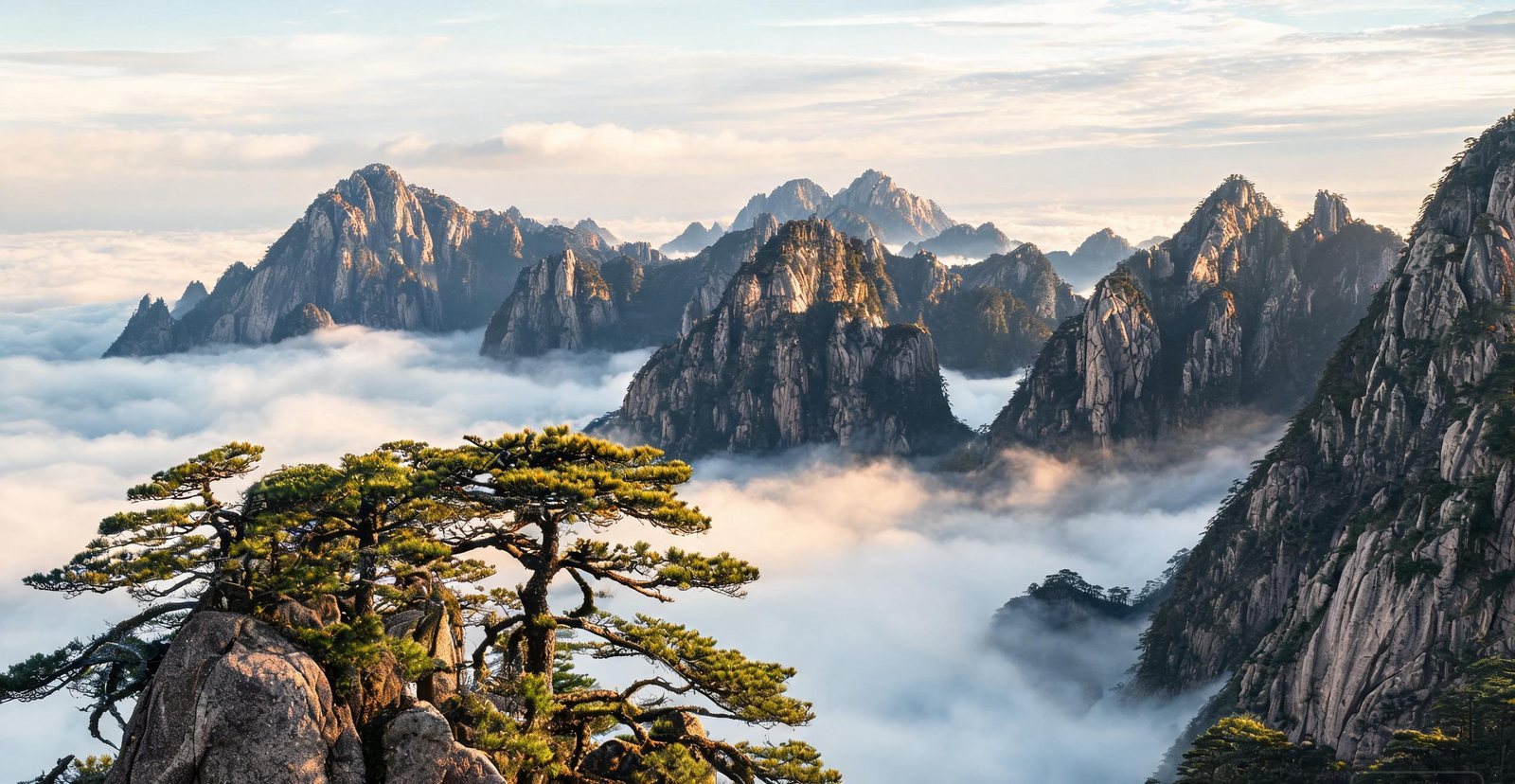
Pines on granite peaks above a sea of cloud at Huangshan
#2 — Huangshan
Huangshan: The Mountain in Ink
Granite peaks, sea-of-cloud mornings and gnarled pines clinging to cliff edges — Huangshan is the landscape Chinese painters spent a thousand years trying to capture.
Sunrise at Bright Summit — China's best-known dawn.
Soak in the hot springs at the foot of the mountain.
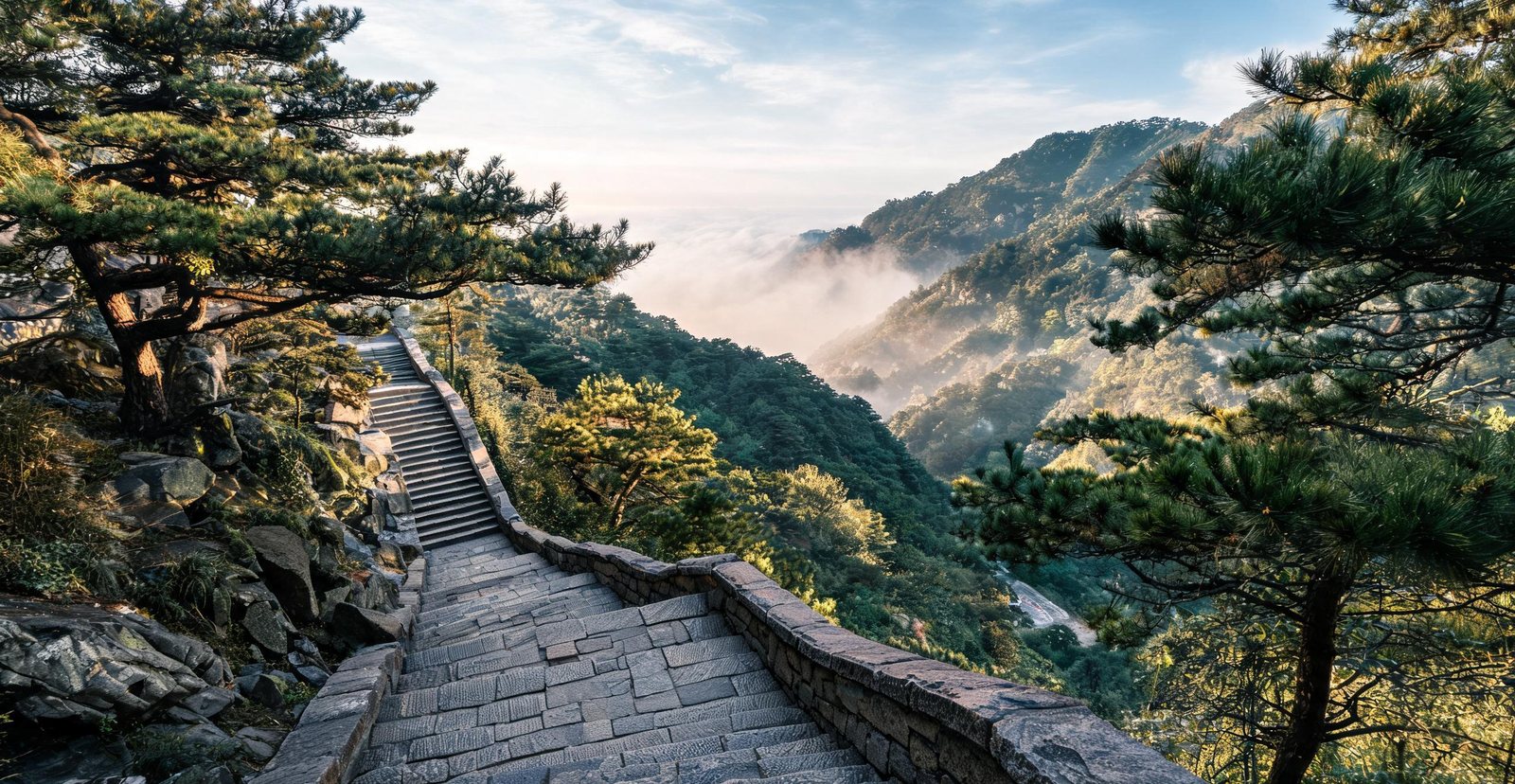
A stone stairway climbing the flank of Mount Tai toward sunrise
#3 — Mount Tai
Mount Tai: The Most Climbed Peak on Earth
For three thousand years emperors came to Mount Tai to announce their rule to heaven. Today you can climb the 7,200 stone steps and watch sunrise from the summit.
Climb the Eighteen Bends stairway to the South Gate of Heaven.
See the Dai Temple and the stone inscriptions at the base.
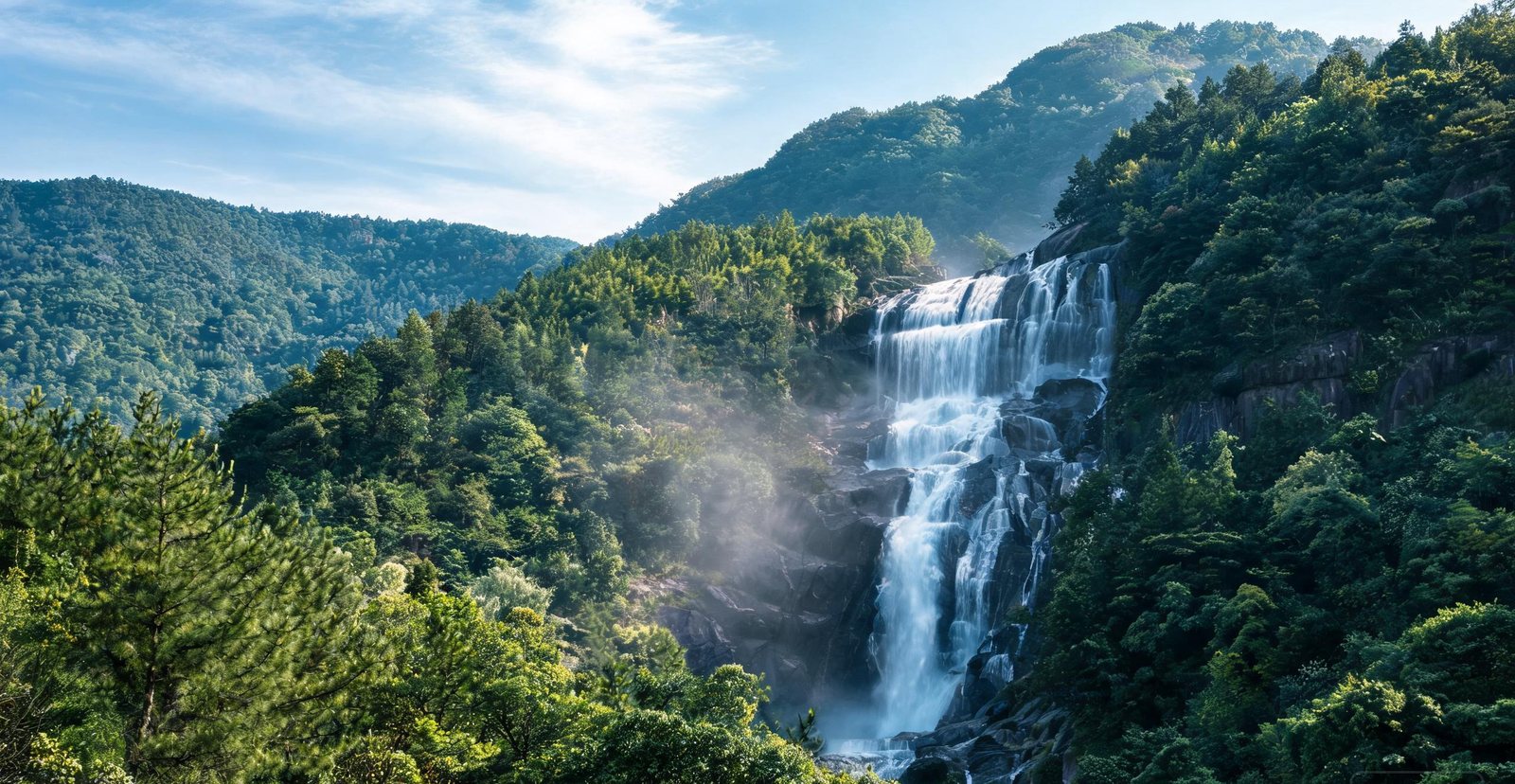
A waterfall plunging through green cliffs on Mount Lu
#4 — Mount Lu
Mount Lu: Waterfalls and Mountain Mists
Rising 1,474 metres out of the Yangtze plain, Mount Lu hides waterfalls, temples and a European-style mountain village in clouds that inspired Chinese poetry for centuries.
See the Three-Step Spring waterfall at Sandie Springs.
Walk Meilu Villa and the old mountain town of Guling.
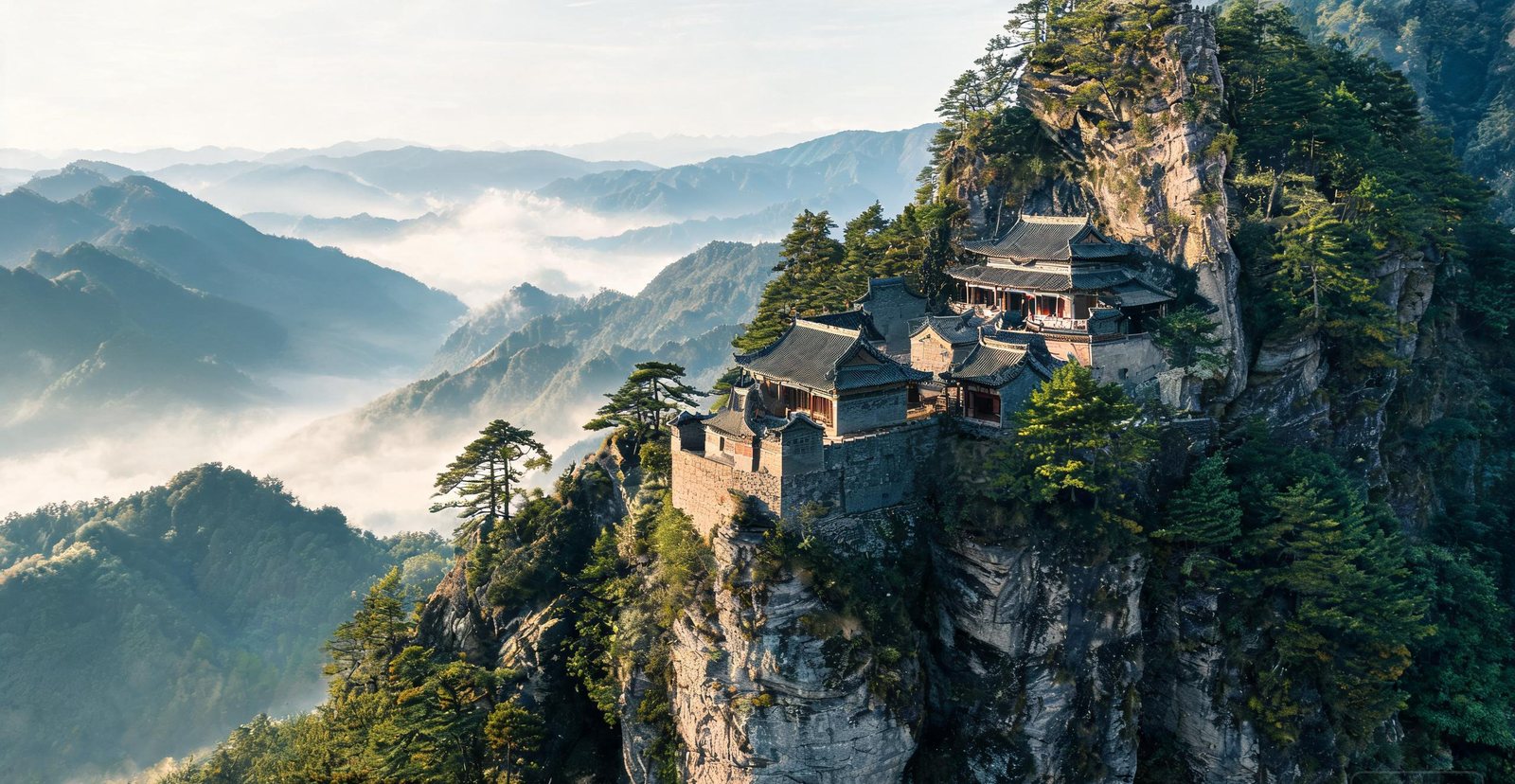
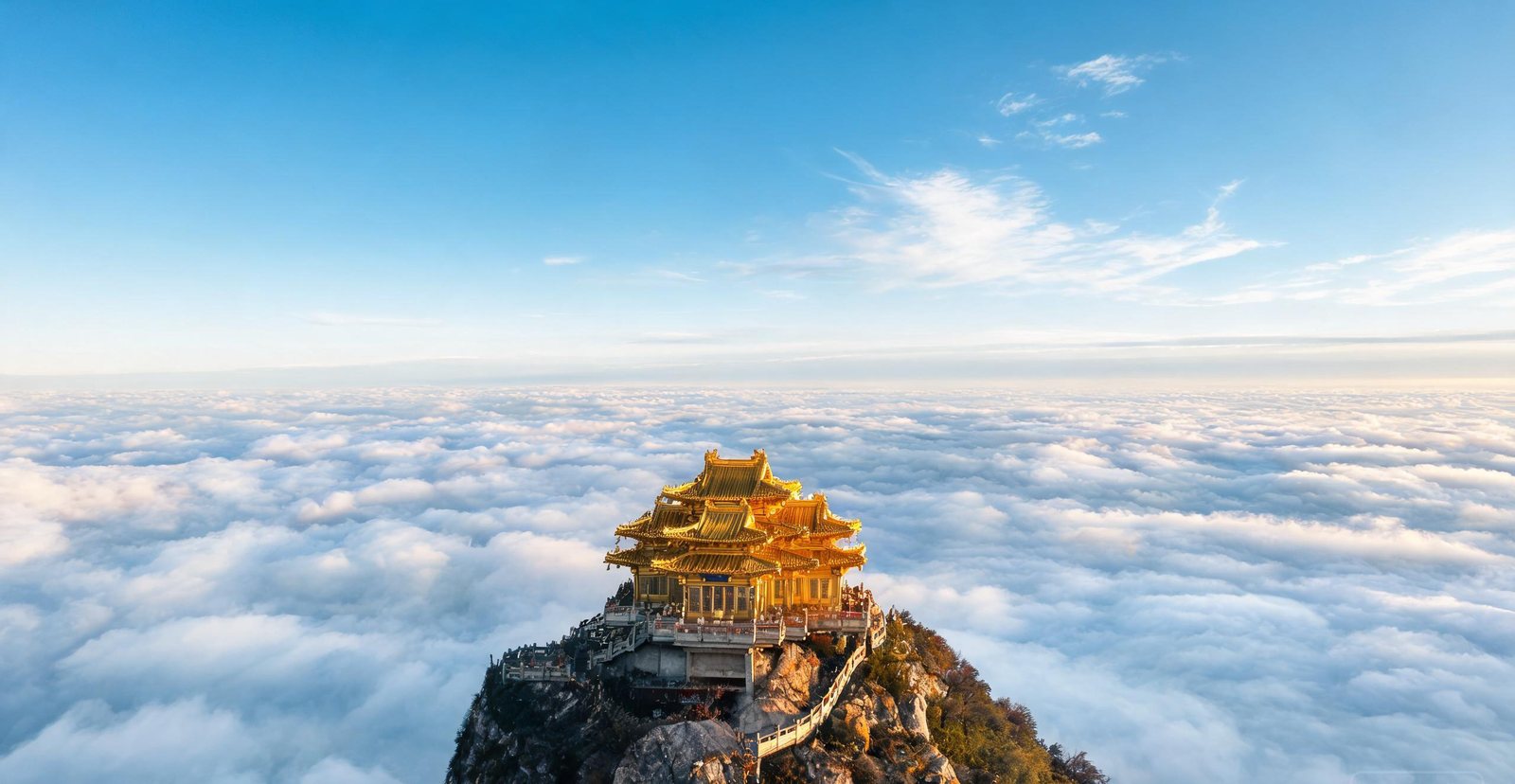
Taoist temple halls stacked on a misty ridge at Wudangshan
#5 — Wudang Mountains
Wudang: Cradle of Tai Chi
The birthplace of tai chi and the Taoist martial arts, Wudang is a UNESCO mountain of ancient temple complexes stacked on cliffs and wrapped in cloud.
See the Golden Hall and the Nanyan Palace on the cliff face.
Watch monks practise tai chi in the courtyards at dawn.
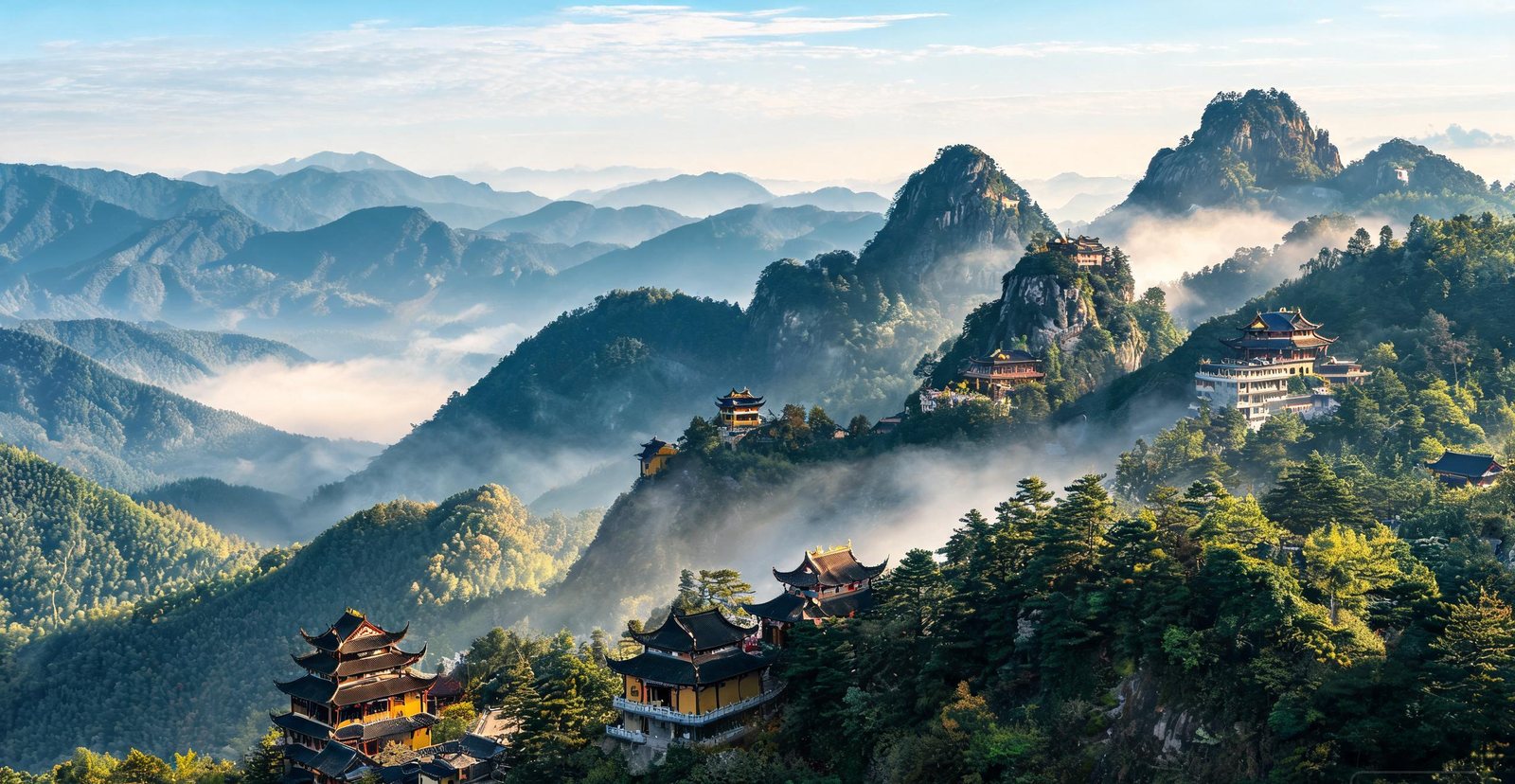
Temple roofs and incense smoke on Jiuhua Mountain
#6 — Jiuhua Mountain
Jiuhua: One of the Four Sacred Buddhist Mountains
Named for its nine lotus-like peaks, Jiuhua is a pilgrimage mountain of 99 temples, drifting incense smoke and Buddhist libraries fourteen centuries old.
Climb to Tiantai Peak past the temples lining the way.
Visit the Body Hall, where mummified monks are venerated.
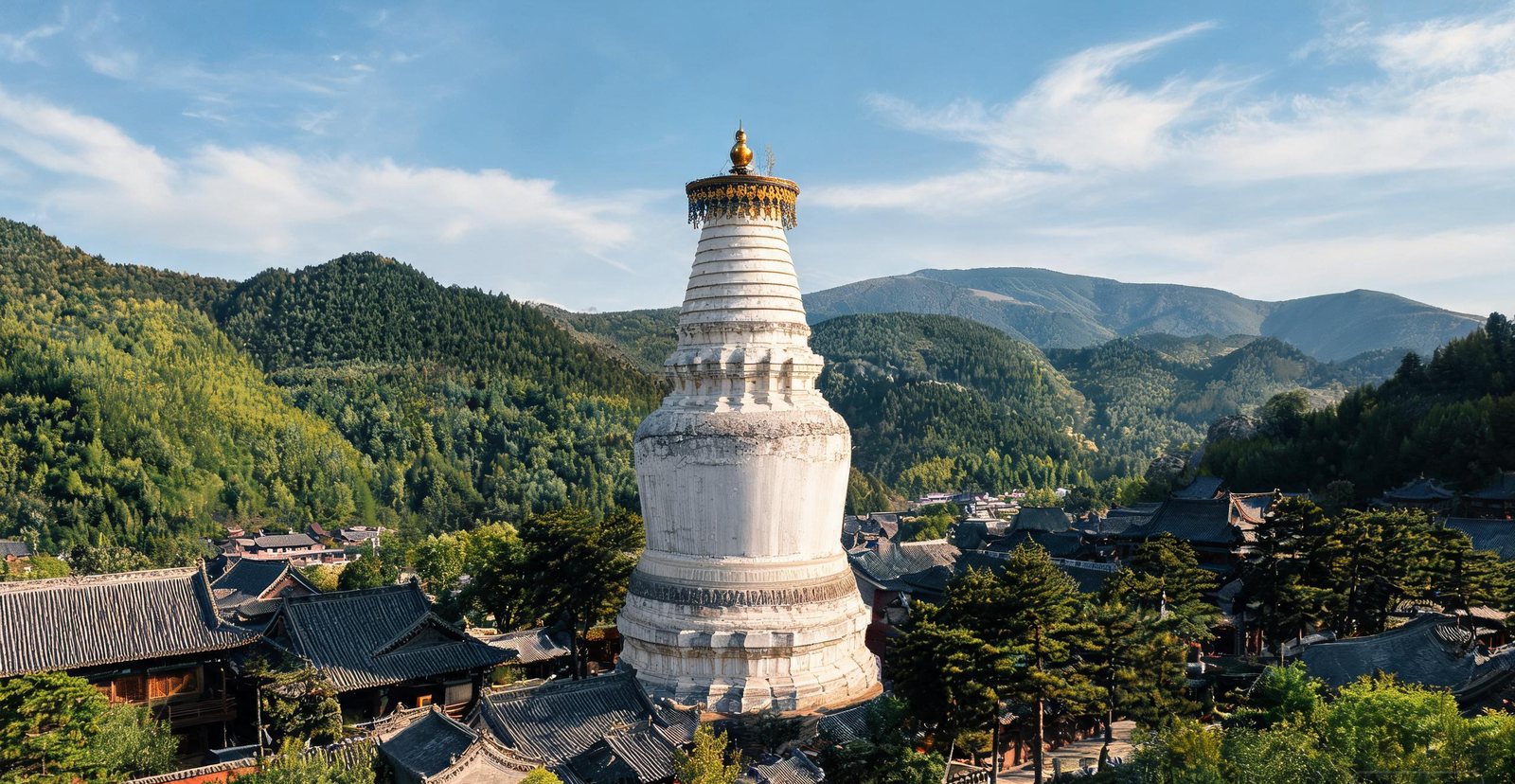
The Great White Pagoda and temple roofs at Wutai Mountain
#7 — Wutai Mountain
Wutai: The Buddhist Roof of North China
Five flat-topped peaks, cool all summer, make Wutai the most revered Buddhist mountain in North China — its wooden halls date back to the Tang dynasty.
See the Nanchan and Foguang temples, the oldest wooden halls in China.
Walk the Great White Pagoda in the town of Taihuai.
Cloud sea below the golden summit statue on Mount Emei
#8 — Mount Emei
Emei: Monkey Troops and a Golden Summit
The tallest of China's four sacred Buddhist mountains rises 3,099 metres — monkeys patrol the trails and the golden summit statue looks out over an ocean of cloud.
Ride the cable car to the Golden Summit for the cloud sea.
Watch the monkeys make off with snacks at Qingyin Pavilion.
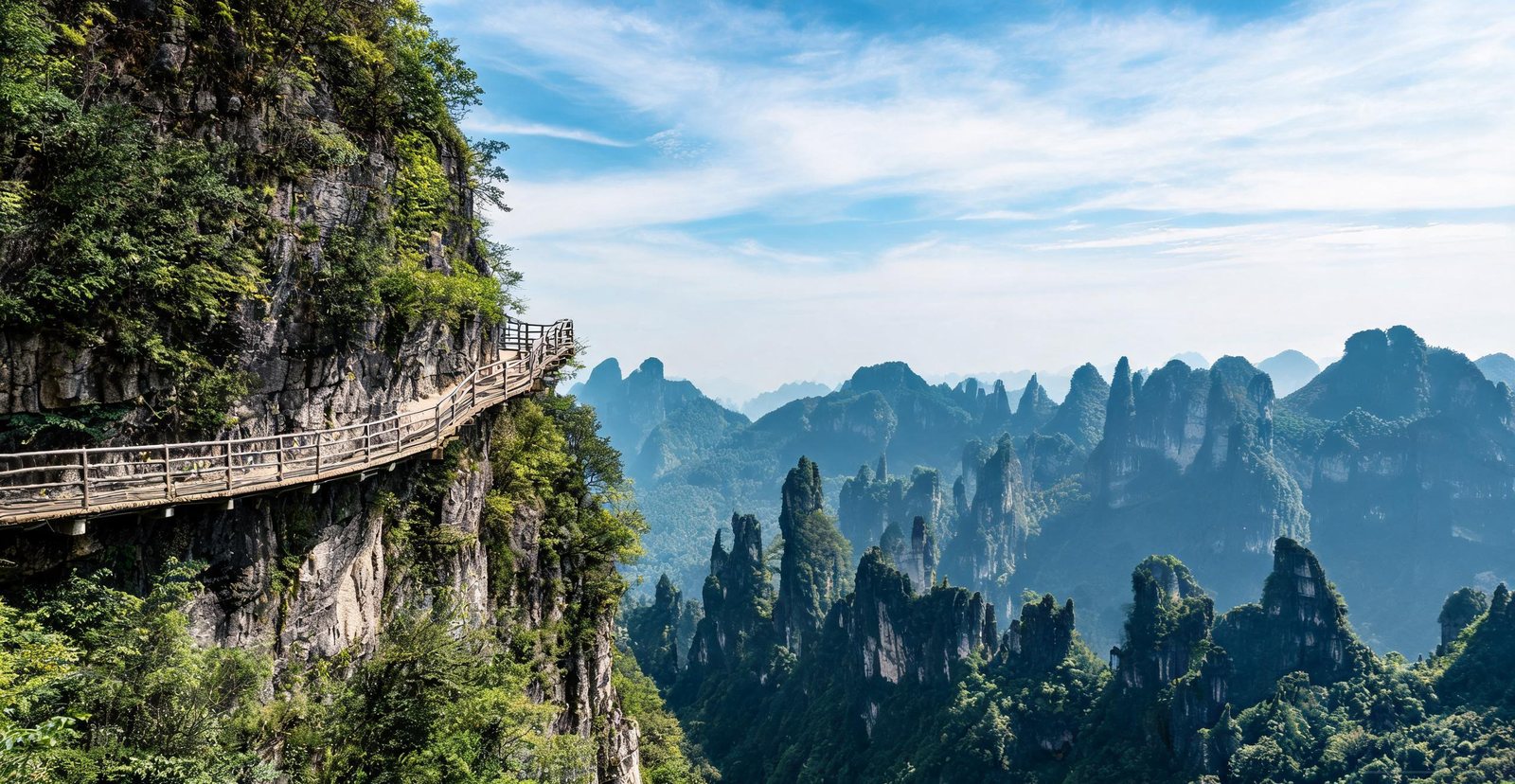
Karst spires and a cliff walkway inside Enshi Grand Canyon
#9 — Enshi Grand Canyon
Enshi Grand Canyon: Karst Spires and a Cliff Walk
Enshi hides a canyon of 300-metre karst columns, a walkway bolted to a vertical cliff, and the slender 'One Incense Stick' spire that looks too thin to stand.
Walk the cliff-hugging boardwalk high above the chasm.
Descend into the Yunlong Ground Rift, a green canyon of its own.
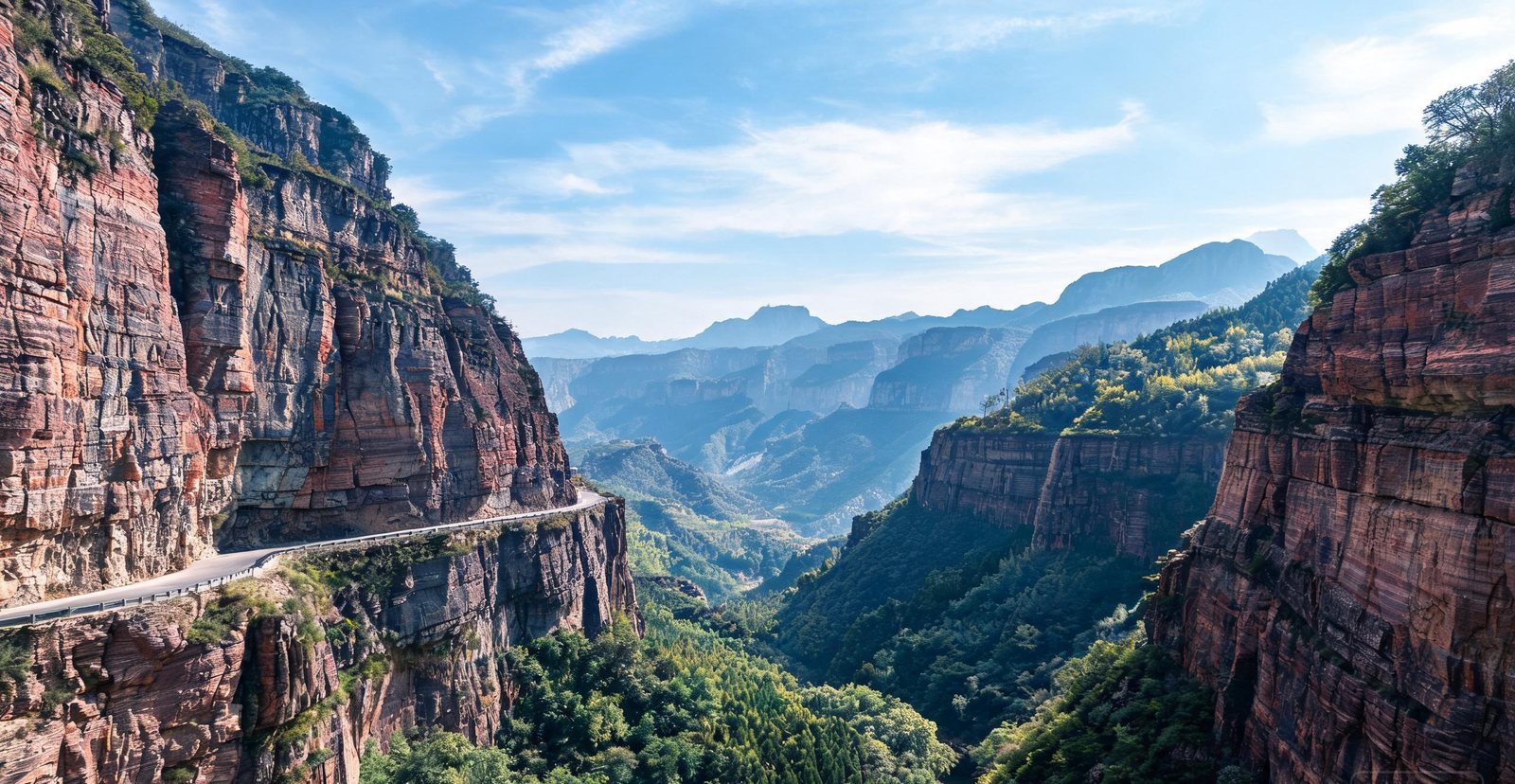
A road carved along the cliff wall of the Taihang Grand Canyon
#10 — Taihang Grand Canyon
Taihang Grand Canyon: Cliff Gorges of the North
Cut by the Taihang range along the Hebei-Henan border, this canyon walls a gorge of plunging cliffs, hanging villages and glass viewing platforms.
Drive the Taihang Sky Road, a highway carved along a cliff ledge.
Walk the Peach Blossom Valley gorge in early spring.
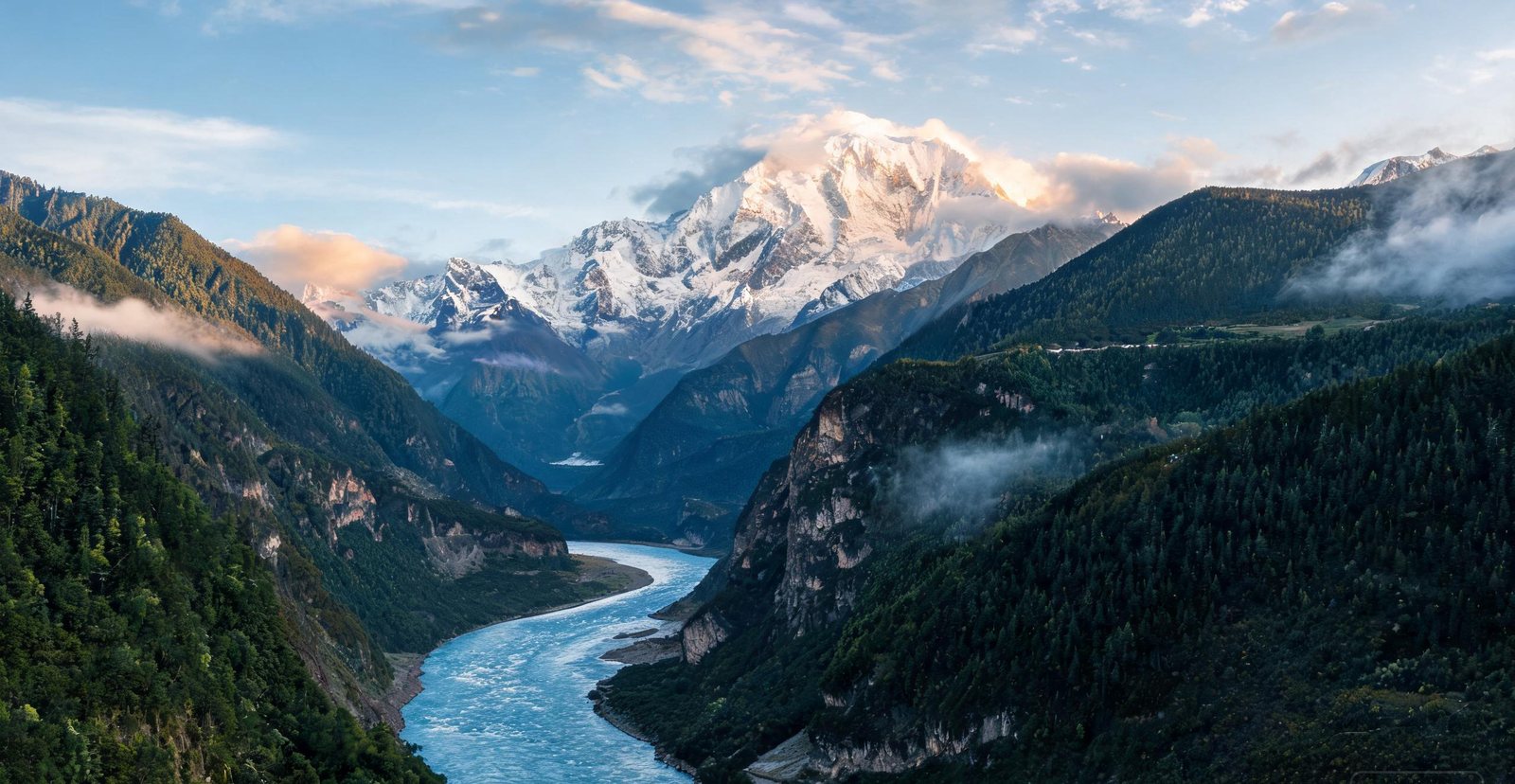
The Yarlung Tsangpo river bending around Namcha Barwa
#11 — Yarlung Tsangpo Grand Canyon
Yarlung Tsangpo: The World's Deepest Canyon
The Yarlung Tsangpo Great Canyon plunges 6,009 metres — deeper than any other on earth — then bends around the 7,782-metre peak of Namcha Barwa.
View Namcha Barwa from the main canyon lookout.
Come in spring for the peach blossoms of Nyingchi.
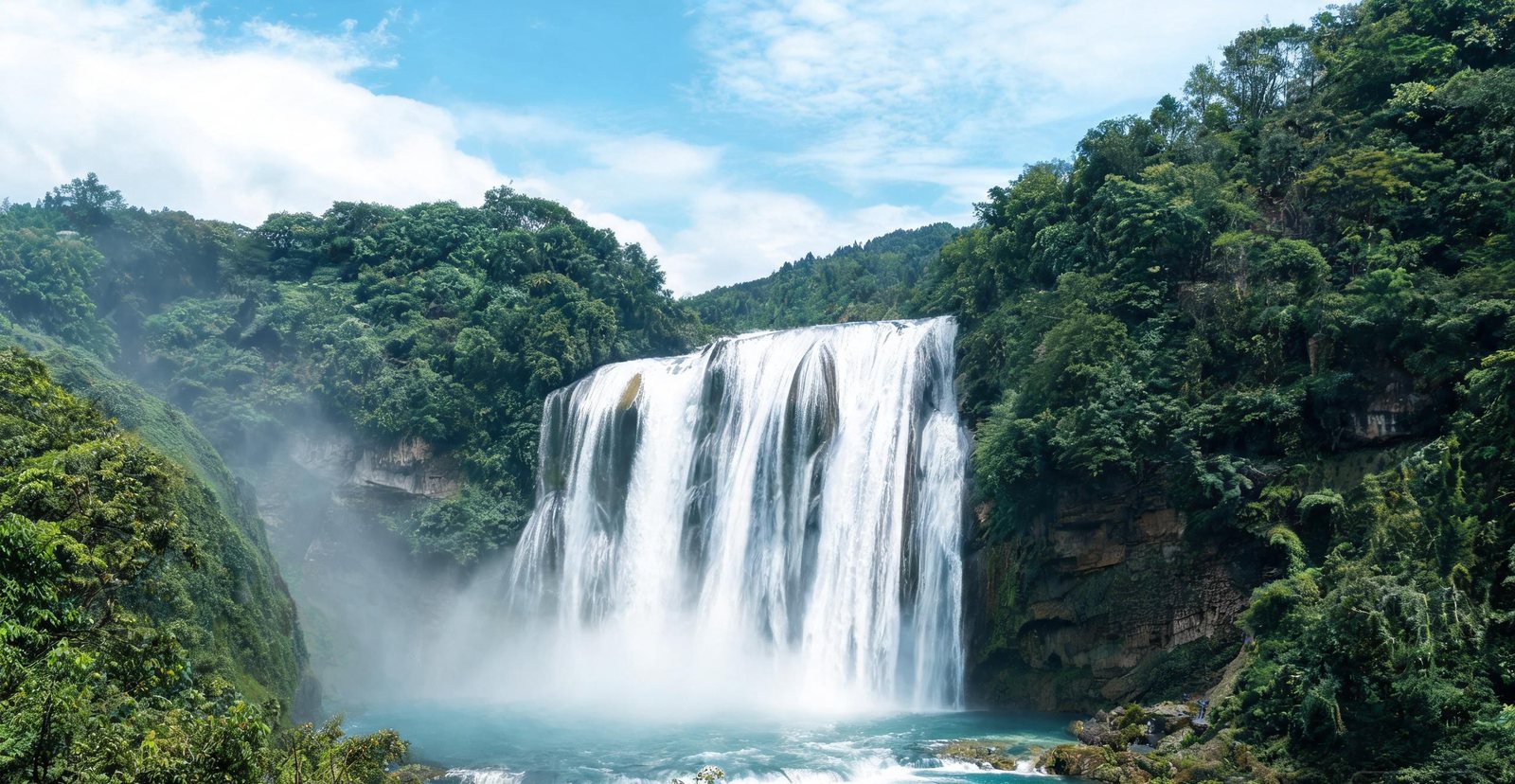
Huangguoshu waterfall thundering into a green gorge
#12 — Huangguoshu Falls
Huangguoshu: Asia's Great Curtain Waterfall
Seventy-eight metres high and 101 wide, Huangguoshu is the largest waterfall in Asia — and a walkway lets you step behind the falling curtain of water.
Walk the Water Curtain Cave behind the falls.
Visit in the rainy season, June to August, for the fullest flow.
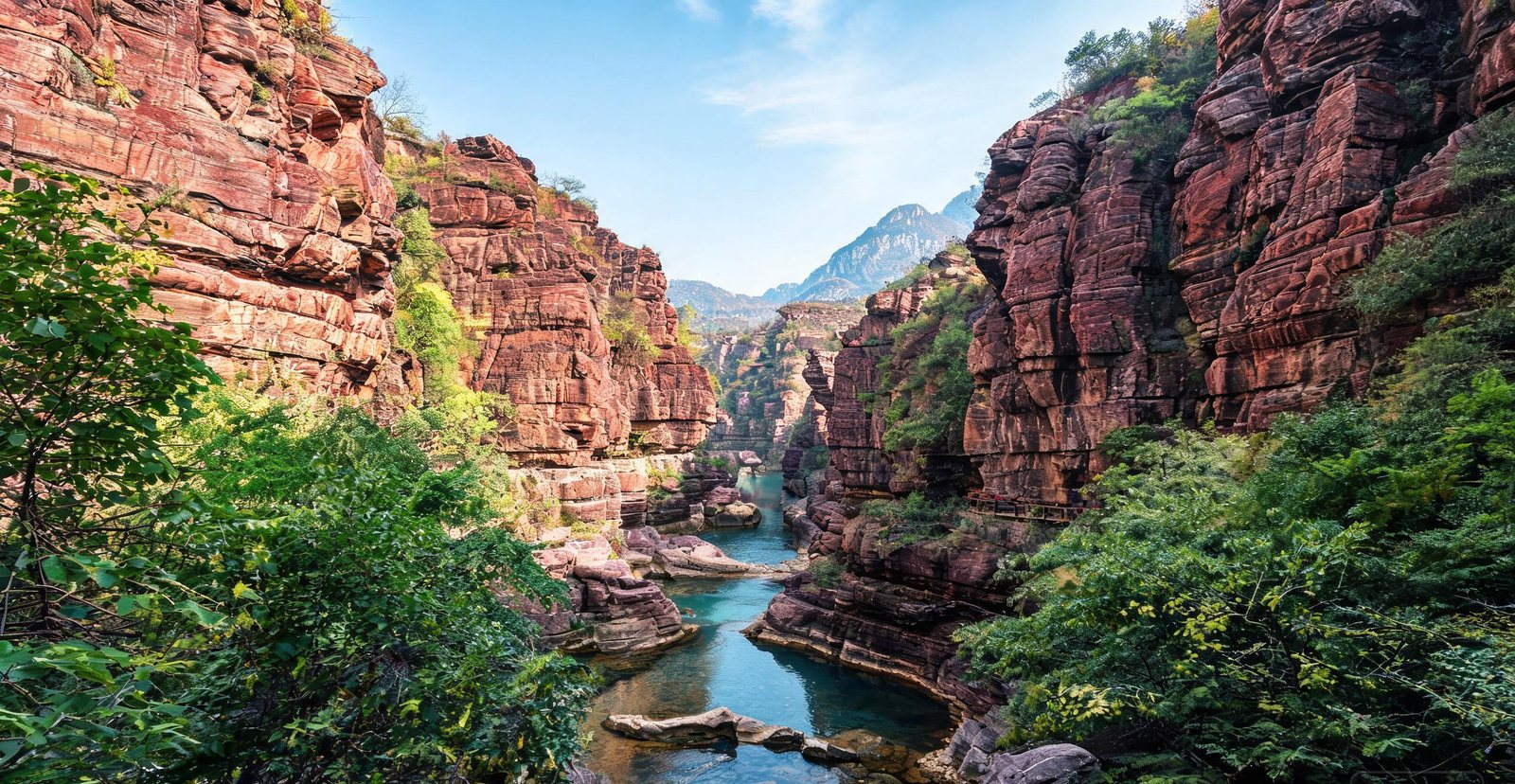
Red rock walls of the Red Stone Gorge at Yuntai Mountain
#13 — Yuntai Mountain
Yuntai: Red Rock Canyons and Terraced Falls
Yuntai Mountain stacks red-rock canyons, a 314-metre single-drop waterfall and the cliff-cut Red Stone Gorge into one easily walked park.
Walk the Red Stone Gorge boardwalk beside the water.
Climb to the Yuntai Sky Waterfall after summer rain.
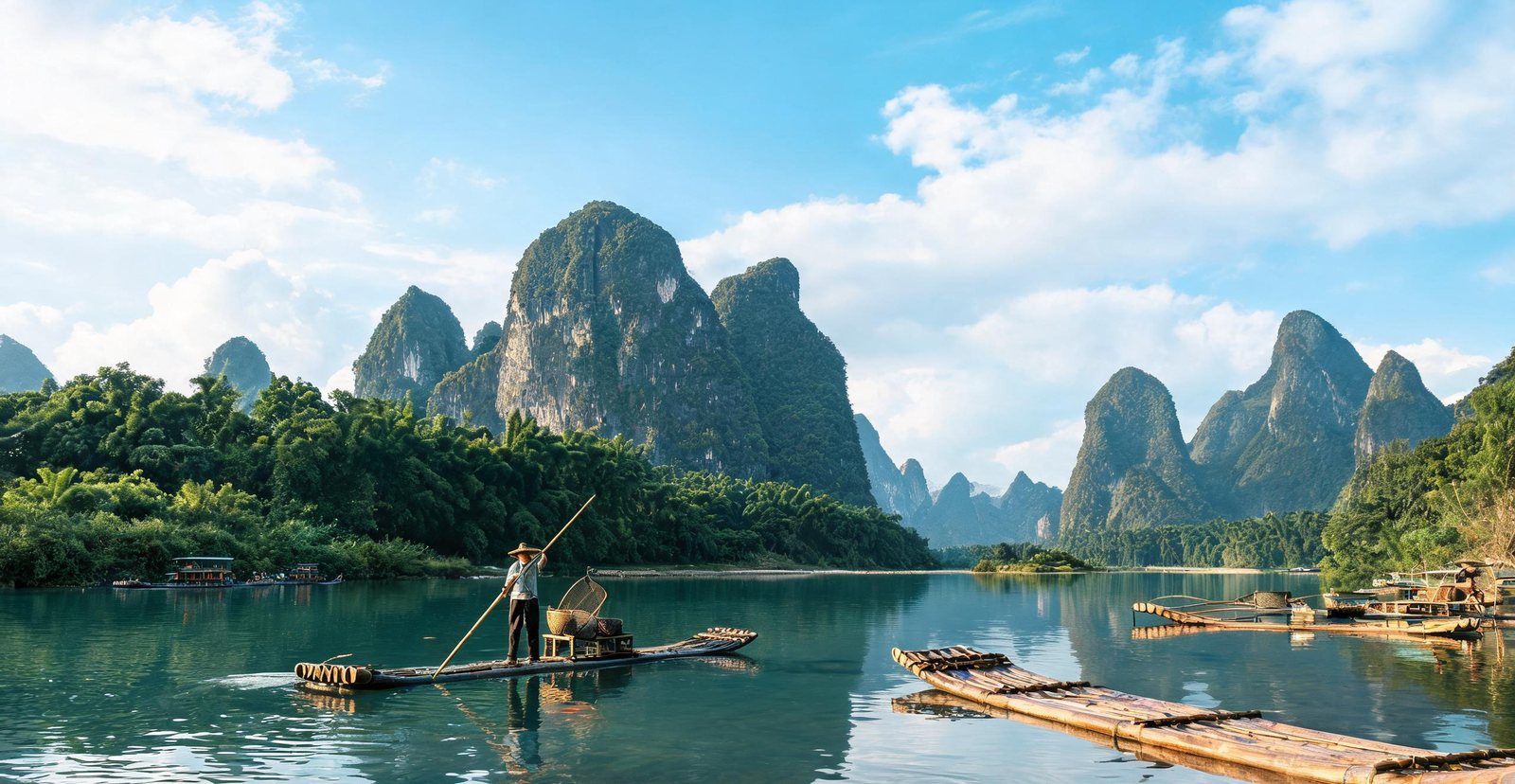
Bamboo rafts drifting past karst peaks on the Li River
#14 — Guilin & Yangshuo
Karst Peaks, River Fog, and Bamboo Rafts
The emerald Li River threads through 1,200 of these jagged limestone karst mountains. The classic 4-hour cruise from Guilin to Yangshuo is worth every minute, but staying overnight in Yangshuo lets you cycle the countryside at dawn — the real magic.
Take the Li River cruise, then cycle or scooter through Moon Hill.
Try Guilin rice noodles — breakfast of champions.
Avoid peak holiday weeks (Golden Week, early Oct).
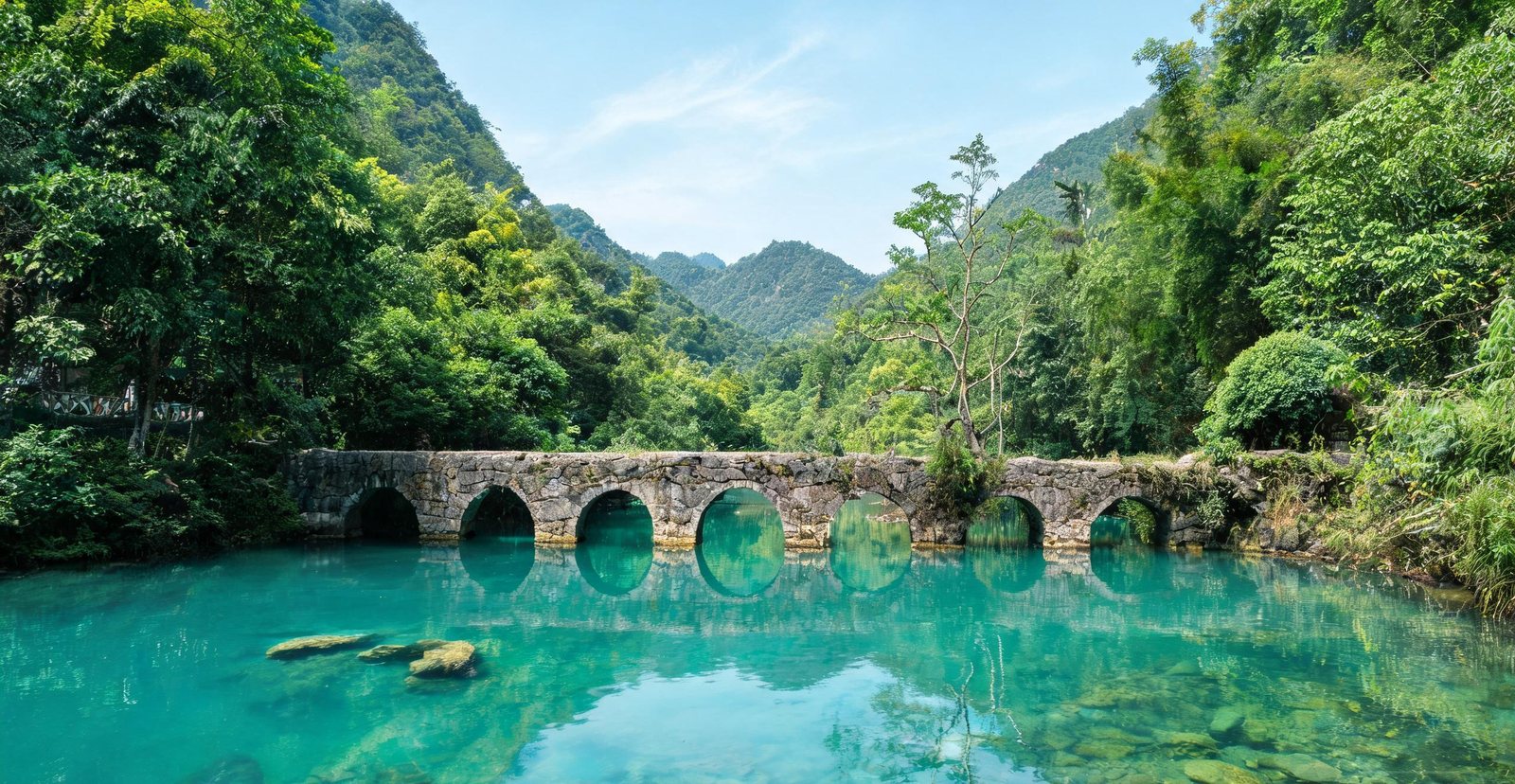
Turquoise terraced pools and a stone bridge at Xiaoqikong
#15 — Libo Xiaoqikong
Xiaoqikong: Seven Arches and Emerald Pools
A seven-arched stone bridge from 1836 gives this Libo gorge its name — but the real draw is the terraced turquoise pools and forest streams tumbling through it.
Photograph the Seven-Arch Bridge reflected in the still water.
Walk the 68-step waterfall and the flooded Water Forest.
Cone-shaped karst hills above rice paddies at Wanfenglin
#16 — Wanfenglin
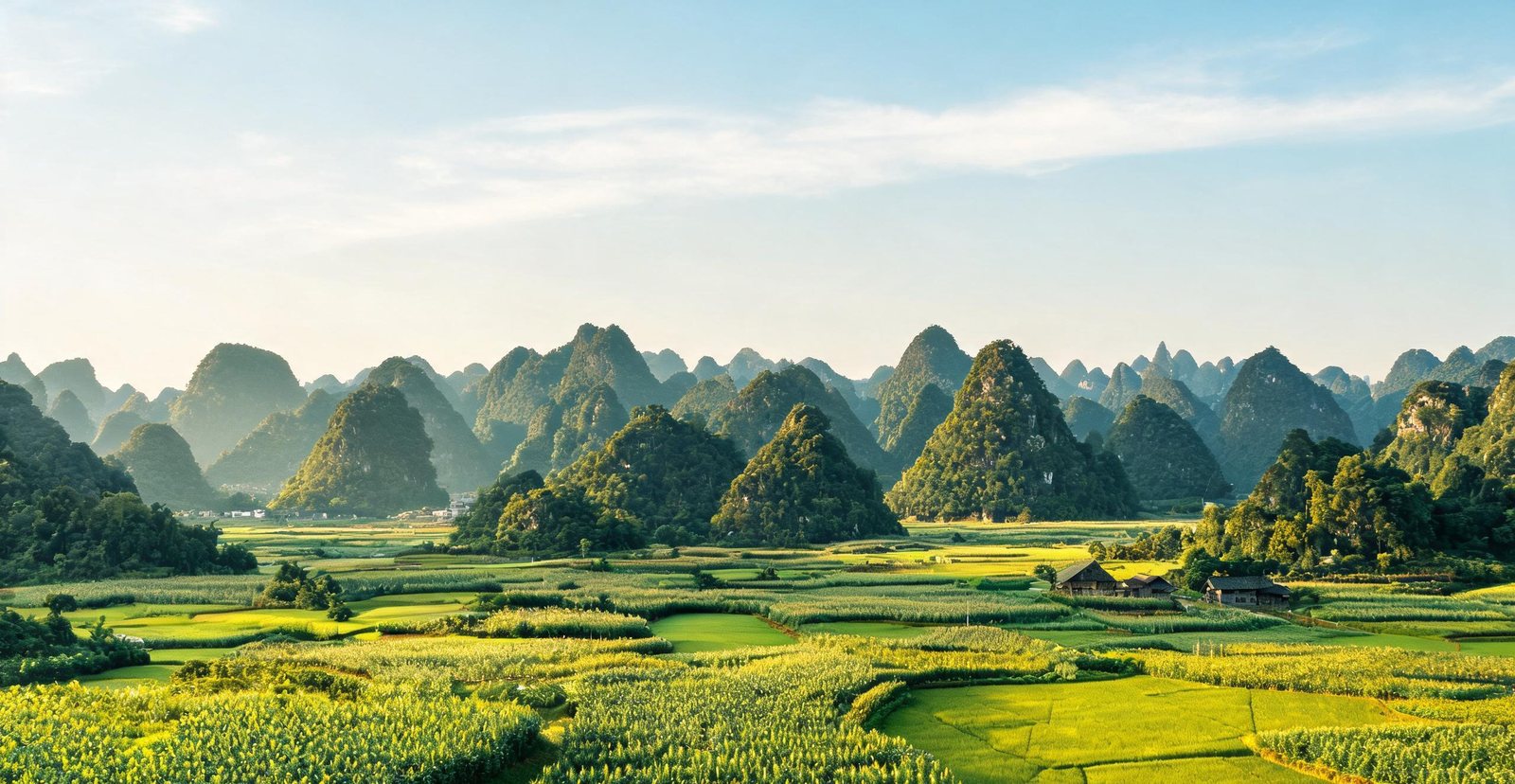
Wanfenglin: Ten Thousand Karst Peaks
Thousands of cone-shaped karst hills rise straight out of the rice paddies around Xingyi — best seen cycling the lanes between the villages below.
Ride a bicycle or e-bike through the paddy fields.
Catch the hills at dawn from the Guanfeng Avenue viewpoints.
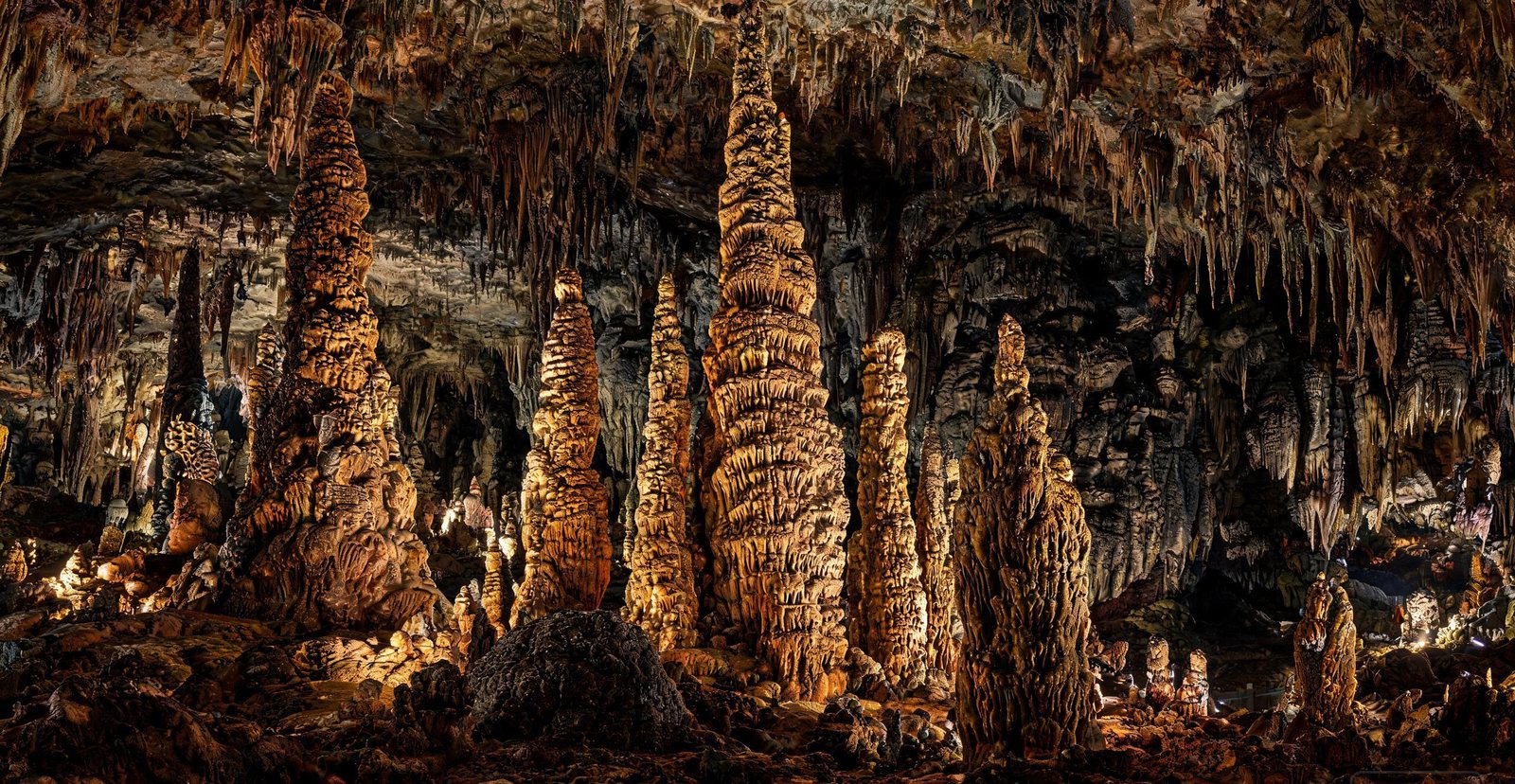
Floodlit stalagmites inside the vast Zhijin Cave
#17 — Zhijin Cave
Zhijin Cave: A Palace Underground
One of the largest caves in the world, Zhijin runs for kilometres beneath Guizhou, filled with forty-metre stalagmites that glisten under coloured light.
See the Silver Rain Tree and the huge 'Helmet' column.
Bring a jacket — the cave stays cool all year round.
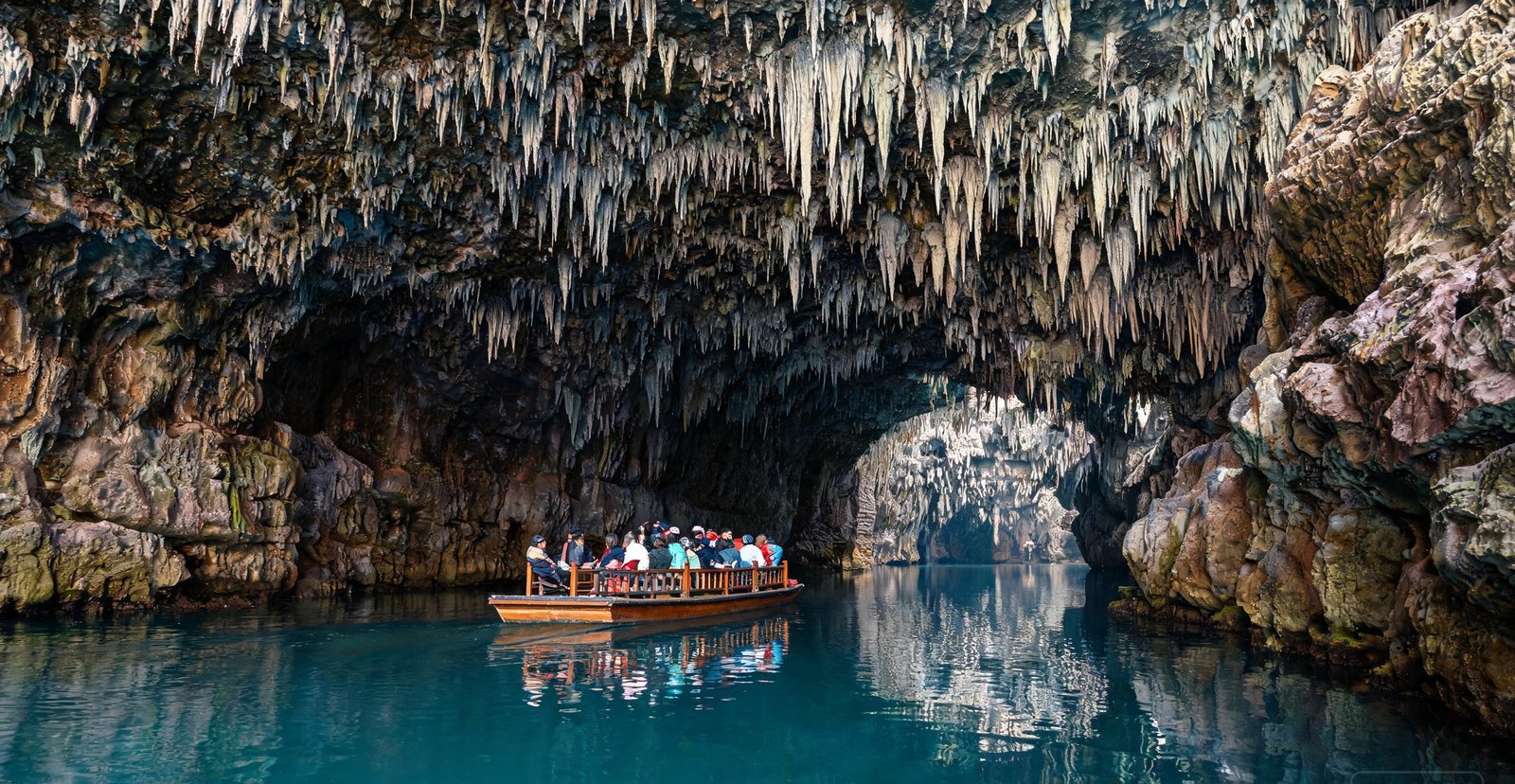
A boat gliding through the floodlit Benxi Water Cave
#18 — Benxi Water Cave
Benxi Water Cave: A River Underground
The longest navigable water cave in Asia, Benxi lets you drift by boat for nearly three kilometres past stalactites and stone falls.
Take the boat tour through the flooded galleries.
Combine it with the Benxi Geological Museum next door.
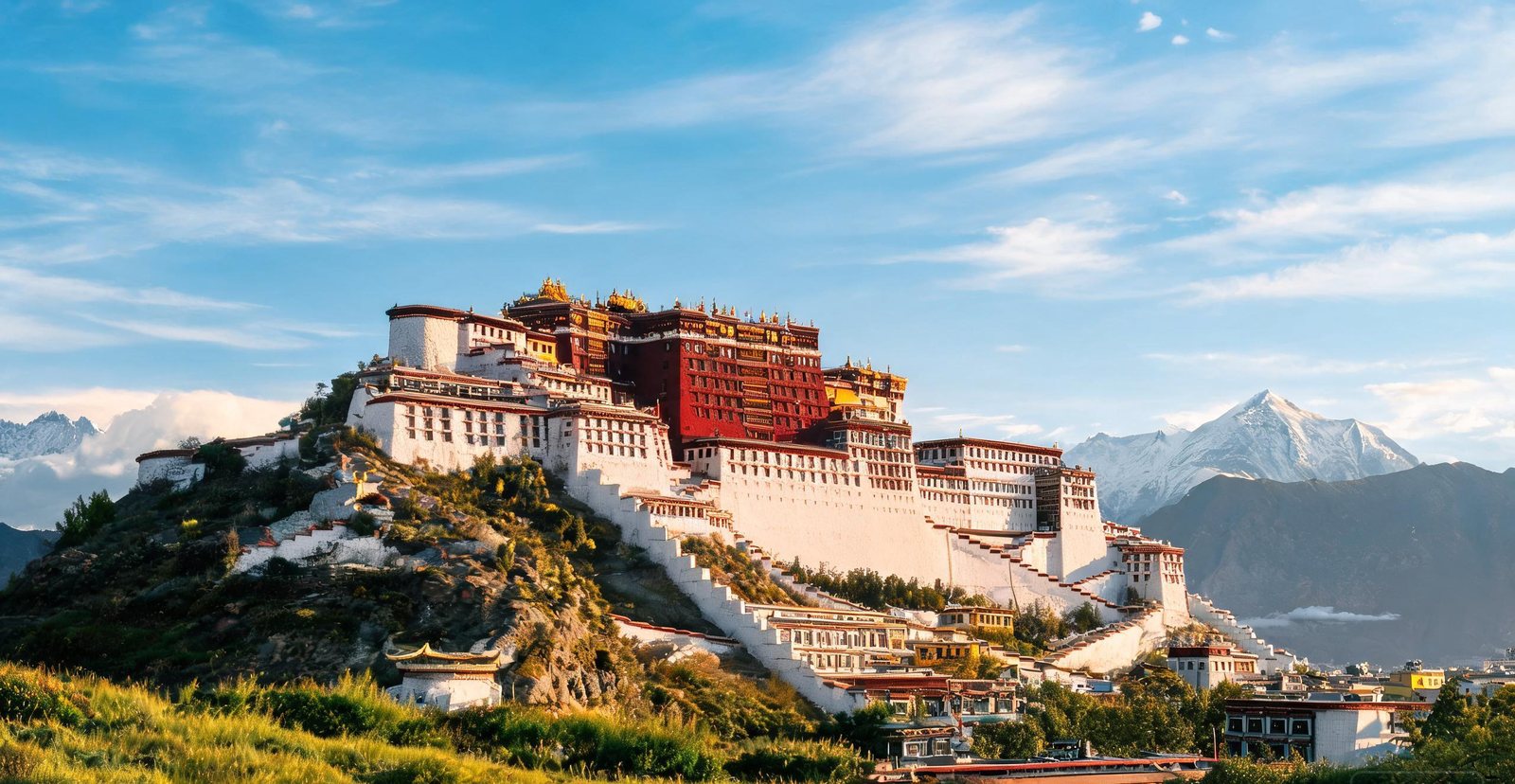
The Potala Palace rising above Lhasa under a deep blue sky
#19 — Lhasa: Potala Palace & Namtso
Lhasa: The Potala Above the Roof of the World
The thirteen-storey Potala Palace climbs a hill above Lhasa at 3,700 metres, and a few hours north lies Namtso — a turquoise salt lake at 4,718 metres.
Tour the Potala Palace — passes must be booked in advance.
Join the pilgrim circuit around Jokhang Temple at dawn.
Snow peaks of Meili above forests near Shangri-La
#20 — Shangri-La: Pudacuo & Meili
Shangri-La: Lakes, Meadows and a Sacred Peak
Yunnan's Tibetan corner holds the Pudacuo national park — alpine lakes and yak meadows — and the 6,740-metre Meili Snow Mountain, whose Kawagebo peak has never been climbed.
Walk the Bita Lake boardwalk in Pudacuo park.
Watch Kawagebo catch the first sunrise light from Feilai Temple.
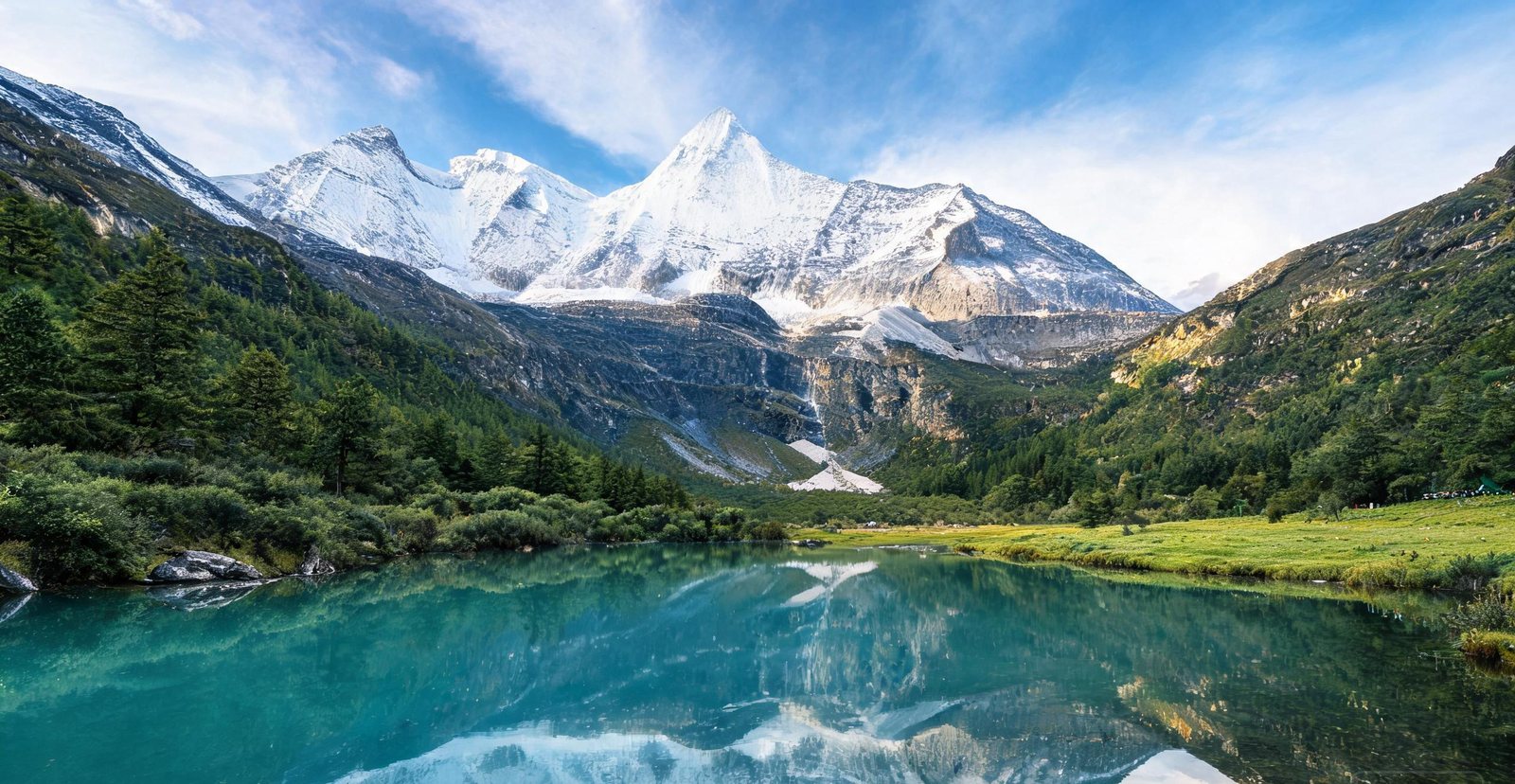
Snow peaks and a turquoise lake at Daocheng Yading
#21 — Daocheng Yading
Daocheng Yading: The Last Shangri-La
Three snow peaks over 5,900 metres, alpine lakes and yak-herder valleys once led explorers to call this Tibetan corner of Sichuan the last Shangri-La.
Hike to the Pearl Lake below the Xiannairi peak.
Ride horses up to the Chonggu pasture and Milk Lake.
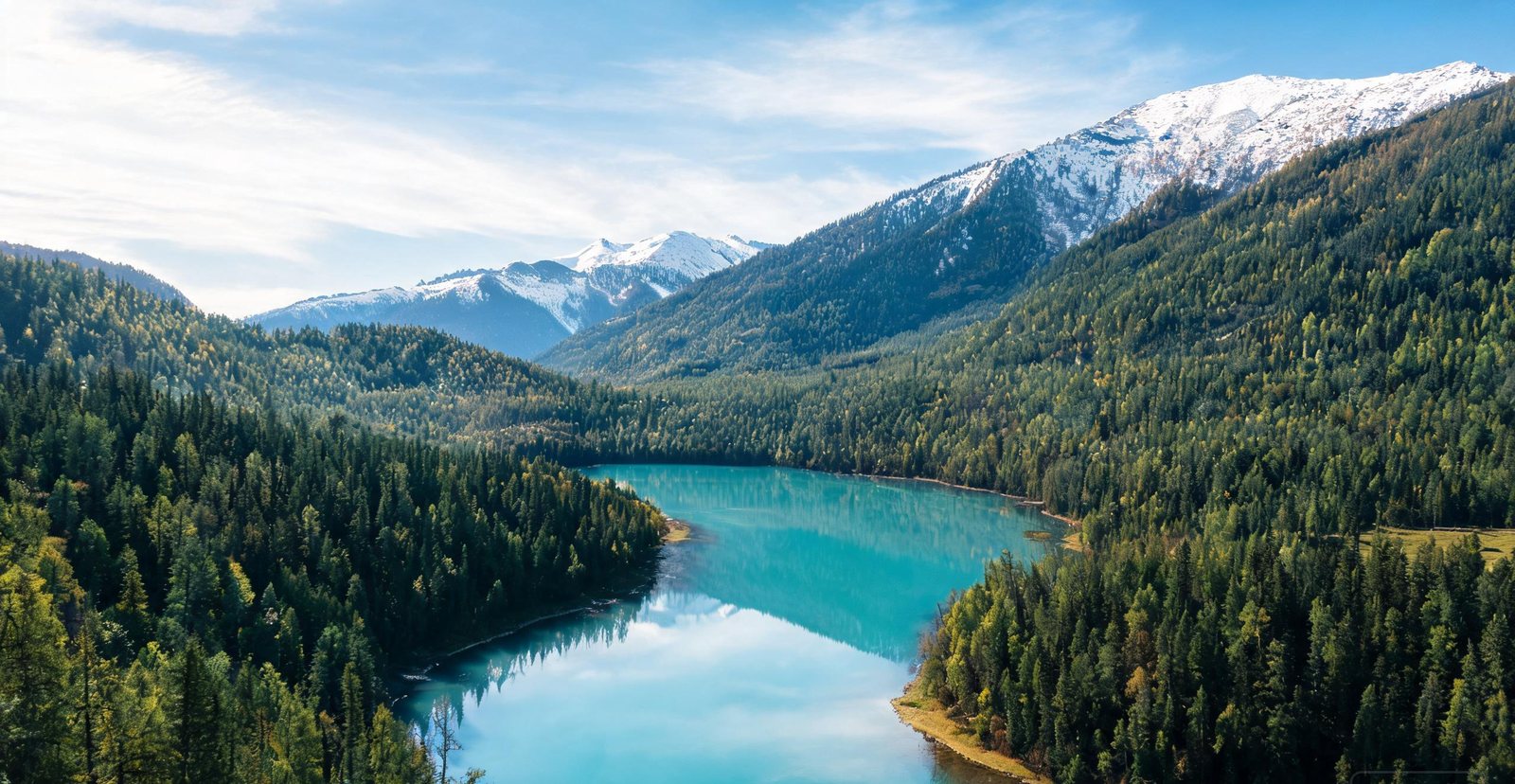
Kanas Lake in autumn colour beneath forested ridges
#22 — Kanas Lake
Kanas: A Lake of Shifting Colours
In the far north of Xinjiang, Kanas changes colour through the day — green, then blue, then silver — and the Tuva villages on its shore keep a herder's life.
Look for the 'Kanas monster', the giant fish legend of the lake.
Hike up to the Fish-Watching Pavilion above the water.
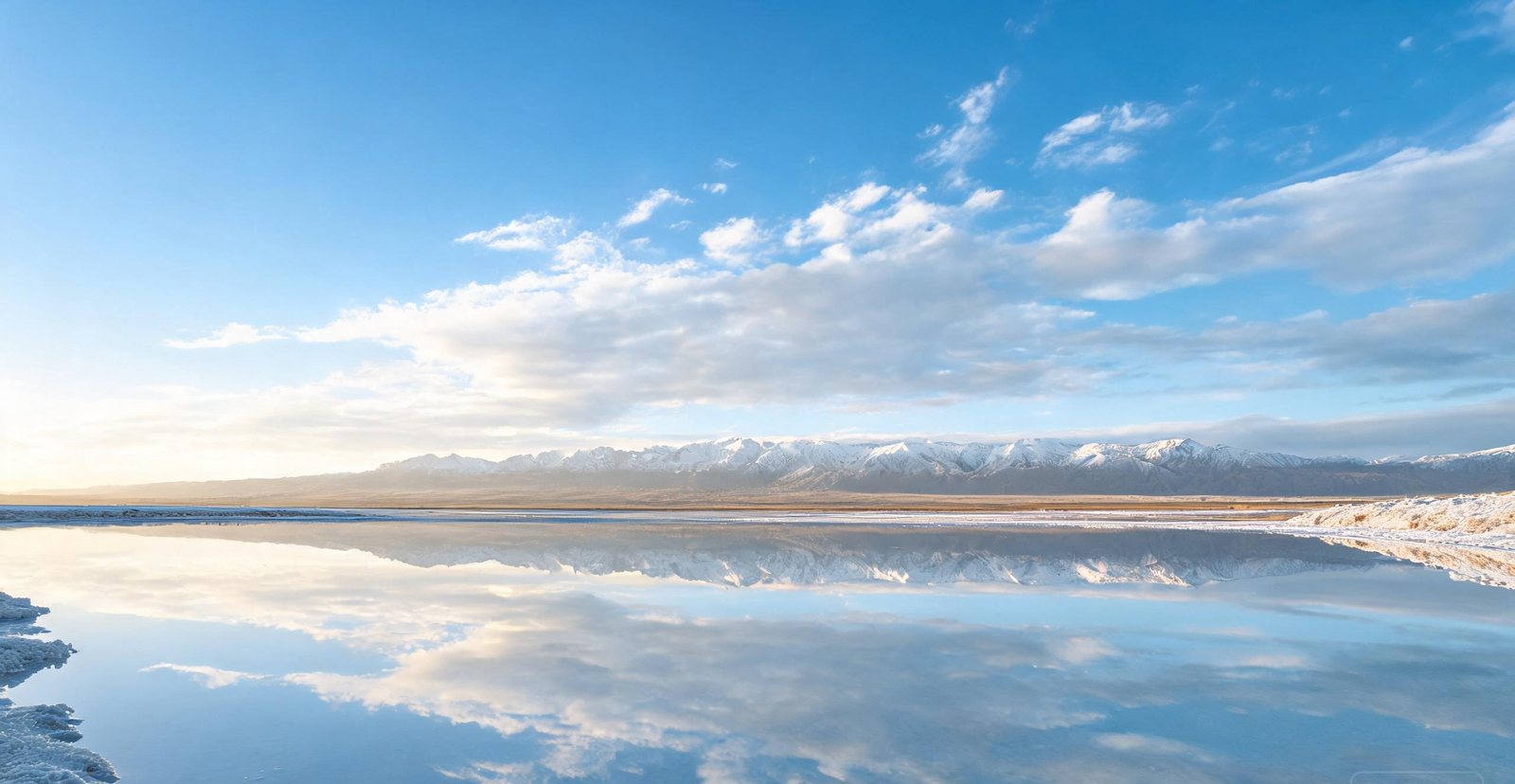
People walking across the mirror surface of Chaka Salt Lake
#23 — Chaka Salt Lake & Emerald Lake
Chaka and Emerald: Mirror Lakes of the Plateau
On the Tibetan plateau, Chaka Salt Lake turns into a giant mirror for the sky, while nearby Emerald Lake keeps a palette of green and blue pools in the desert.
Walk the salt-crust boardwalk at Chaka for the reflections.
Go at dawn to have the Emerald Lake mirrors to yourself.
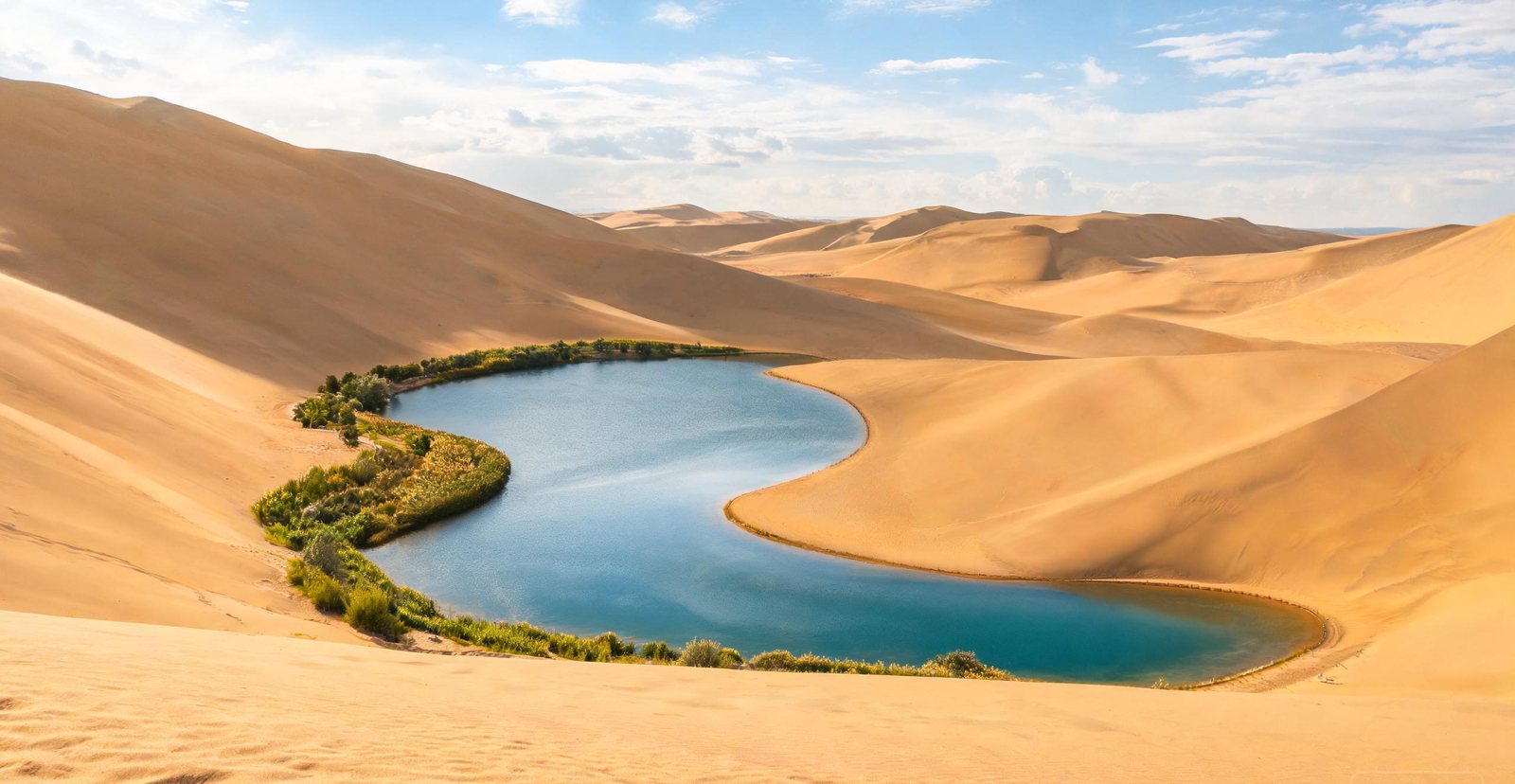
Crescent Lake cupped by towering sand dunes at Dunhuang
#24 — Mingsha Dunes & Crescent Lake
Mingsha and Crescent: Singing Dunes and a Lake
The 'singing sand' dunes of Dunhuang hum underfoot, and at their base a crescent-shaped spring has held water for two thousand years despite the desert all around it.
Ride a camel or a sand-board down the dunes.
See Crescent Lake lit up after sunset.
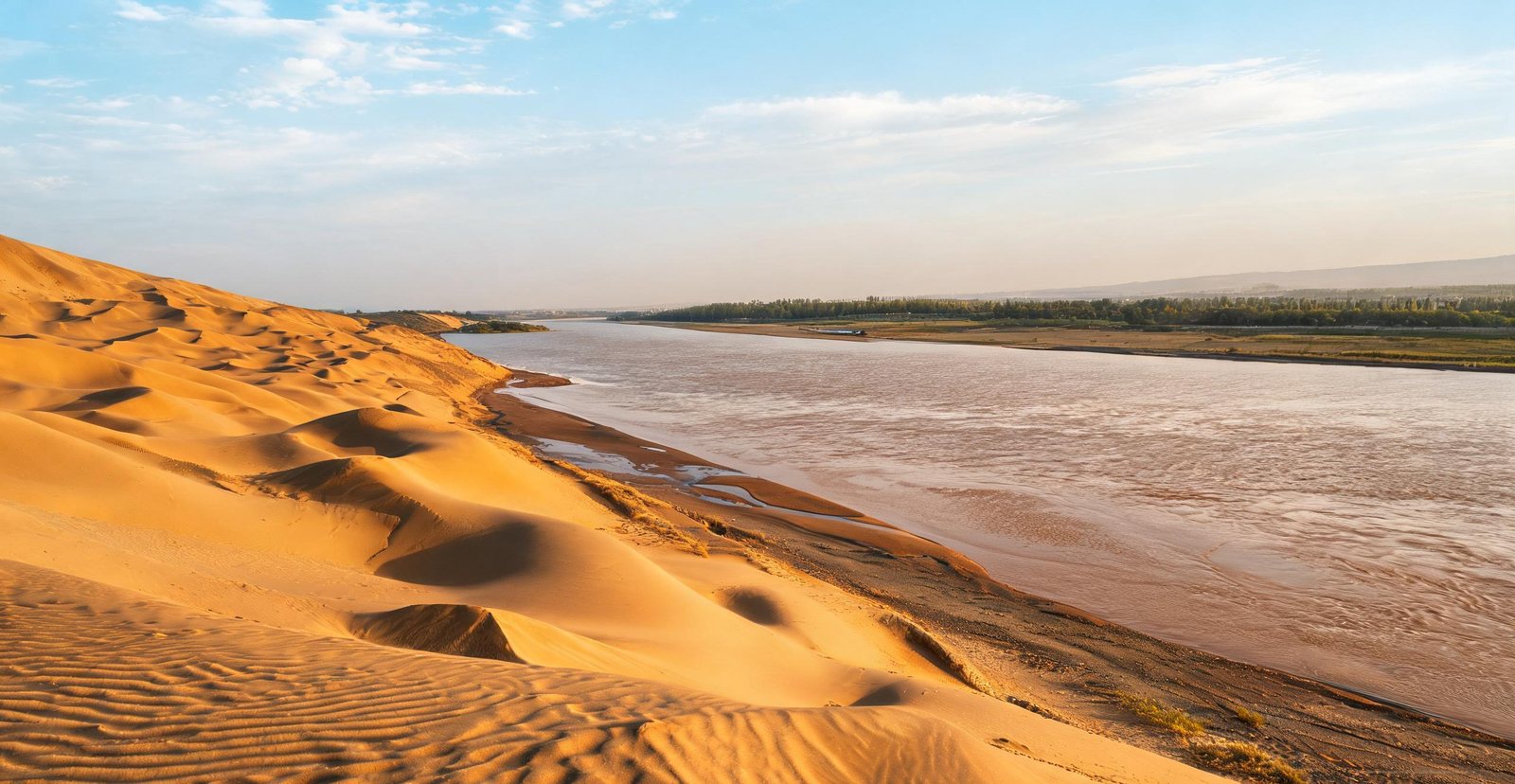
Sand dunes dropping to the Yellow River at Shapotou
#25 — Shapotou
Shapotou: Where Desert Meets the Yellow River
At Shapotou the Tengger Desert slides right up to the Yellow River — dunes on one side, green oasis and raft crossings on the other.
Sand-board down the dune slopes to the river.
Cross the river on a traditional sheep-skin raft.
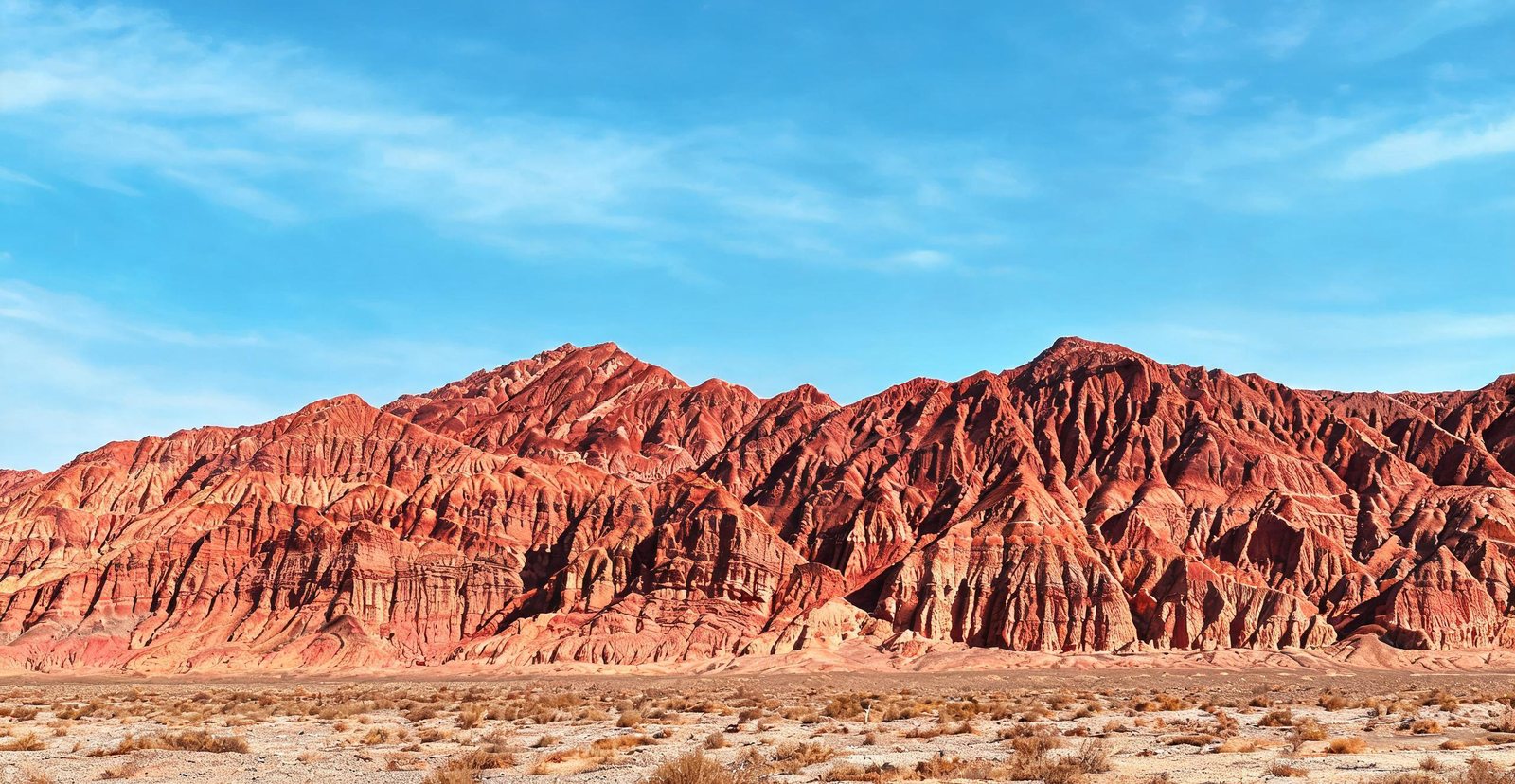
Red ridges of the Flaming Mountains above Turpan
#26 — Turpan: Flaming Mountains & Grape Valley
Turpan: Flaming Mountains and Grape Valley
Turpan sits in a furnace-like basin 154 metres below sea level — the Flaming Mountains glow red in summer while Grape Valley stays a green ribbon of vines and courtyards.
See the Flaming Mountains at midday, when they glow hottest.
Cool off in Grape Valley, eating grapes under the trellises.
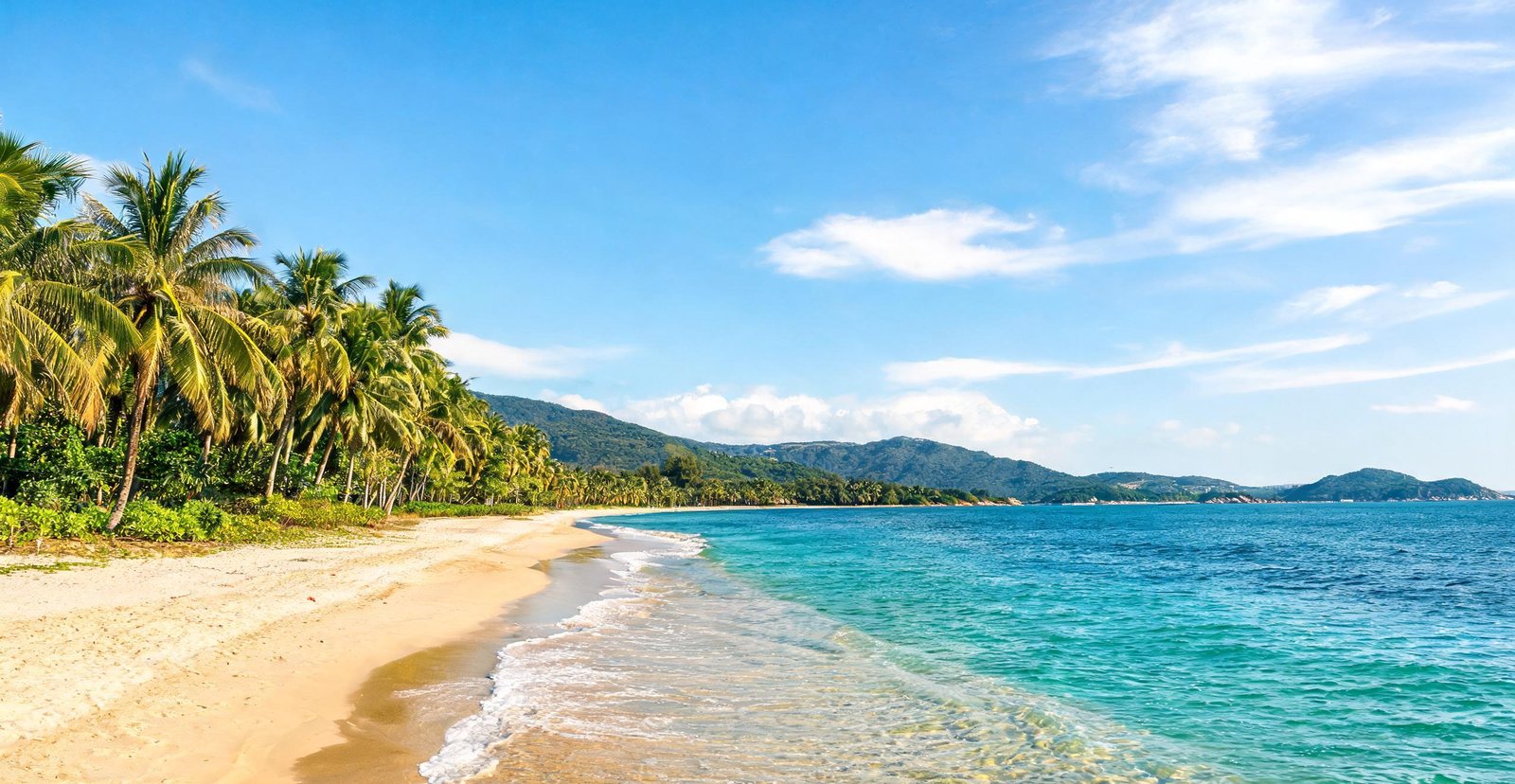
Turquoise water and white sand at Yalong Bay, Hainan
#27 — Sanya: Yalong Bay & Wuzhizhou Island
Sanya: China's Tropical Coast
Hainan's southern tip is China's beach capital — Yalong Bay's white sand and the coral reefs and dive sites off Wuzhizhou Island.
Snorkel or dive the coral reef off Wuzhizhou Island.
Watch sunrise over Yalong Bay from the boardwalk.
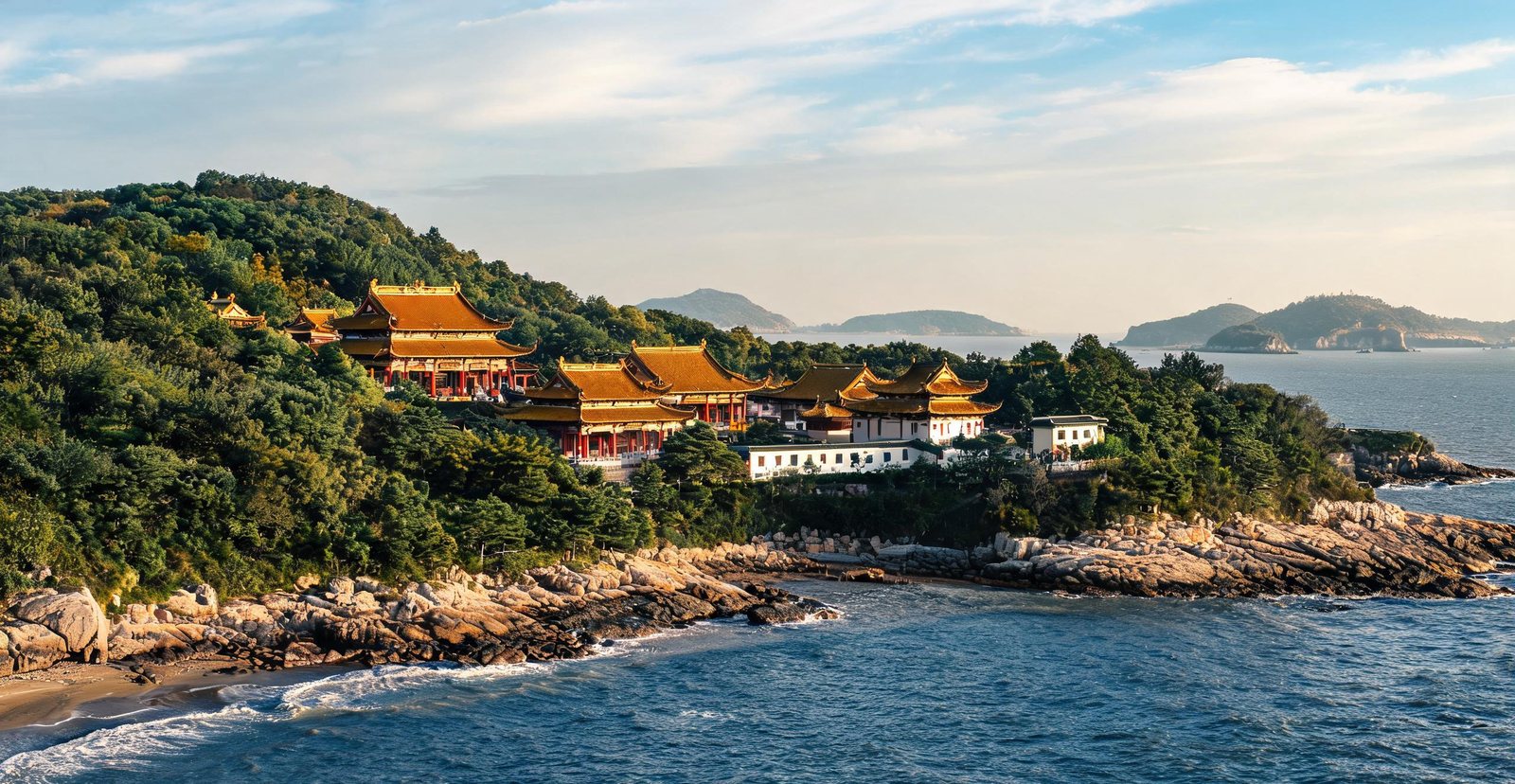
Island temples on Putuo Mountain off Zhoushan
#28 — Zhoushan: Dongji Islands & Putuo
Zhoushan: Island Monasteries and Blue Water
Off Ningbo, the Zhoushan archipelago holds Putuo Mountain — a sacred Buddhist island of temples and beaches — and Dongji, remote eastern isles of blue water and fishing villages.
Take the ferry to Putuo Mountain and its 33-metre Guanyin.
Sail to Dongji for the easternmost sunrise in China.
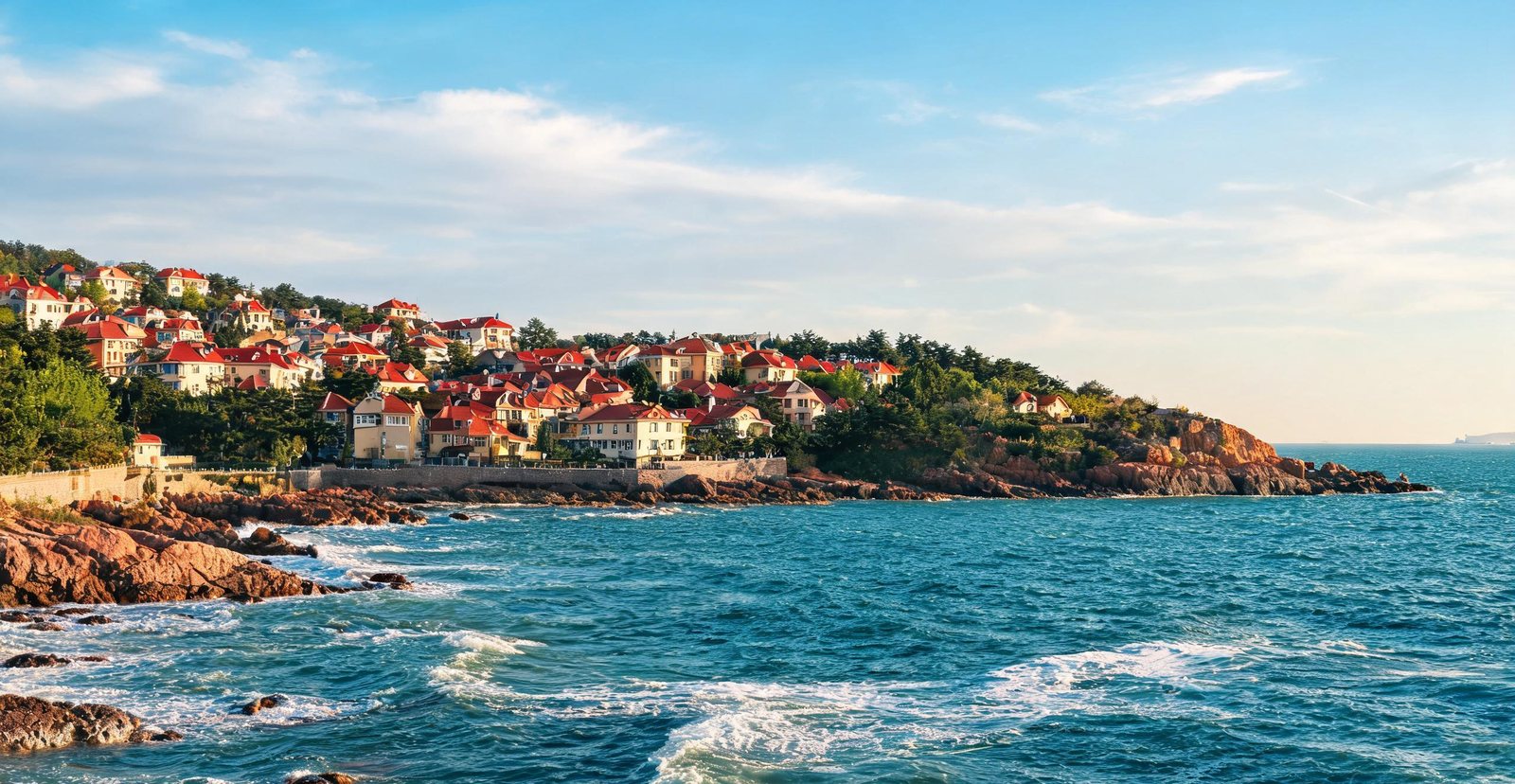
Qingdao's red-roofed houses above the Yellow Sea coast
#29 — Qingdao: Laoshan & the Coast
Qingdao: Beer, Sea Cliffs and a Taoist Mountain
Qingdao's red-roofed seaside town pairs a German-era old quarter with Laoshan — the highest coastal mountain in China, tumbling straight into the Yellow Sea.
Climb Laoshan to the Giant Peak for a sea-level view.
Walk the Badaguan villa district and Zhanqiao Pier.
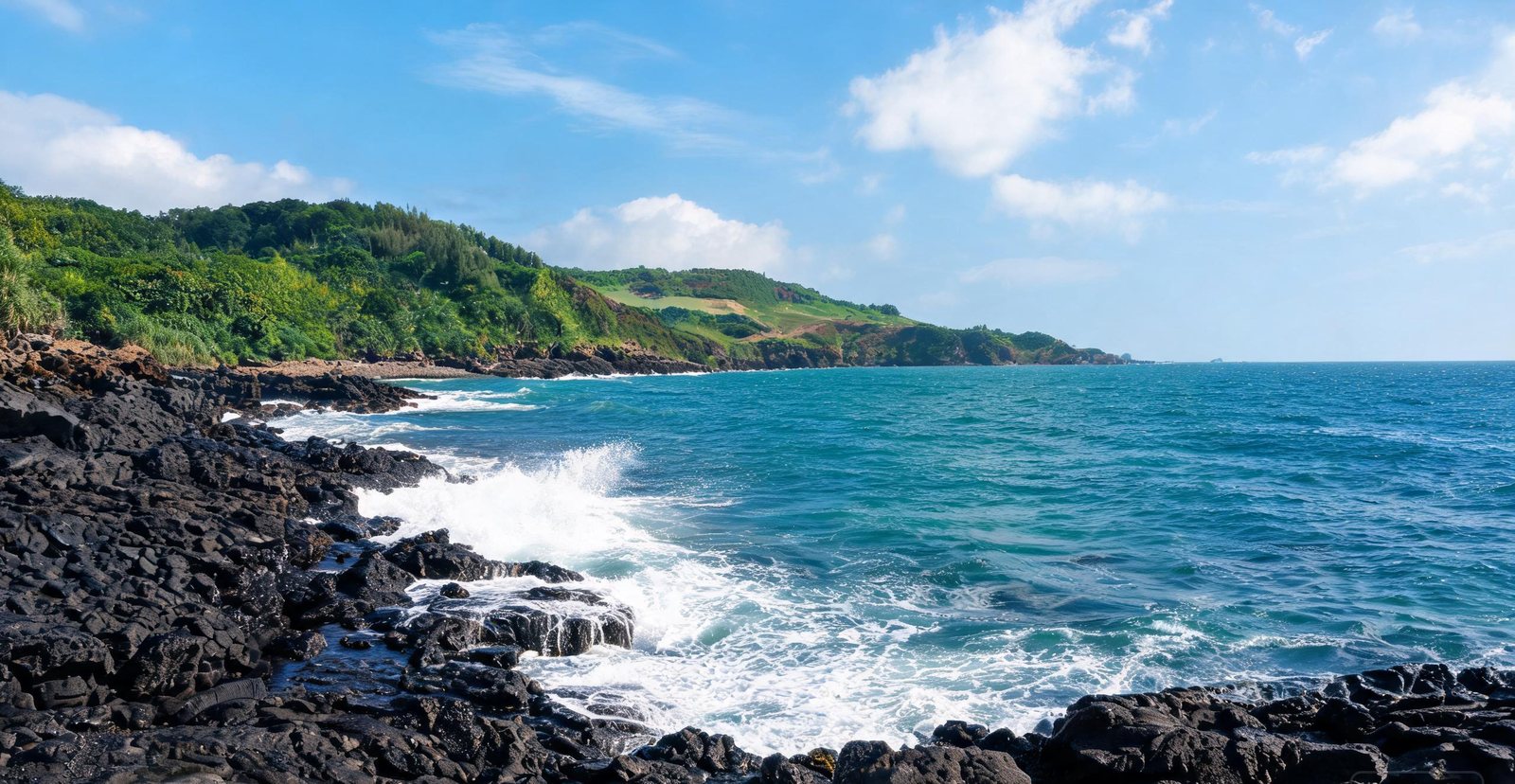
Volcanic cliffs and clear water on Weizhou Island
#30 — Weizhou Island
Weizhou: A Volcanic Island in the Gulf
China's youngest volcanic island, Weizhou off Beihai has a basalt-crater coastline, coral shallows and a lighthouse on its highest point.
See the Crocodile Hill crater park and its lava cliffs.
Snorkel the coral reef near Shell Beach.
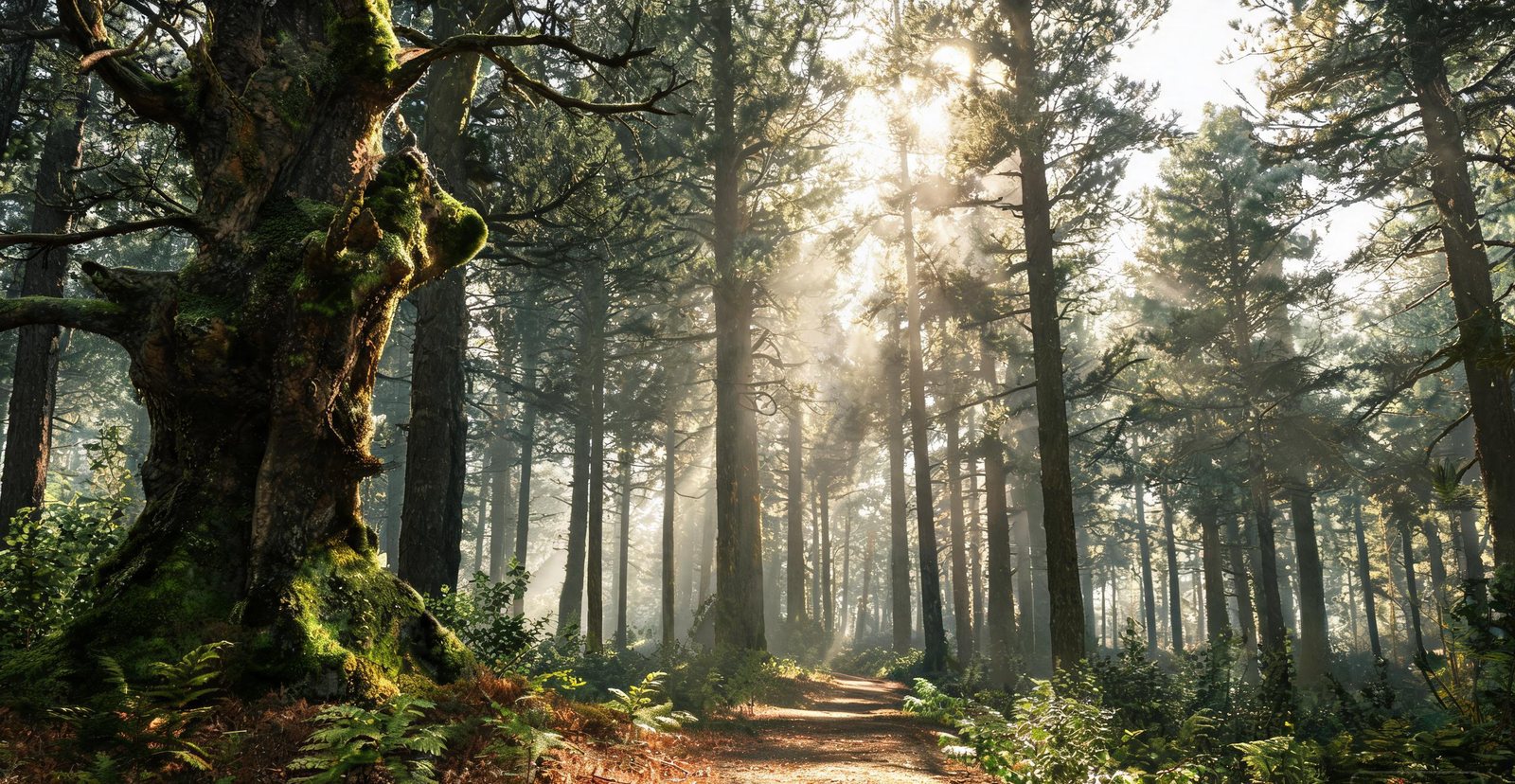
Towering pine trunks in the primeval forest near Yichun
#31 — Yichun: Korean Pine Forest
Yichun: Into the Primeval Pine Forest
In China's far northeast, Yichun protects some of the last old-growth Korean pine forest — canopies of red pine hundreds of years old, over a floor of moss and mushrooms.
Walk the Wuying forest park boardwalks among giant pines.
Come in autumn for the golden larch and red maple.
Snow-covered timber houses at Beiji Village, Mohe
#32 — Mohe: China's Arctic Village
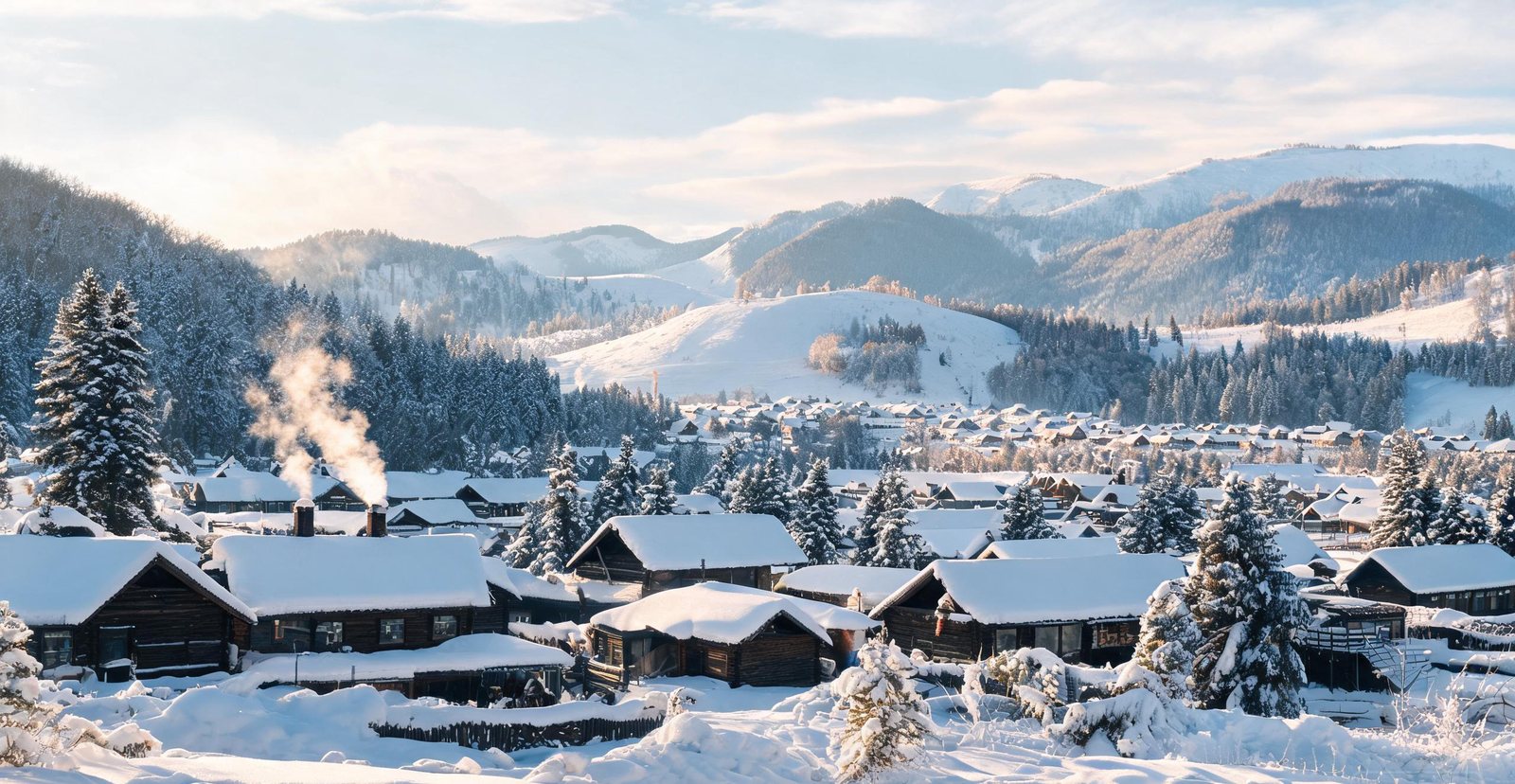
Mohe: China's Northernmost Point
Beiji, the 'Arctic' Village, sits at the top of China, where the winter mercury hits minus forty, timber houses glow under deep snow, and the aurora occasionally flickers.
Stand at the northernmost point marker on the Heilongjiang river.
Come in winter for ice and snow festivals and possible auroras.
Dense tropical rainforest canopy in Xishuangbanna
#33 — Xishuangbanna Rainforest
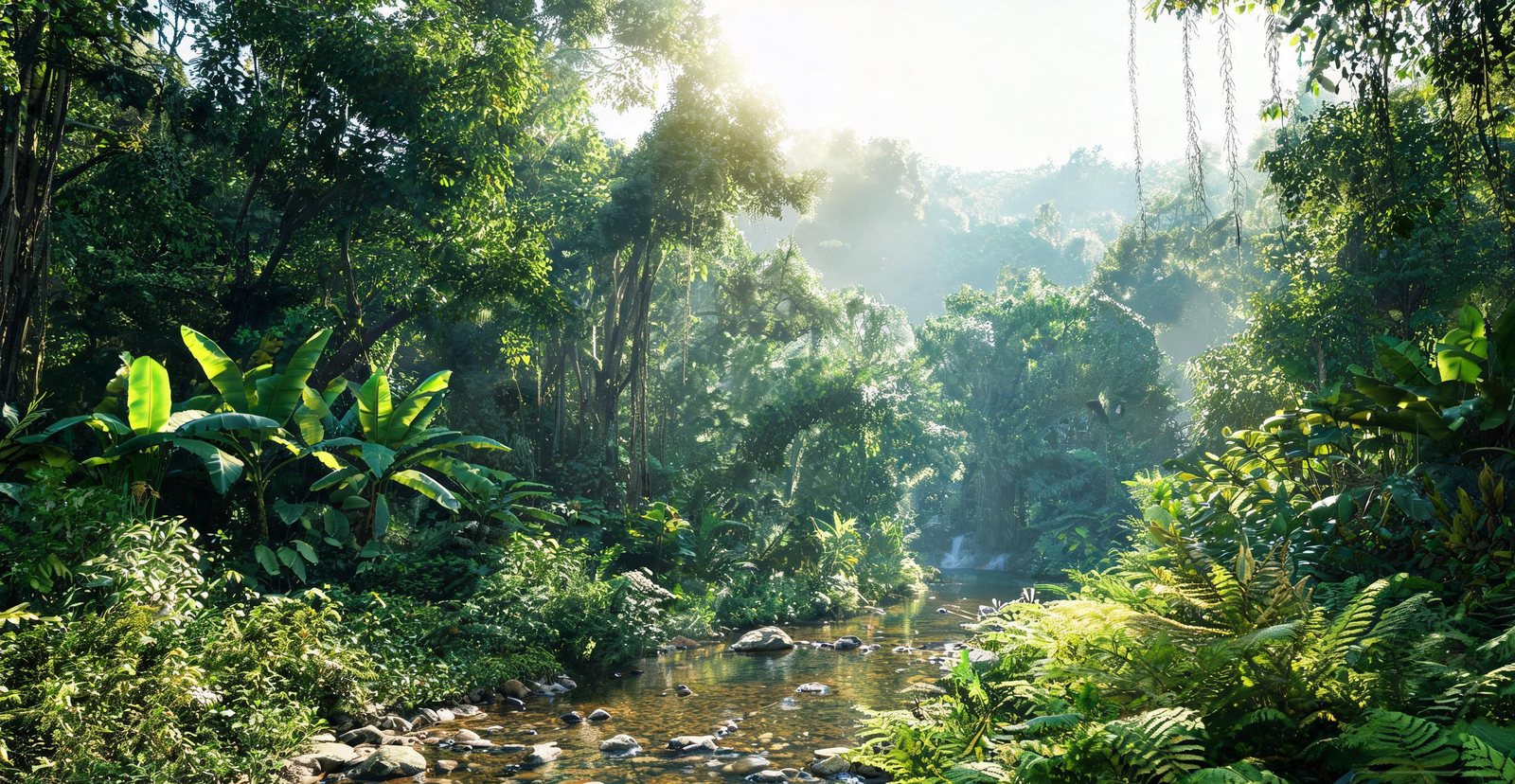
Xishuangbanna: China's Tropical Rainforest
Bordering Laos and Myanmar, Xishuangbanna is China's only true tropical rainforest — home to wild elephants, Dai bamboo houses and nightly displays of fireflies.
Take a night walk to see fireflies and tree frogs.
Visit a Dai village and its stilted bamboo houses.
Reed channels and wooden boats in Xixi Wetland, Hangzhou
#34 — Xixi Wetland
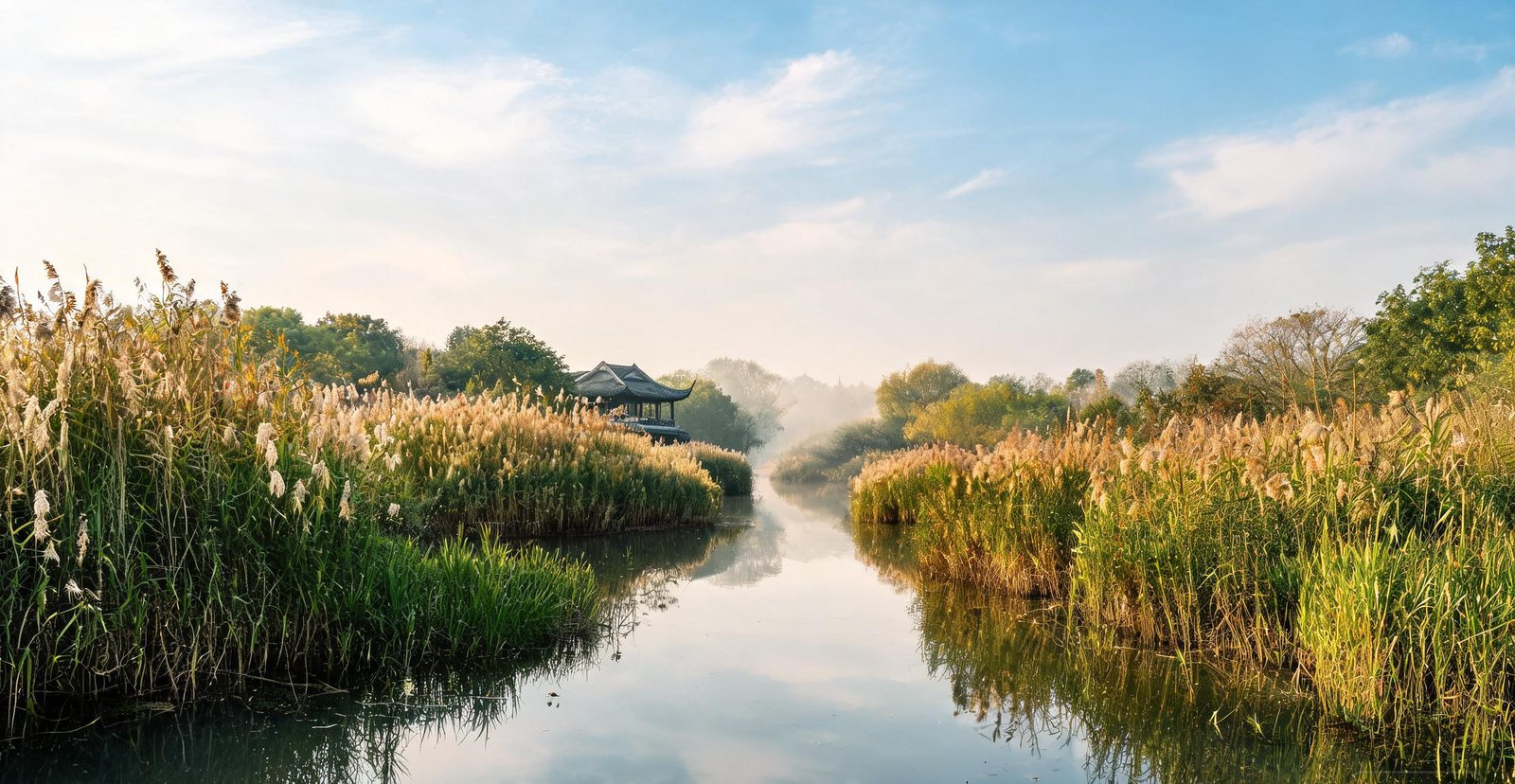
Xixi: Hangzhou's Urban Wetland
A maze of reed channels, persimmon trees and old water villages just outside Hangzhou, Xixi was among China's first national wetland parks.
Glide through the reed channels by electric boat.
Visit in autumn for the persimmon harvest.
A dark volcanic cone rising from Inner Mongolian grassland
#35 — Ulanqab Volcano Group
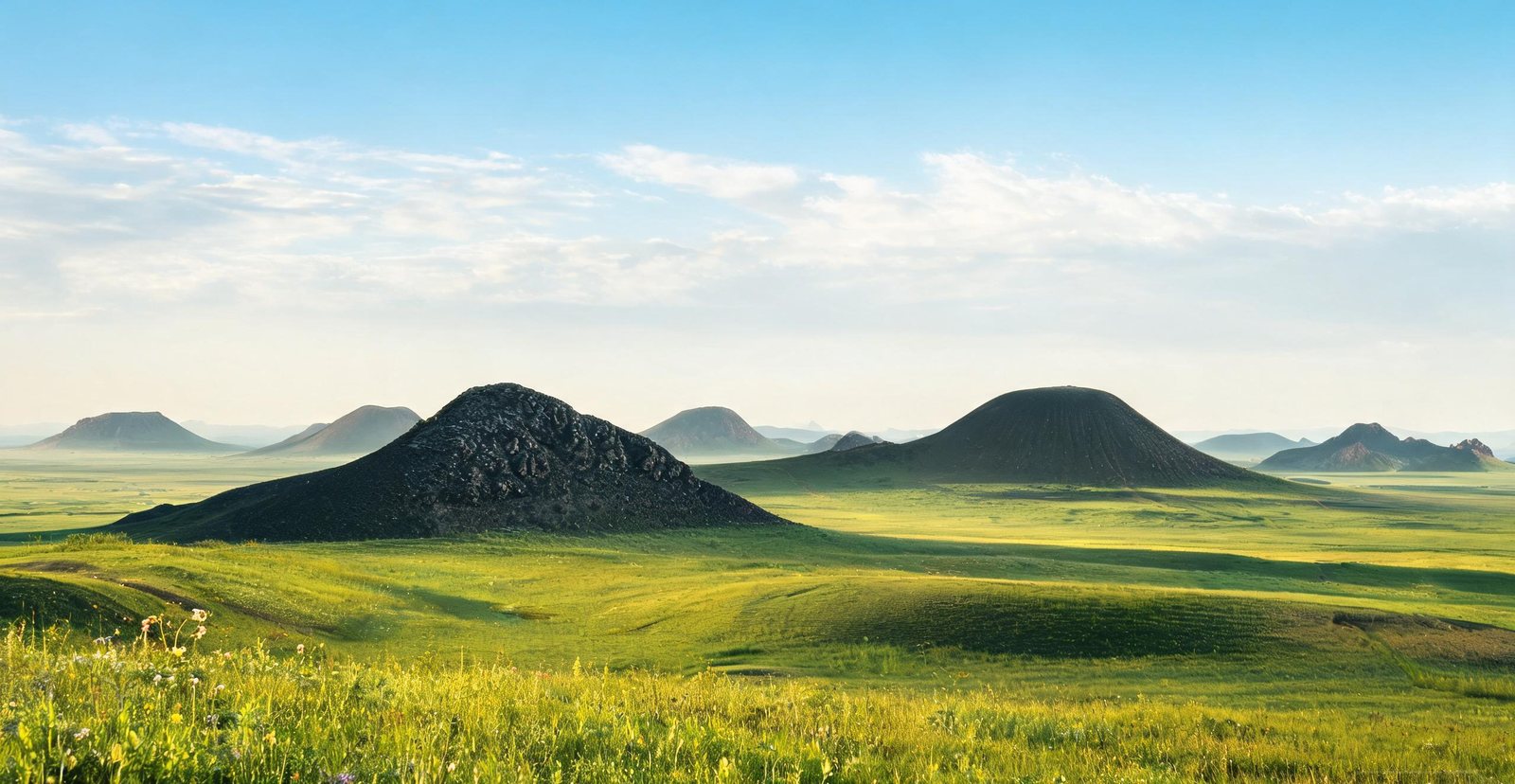
Ulanqab: Volcanoes on the Grassland
Rising straight out of Inner Mongolian grassland, the Ulan Hada cones are among China's best-preserved Quaternary volcanoes — some with craters you can walk into.
Hike the rim of Crater Three for the full cone view.
Drive between the cones on the grassland track at sunset.
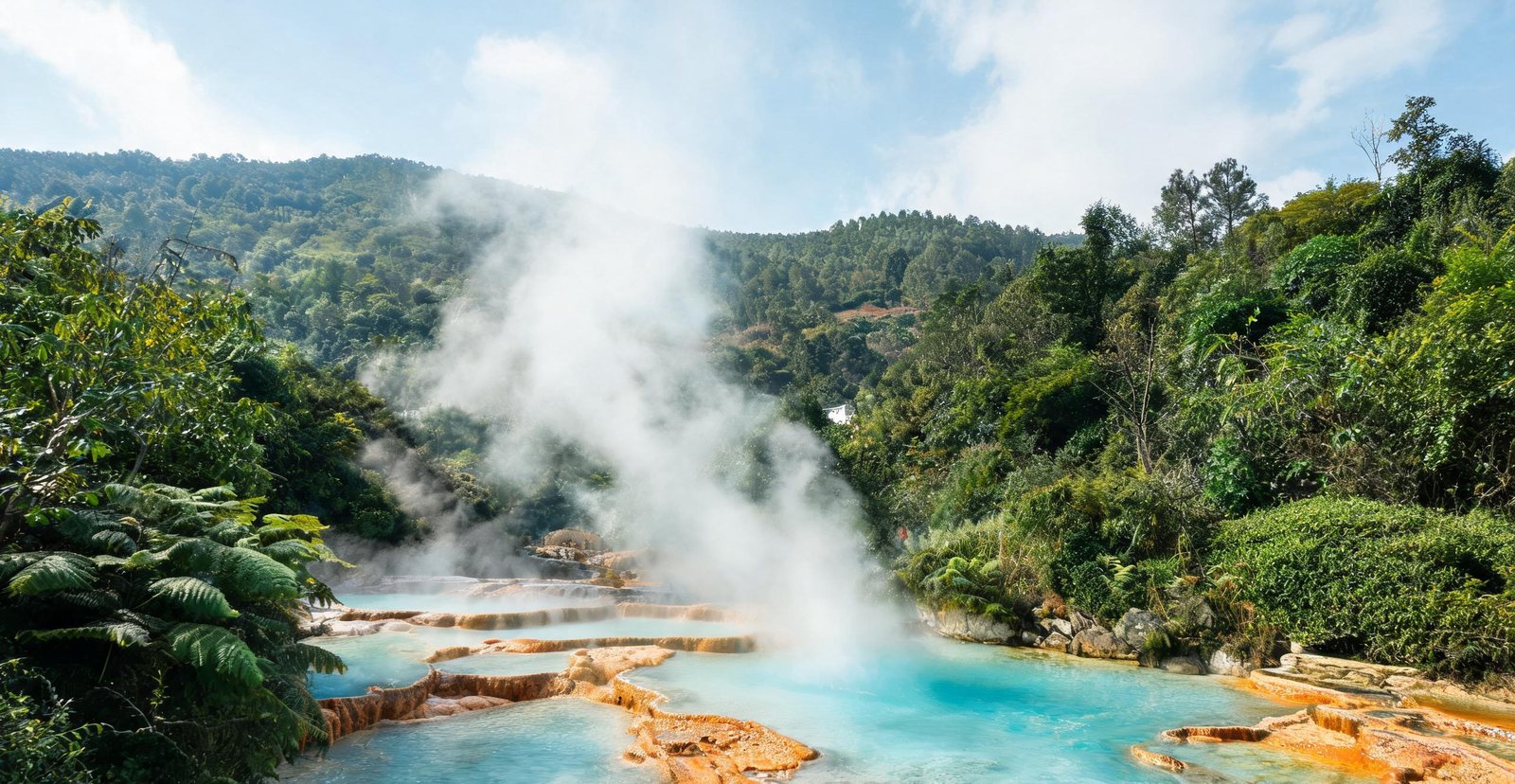
Steam rising from the hot springs at Rehai, Tengchong
#36 — Tengchong: Hot Springs & Volcanoes
Tengchong: Steam Vents and Dormant Cones
On the Myanmar border, Tengchong bubbles with the Rehai hot sea — boiling springs and fumaroles — and a field of ninety dormant volcanic cones.
See the Big Boiling Pot of Rehai, hot enough to cook eggs.
Fly over the craters and caldera in a hot-air balloon.
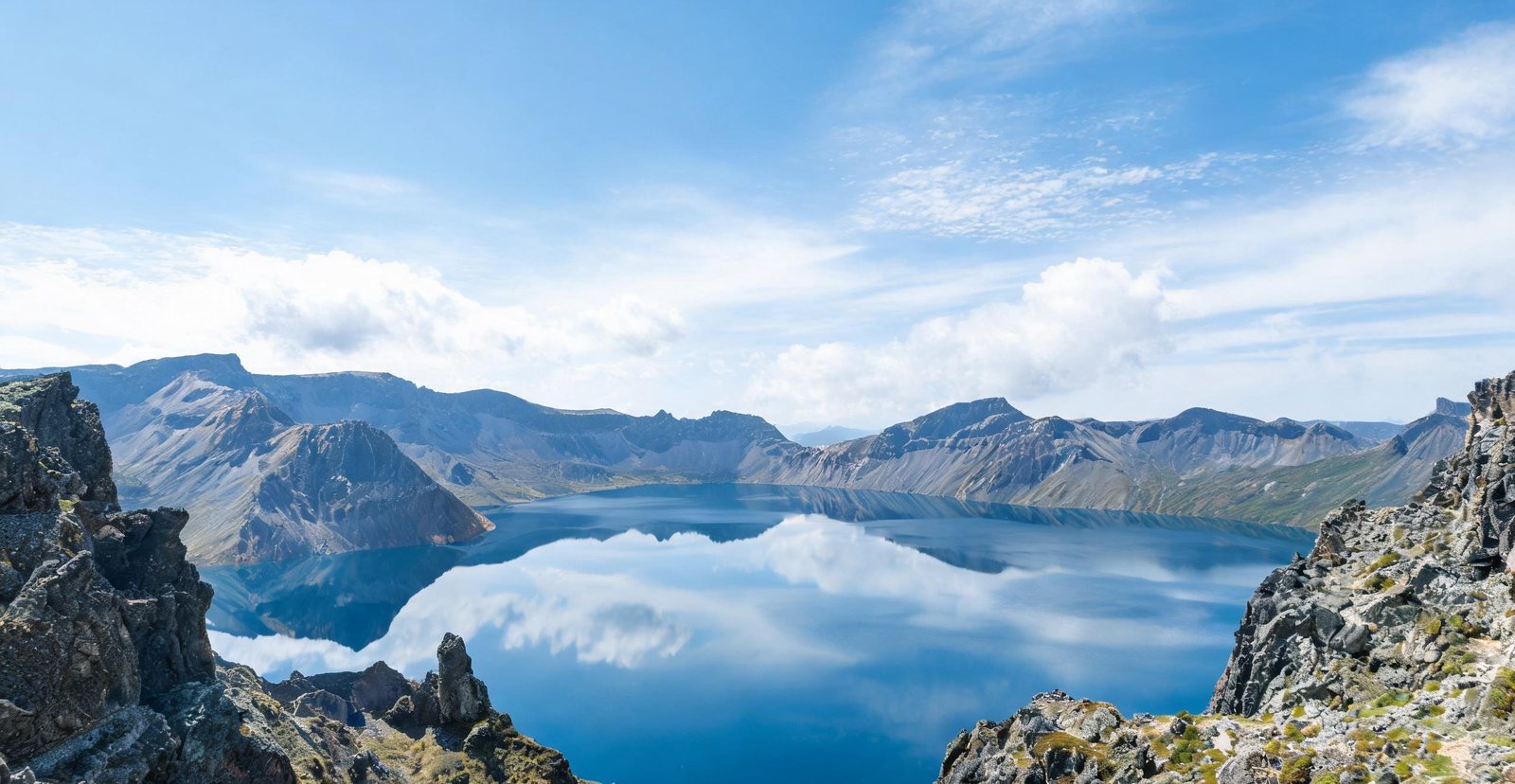
Heaven Lake filling the volcanic crater of Changbai Mountain
#37 — Changbai Mountain & Heaven Lake
Changbai: Heaven Lake on the Volcano Rim
China's highest volcanic lake fills a crater at 2,189 metres on the North Korean border — reached by a 1,400-step climb and wrapped in cloud most days.
Climb the north or west slope stairs to the crater rim.
Go early — Heaven Lake usually clears of cloud before noon.
Travel Smart
Practical Tips for First-Time Visitors
🅰 Get a VPN
Google, Instagram, YouTube, WhatsApp, Netflix — all blocked in mainland China. Install a reputable VPN before you arrive. ExpressVPN, Astrill, and Surfshark are popular with travelers.
💳 Cash Is King (Sort Of)
WeChat Pay and Alipay dominate domestic payments and require a local bank account. Bring enough U.S. dollars or euros to exchange at major hotels/banks, or use your international credit card.
🚄 Rail Is Faster Than Flying
China's high-speed rail network is the world's largest. Beijing–Shanghai: 4.5 hours, roughly $70. Book via Trip.com or Ctrip. Seat class 1 (soft) is worth it.
🗣 Language
Learn 5 phrases: nihao (hello), xiexie (thank you), qing (please), duoshao qian (how much), wo bu hui shuo zhongwen (I don't speak Chinese). Google Translate offline pack is your friend.
🏨 Booking Sites
Hotels: Trip.com, Booking.com. Hostels: Hostelworld. Homestays: Airbnb is blocked; use Tujia or Booking.com instead. Book major sites (Forbidden City, Terracotta) in advance.
📅 Avoid Golden Week
Chinese National Day (Oct 1–7) and Lunar New Year are massive domestic holidays — crowds + price spikes. Plan around them. May Day (May 1–5) is a smaller 5-day holiday.
One trip won't be enough.
But it will be the first of many. Start with Beijing, Chengdu, and Shanghai — then let China pull you back.